





NASA is turning its historic return to the Moon into a monumental business opportunity. Recent announcements confirm the agency is accelerating its work with two of its biggest, and most competitive, private partners: SpaceX and Blue Origin.
A Tale of Two Landers
The core of
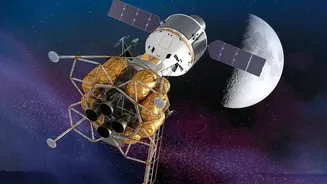
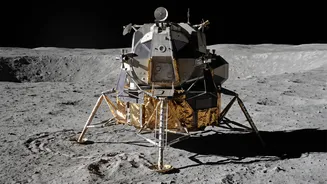
NASA's strategy for returning astronauts to the lunar surface rests on its Human Landing System (HLS) program. Instead of building its own vehicle, the agency has embraced a commercial-first model, awarding multi-billion dollar contracts to private companies to design, build, and test landers. The two titans selected for this task are Elon Musk's SpaceX and Jeff Bezos's Blue Origin. SpaceX is adapting its colossal Starship rocket into a lunar lander, a vehicle designed for full reusability and massive cargo capacity. Blue Origin, leading a 'National Team' that includes industry veterans like Lockheed Martin and Boeing, is developing its more traditional, three-stage 'Blue Moon' lander. Both companies are now working under revised contracts to speed up development for a planned lunar return in 2028.
Competition as a Strategy
Rather than picking a single winner, NASA is deliberately fostering competition between the two aerospace giants. This strategy serves several key purposes. Firstly, it provides redundancy; if one company's development stalls, the other can still keep the program on track. This was a hard-learned lesson from previous procurement models. Secondly, competition is expected to drive down costs and accelerate innovation, as both companies vie to prove their system is more efficient and capable. This approach mirrors the success of the Commercial Crew Program, which used a similar competitive model with SpaceX and Boeing to end reliance on Russian Soyuz rockets for travel to the International Space Station. Ultimately, NASA will determine which company is ready to perform the first crewed landing in 2028 based on their progress and readiness.
A Major Mission Shake-Up
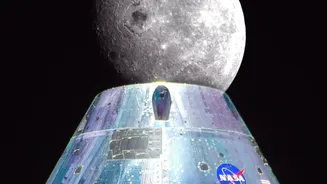
To de-risk the eventual lunar landing, NASA announced a major restructuring of its Artemis program earlier in 2026. The Artemis III mission, once slated to be the first landing, has been repurposed. Now scheduled for 2027, it will serve as a crucial dress rehearsal in low-Earth orbit. During this mission, astronauts aboard the Orion capsule will rendezvous and dock with test versions of both the Starship HLS and the Blue Moon lander. This allows crews and ground teams to test critical procedures like docking, vehicle entry, and systems checks in a relatively safe environment before attempting the much more complex journey to the Moon. The first crewed landing has been shifted to the Artemis IV mission in early 2028.
The Road to Artemis IV
The path to the 2028 landing is packed with ambitious milestones for both companies. SpaceX must demonstrate its unprecedented in-space refueling capability, which involves multiple tanker flights to fuel a Starship lander in orbit before it can journey to the Moon. Starship successfully reached orbit for the first time in September 2026, marking a major step toward operational flights. Blue Origin, meanwhile, must return its New Glenn rocket to flight after a 2026 launchpad explosion and complete an uncrewed demonstration landing of its MK1 lander. Both companies are required to perform a full, uncrewed landing on the Moon before NASA will certify their systems to carry astronauts. These parallel paths of development represent a new, fasterpaced, and more commercially driven space race.