




For First-Timers: Easy to Moderate Treks
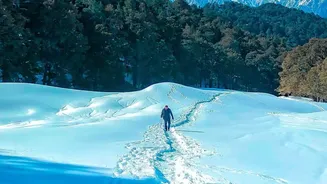
If you're new to snow trekking, the key is to choose a trail that is rewarding but not overwhelming. These treks are perfect for beginners who are in good physical shape. The Kedarkantha trek in Uttarakhand is one of India's most popular winter routes
for a reason. Typically a five or six-day journey starting from the village of Sankri, it covers about 20-23 km and reaches a summit of approximately 12,500 feet. The trail winds through beautiful pine forests and past the frozen Juda Ka Talab lake, culminating in a summit climb that offers 360-degree views of famous peaks like Swargarohini and Bandarpoonch. While graded easy-to-moderate, the summit day is demanding, often starting before sunrise. Another excellent choice is the Brahmatal trek, known for its stunning views of Mt. Trishul and Nanda Ghunti. This trek also involves camping beside frozen alpine lakes, Bekaltal and Brahmatal, making it a classic winter experience. Both treks are ideal for fit beginners ready for a memorable first Himalayan summit.
The Next Level: Moderate Treks
For those with some trekking experience or a higher level of fitness, moderate treks offer a greater challenge and equally stunning rewards. The Kuari Pass trek, also in Uttarakhand, is a step up from beginner trails. Known for its expansive views of major peaks including Nanda Devi and Dronagiri, the trail takes you through dense oak forests and vast snow-covered meadows, or 'bugyals'. While accessible, winter conditions can make the path icy and demanding, especially with the wind on exposed ridges. Another fantastic option is the Dayara Bugyal trek. This route is famous for its massive, rolling meadows which are entirely blanketed in snow during winter, offering a surreal landscape. The climb is gentler than many other summit treks, making it a good bridge between easy and difficult categories.
For the Experienced: Difficult Treks
Reserved for seasoned trekkers with high-altitude experience, difficult winter treks are true expeditions. The most iconic of these is the Chadar Trek in Ladakh, which involves walking on the frozen Zanskar River. This trek is less about climbing and more about enduring extreme cold, with temperatures often dropping to -30°C at night. The trail itself is a sheet of ice that changes daily, making it a unique and challenging journey through a dramatic gorge. Access is tightly controlled, requiring multiple days of acclimatisation in Leh and a mandatory medical check-up due to the severe conditions. The 2026 season was even suspended due to inadequate ice formation, highlighting the trek's unpredictable nature. This is an adventure for those who are mentally and physically prepared for one of the world's most unique and demanding treks.
Building Your Fitness: Cardiovascular Endurance
No matter the trek's difficulty, cardiovascular fitness is non-negotiable. Himalayan treks involve walking for several hours a day at altitudes where oxygen is thinner. Your training should focus on building stamina. Start at least six to eight weeks before your trek. A good routine includes jogging, brisk walking, or cycling for 45-60 minutes, three to four times a week. The goal is to get your heart rate up and sustain it. A practical target for an easy-to-moderate trek like Kedarkantha is to be able to jog 5 km in under 40 minutes. If you live in a city, climbing stairs is an excellent substitute for hills, as it directly mimics the motion of ascending a trail.
Essential Strength and Conditioning
Cardio alone isn't enough; you also need to build functional strength, especially in your legs and core. Your legs—quadriceps, hamstrings, and glutes—will be doing most of the work on steep ascents and descents. Incorporate exercises like squats, walking lunges, and calf raises into your routine at least twice a week. A strong core is crucial for maintaining balance on uneven, snowy terrain, especially while carrying a backpack. Exercises like planks and crunches will help stabilise your body. Don't forget your back and shoulders, which will support your daypack. Simple exercises like push-ups and rows can make a significant difference in your comfort on the trail.
Acclimatisation and Mental Preparedness
Physical fitness is only half the battle. High-altitude trekking also requires mental resilience. Summit days often start in the pre-dawn cold, and you'll need the mental fortitude to keep going when you're tired. Acclimatisation is also critical. Most trek itineraries build in gradual ascents and rest days to allow your body to adjust to lower oxygen levels. Never rush the ascent. It's also vital to listen to your body and communicate any symptoms of altitude sickness, like headaches or nausea, to your trek leader immediately. Finally, prepare mentally for basic camping conditions and extreme cold. Embracing the simplicity and challenge of mountain life is a key part of the experience.