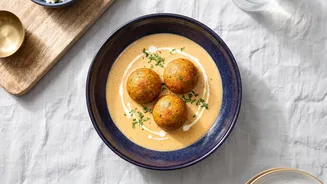


The Anatomy of a Kofta
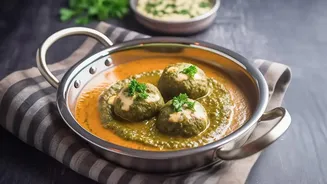
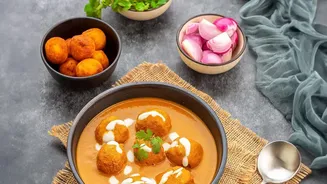
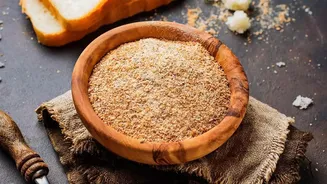
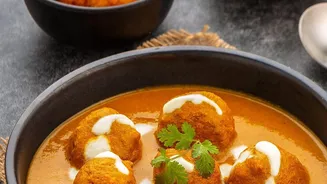
Before we get to the gravy, let's understand what a kofta is. Whether it’s made from lauki, paneer, potato, or minced meat, a kofta is a delicate balance of a primary ingredient and a binder like gram flour (besan), cornflour, or breadcrumbs. The goal
is to use just enough binder to hold it together without making it dense or tough. Many common issues start here. For vegetable koftas, excess moisture is the number one enemy. If you don't squeeze every last drop of water from grated lauki, for example, the kofta will be structurally weak. Frying is not just for colour; it creates a crucial, protective outer crust that acts as a shield, helping the kofta hold its shape when it eventually meets the gravy.
The Gravy: A Gentle Simmer, Not a Boil
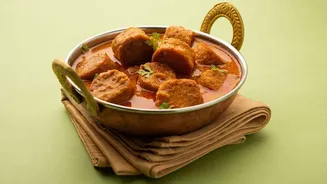
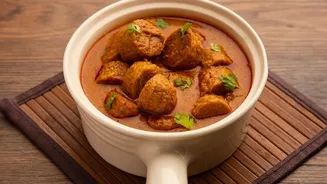
Imagine your kofta as a delicate guest and the gravy as its destination. A rolling, aggressive boil is the equivalent of a chaotic, turbulent environment. The violent bubbling physically batters the koftas, causing even well-made ones to break apart. The ideal state for your gravy when the koftas are introduced is a gentle, lazy simmer. The gravy should be fully cooked, seasoned, and thickened before this point. Think of it as preparing the perfect warm bath—calm and welcoming. A vigorous boil is simply too much force for the kofta's fragile structure to handle.
The Golden Rule of Timing
This is the heart of the matter. Koftas are not like potatoes or tough cuts of meat that need to be simmered for an hour to become tender. They are already cooked and need only to be heated through and absorb the gravy's flavour. For most vegetarian koftas, like malai or lauki, the rule is to add them as close to serving time as possible. Many chefs recommend adding them, simmering for just a minute or two, and then turning off the heat. If left to soak for too long, they will act like a sponge, becoming waterlogged and losing their structural integrity. Meat koftas are a slight exception, as the raw mince inside needs to cook. However, even these should be simmered gently, never boiled, for their required cooking time to ensure they remain succulent and don't toughen up.
Temperature Shock: The Hidden Saboteur
Have you ever added sizzling hot, straight-from-the-fryer koftas into a steaming hot gravy? This can also be a recipe for disaster. While it seems efficient, the extreme temperature differential can cause the koftas to soak up the gravy too quickly, making them soft and prone to breaking. A better approach is to allow for a brief cooling period. Let your freshly fried koftas rest on a wire rack for several minutes. Similarly, if your gravy has been boiling, let it settle into a gentle simmer. Some cooks even prefer adding slightly cooled koftas into warm, not piping hot, gravy right at the table to guarantee the perfect texture.
Patience After the Plunge
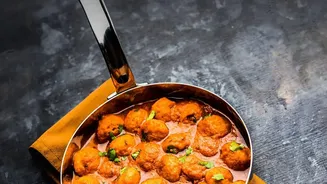
Once the koftas are finally in the gravy, your work is almost done. Resist the temptation to stir vigorously with a spoon. This mechanical force is often the final straw that breaks them. If you need to distribute the gravy, gently swirl the entire pan by its handle. This coats the koftas without putting direct pressure on them. After a minute or two of simmering, turn off the heat and let the curry rest for about five to ten minutes before serving. This allows the koftas to absorb all the rich flavours of the gravy without overcooking, ensuring they are flavourful, intact, and have that melt-in-the-mouth texture you were aiming for.