







The Monsoon Fermentation Paradox
For countless home cooks across India, the rainy season presents a familiar challenge. While the cooler weather is a welcome respite, it can throw a wrench into kitchen routines. One of the most common issues is the unpredictable nature of fermenting
batter for staples like idli and dosa. Logic suggests that lower temperatures should slow down the activity of yeast and bacteria, leading to a sluggish, under-fermented batter. However, experienced South Indian chefs and grandmothers will tell you to watch your batter more closely during the monsoon, as it often ferments much faster than it does in the dry heat of summer. This counterintuitive phenomenon isn't magic; it's a simple matter of science, where humidity trumps temperature.
It’s Not the Heat, It’s the Humidity
The key to understanding this kitchen secret is humidity. Fermentation is driven by a culture of wild yeasts and beneficial bacteria, such as Leuconostoc mesenteroides, which are naturally present in the ingredients and the environment. These microorganisms thrive in warm, moist conditions. During the rainy season, the air becomes saturated with moisture. Professional bakers know that dough requires a relative humidity of at least 75% for optimal fermentation, and monsoon weather often provides this in abundance. This high humidity acts like a natural proofing box, creating the perfect damp environment that allows the microbes in your batter to work at an accelerated pace. The dough essentially absorbs moisture from the air, which can make it feel wetter and ferment faster.
A Microbial Bonanza
Think of your idli batter as a tiny ecosystem. The microorganisms are there to break down the starches and proteins in the rice and lentils, producing the carbon dioxide gas that makes idlis light and fluffy, and the lactic acid that gives them their characteristic tangy flavour. While summer heat provides the warmth, the intense humidity of the monsoon provides the other crucial ingredient: water. This abundance of airborne moisture creates a veritable playground for the microbes, supercharging their activity. Consequently, a batter that might take 10-12 hours to ferment in a dry climate could be perfectly proofed and ready in as little as six to eight hours during a humid rainy spell.
Tips from the Pros: Trust Your Senses
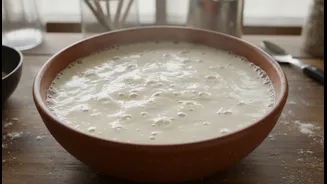
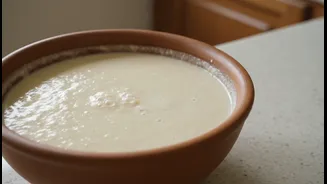
So, how do you adapt your technique for the monsoon? The answer is to rely on observation rather than a clock. Experienced chefs don't just follow a recipe's timing; they read the batter. Here’s how you can too: Start Checking Early: During rainy fortnights, begin checking your batter for signs of fermentation around the 6-hour mark, instead of the usual 8 or 10. Look for Visual Cues: A well-fermented batter will have visibly increased in volume, often doubling in size. It will be light, airy, and filled with tiny bubbles. A slightly domed top is also a good sign. The Smell Test: The aroma is a crucial indicator. Properly fermented batter should have a pleasant, slightly tangy or sour smell, similar to fresh curd. If it smells overly sharp, alcoholic, or unpleasant, it may be over-fermented. Adjust Water Content: Since high humidity adds moisture to the dough, some experts suggest using slightly less water when grinding the batter to begin with. This helps prevent it from becoming too loose or watery.
The Risk of Over-Proofing
The main reason chefs scale down proofing times is to avoid the dreaded over-fermentation. When batter is left out for too long in a humid environment, the microbial activity goes into overdrive. This produces an excess of acid, resulting in idlis and dosas that are overly sour and can have a dense, gummy texture. An over-proofed batter also loses its structure, collapsing in on itself and failing to rise properly when steamed or cooked. By shortening the fermentation window, chefs ensure the batter hits its peak flavour and texture, resulting in perfectly soft, fluffy idlis every time. Once the batter has risen to your satisfaction, it’s best to refrigerate it immediately to slow down the fermentation process.