


Cosmic Nomads Passing Through
Our solar system is a busy place, filled with planets, asteroids, and comets that have been orbiting our Sun for billions of years. But every so often, an object appears that is just passing through. These are interstellar objects: comets or asteroids that were
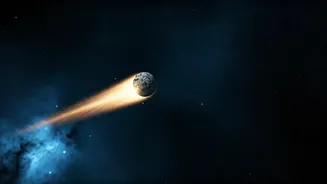
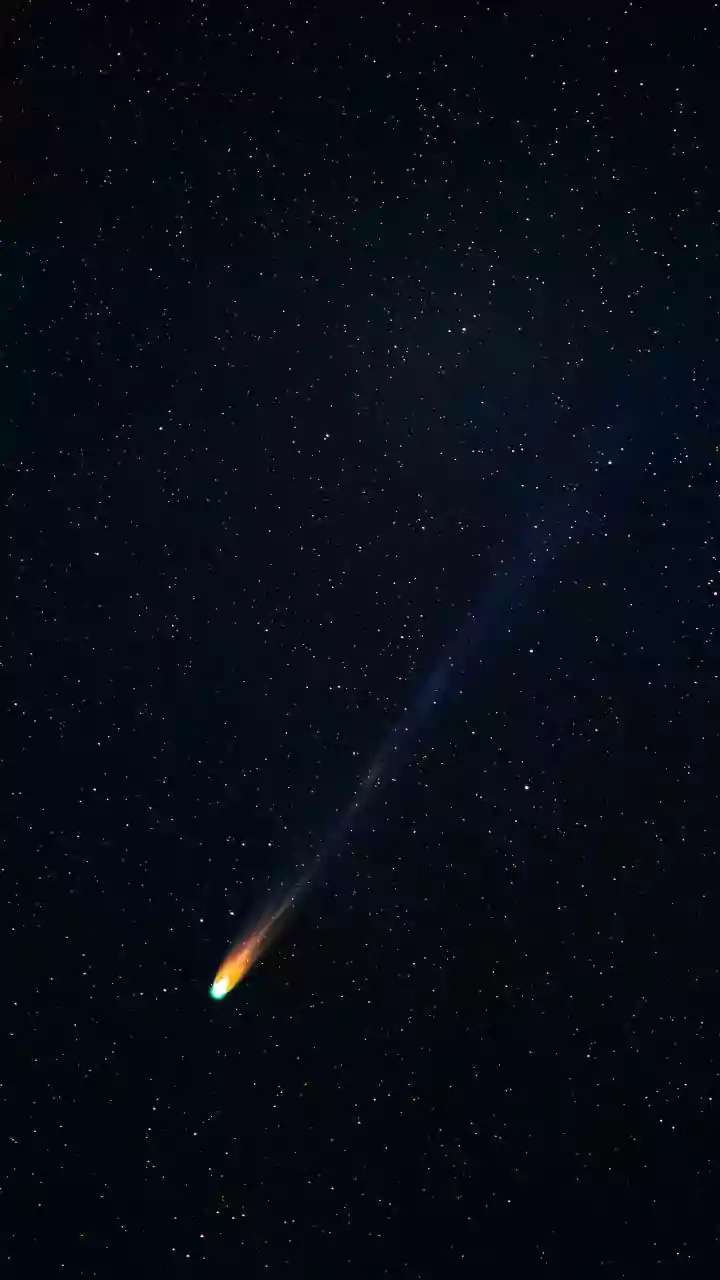
born around another star, ejected from their home system, and sent wandering through the galaxy. They travel through the vast emptiness of space for millions or even billions of years. By complete chance, some of their journeys bring them through our cosmic neighbourhood. Astronomers can identify these visitors by their trajectory. While our solar system's objects follow elliptical paths around the Sun, these travellers move so fast that our Sun's gravity can't capture them. They scream in on a hyperbolic path, swing around the Sun, and head back out into the void, never to return.
The Mysterious Scout: ‘Oumuamua
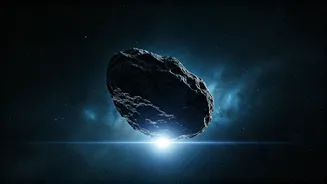
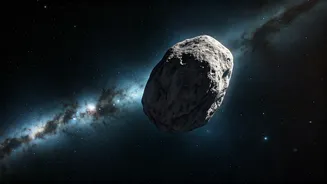
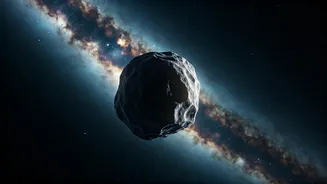
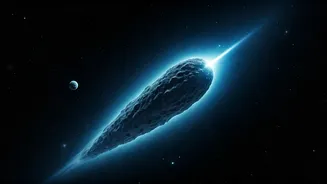
For a long time, interstellar objects were only theoretical. That changed in 2017 with the discovery of 1I/ʻOumuamua, a name that in Hawaiian means “messenger from afar arriving first”. It was nothing like astronomers expected. It was small, perhaps 400 metres long, and had a bizarrely elongated shape, either like a cigar or a flat pancake. Stranger still, it accelerated away from the Sun slightly faster than gravity alone could explain, a push typically caused by ice turning to gas, like a comet's tail. Yet, telescopes saw no tail, no coma of dust and gas. This mystery led to intense debate and even speculation about alien technology, though most scientists favour natural explanations, such as the idea that it was a fragment of a nitrogen iceberg from a distant, Pluto-like world.
A More Familiar Visitor
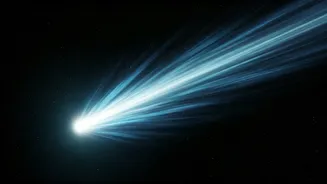
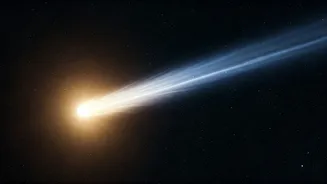
Just two years later, in 2019, a second visitor arrived: 2I/Borisov. Discovered by amateur astronomer Gennadiy Borisov, this object was much more familiar. It looked and behaved like a classic comet, complete with a fuzzy coma and a long tail of dust and gas. For scientists, this was just as exciting as ʻOumuamua's strangeness. Borisov was a direct sample of the chemical building blocks from another solar system. Analysis showed it had a different composition from our comets, with an unusually high concentration of carbon monoxide. This suggested it formed in a very cold, carbon-rich region of its home planetary system, offering a tangible clue about the conditions around another star.
A Message in a Bottle
So, why do astronomers 'love' these objects? Because they are the closest thing we have to a physical sample from another star system. Sending a probe to even the nearest star would take tens of thousands of years. These comets do the travelling for us, delivering a galactic message in a bottle. By studying their light, colour, and composition, scientists can learn about the chemistry of alien worlds. They are remnants from the planet-forming process, offering a snapshot of how other systems are built. Each new visitor helps us understand whether our solar system is typical or an anomaly in the grand scheme of the Milky Way galaxy. Some theories even suggest such objects could transport organic molecules between stars, a concept known as panspermia.
A New Era of Discovery
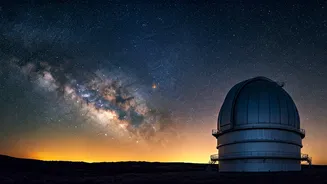
After the first two discoveries, another interstellar comet, 3I/ATLAS, was spotted in 2025. We are now entering a golden age for hunting these celestial nomads. The Vera C. Rubin Observatory in Chile, which began its survey of the sky, is expected to be a game-changer. This powerful observatory will scan the entire visible sky every few days, and scientists predict it will discover dozens of interstellar objects over the next decade. This will transform the field from studying one-off oddities to analysing a whole population of objects. At the same time, the European Space Agency is developing the Comet Interceptor mission, planned for launch around 2029. The idea is to park a spacecraft in space and wait for a pristine, long-period comet—or an interstellar object on the right path—to be discovered, then send the probe to fly right by it for our first close-up look.