







The Body's Hidden Conversation
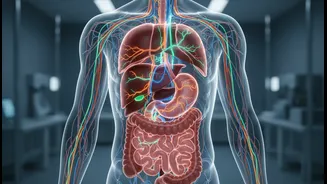
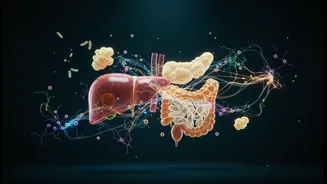
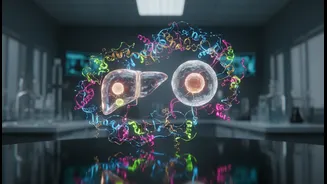
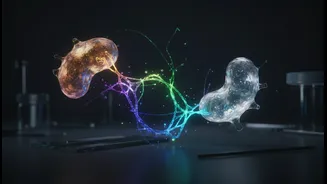
The human body is not a collection of independent parts; it is a highly integrated network. A new frontier in biomedical science is exploring this 'inter-organ crosstalk,' which is the constant communication between different organs. This dialogue is essential
for maintaining whole-body homeostasis—the stable internal environment our bodies need to function. This communication happens through a variety of molecular messengers, but proteins are among the most important. These signals travel through the bloodstream, carrying instructions that can influence everything from our metabolism to our immune response. A disruption in this intricate conversation is now understood to be a root cause of many complex diseases, including diabetes, cardiovascular ailments, and even neurodegenerative disorders.
Proteins as Molecular Messengers
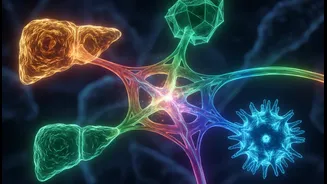
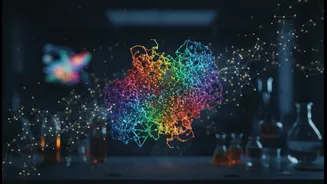
When one organ needs to send a message to another, it often releases specific proteins into the bloodstream. This entire collection of secreted proteins is known as the 'secretome'. These proteins act like keys looking for the right locks (receptors) on the surface of cells in a distant organ. This group of messengers is diverse. It includes well-known communicators like hormones (e.g., insulin from the pancreas) and cytokines, which are small proteins crucial for immune signaling. Scientists are also discovering new classes of these protein signals, such as 'adipokines' from fat tissue, 'myokines' from muscle, and 'hepatokines' from the liver, each with specific roles in regulating health throughout the body. Understanding this protein language is fundamental to grasping how the body coordinates its functions on a systemic level.
Decoding the Signals: How It's Studied
Studying these microscopic messages presents significant challenges. The signals are often present in tiny concentrations, masked by much more abundant proteins in the blood. To overcome this, researchers use advanced technologies. The leading field is 'proteomics,' the large-scale study of proteins. Using a technique called mass spectrometry, scientists can identify and quantify thousands of different proteins in a single sample of blood or fluid. By comparing the secretome of healthy individuals to those with a disease, they can pinpoint which protein signals are going haywire. Another approach involves using sophisticated cell culture models, like organoids or 'organ-on-a-chip' systems, to observe how different cell types communicate in a controlled environment.
From Crosstalk to Disease
When organ communication breaks down, disease often follows. For example, in obesity, inflamed adipose (fat) tissue can release proteins that travel to the liver and muscles, causing them to become resistant to insulin, a hallmark of type 2 diabetes. Similarly, chronic kidney disease can trigger the release of signals that damage the cardiovascular system. There is also growing evidence that signals originating in the gut can influence the brain, contributing to the progression of neurodegenerative diseases like Parkinson's and Alzheimer's. In cancer, tumor cells can hijack these communication pathways to promote their own growth and spread, for instance by sending out signals that cause muscle wasting (cachexia). This reveals that many diseases we once considered organ-specific are actually systemic issues rooted in faulty communication.
The Future: A Systems-Based Medicine
The study of organ-to-organ protein signaling is pushing medicine toward a more holistic, 'systems biology' approach. Instead of just treating the symptoms in one organ, future therapies could target the faulty communication that causes the problem in the first place. For example, identifying specific protein signals could lead to new biomarkers for early disease diagnosis, long before symptoms appear. It could also help develop drugs that block or mimic these signals to restore balance. This shift from an organ-centric view to a network-based understanding promises more precise and effective treatments for some of the most challenging chronic diseases facing society today. It's a fundamental change in how we view the body, from a collection of parts to a beautifully interconnected whole.