


The Persistent Fear of Battery Fires
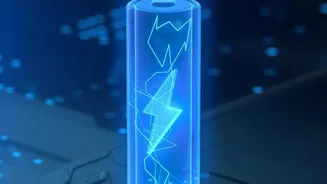
At the heart of nearly every electric vehicle is a lithium-ion battery. While incredibly efficient, these power packs have a known vulnerability. They contain a liquid electrolyte, a chemical soup that allows energy to flow but is also highly flammable.
If a battery is damaged, overcharged, or develops a fault, it can trigger a dangerous chain reaction called 'thermal runaway'. This is where a single overheated cell cascades its heat to neighbouring cells, leading to the release of toxic, flammable gases and potentially a fire that is notoriously difficult to extinguish. This single point of failure has remained a significant concern for consumers and a major engineering challenge for the automotive industry.
A Breakthrough from the Fields
Scientists are now developing a revolutionary solution from one of the world's most abundant resources: agricultural waste. The focus is on lignocellulosic biomass, the tough, structural material that makes up plant stalks and wood. This is the part of the crop often left to rot or, in many parts of India, burned, causing significant air pollution. Researchers have discovered how to process this biomass—waste from crops like sugarcane, wheat, and corn—to create a completely new kind of electrolyte. Instead of a volatile liquid, this process yields a stable, non-flammable substance, often in the form of an 'ionic liquid' or a solid polymer. This transforms a low-value, problematic waste product into a high-value component for the next generation of batteries.
The Science of a Safer Battery
The safety improvement is fundamental. By replacing the flammable liquid electrolyte with a solid or non-flammable ionic liquid derived from plants, the primary fire risk is designed out of the system. There is simply no flammable fuel inside the battery to ignite. This new class of 'green' electrolytes demonstrates high thermal stability, meaning it can withstand higher temperatures without breaking down or catching fire. Early research shows these bio-electrolytes are not only safer but can also be highly effective at conducting ions, which is crucial for battery performance. The goal is to create a battery that offers the power and longevity of lithium-ion without the inherent fire hazard, making EVs fundamentally safer for everyone.
A Win for Sustainability and the Circular Economy
The implications of this technology extend far beyond just vehicle safety. It presents a powerful model for a circular economy, particularly for a country like India. Every year, vast quantities of agricultural residue are burned, contributing to smog and health problems. This breakthrough offers a path to convert that environmental liability into an economic asset. Farmers could potentially gain a new revenue stream by selling crop waste to battery component manufacturers. Furthermore, it reduces the reliance on fossil fuel-derived solvents currently used in battery production. It creates a closed loop: waste from the agricultural sector helps power the transport sector, reducing pollution at both ends of the lifecycle.
The Road from Lab to Highway
While the science is promising, it's important to have realistic expectations about the timeline. This technology is currently in the research and development phase. Scaling up from a laboratory success to mass production for the global auto industry is a complex and capital-intensive process that takes years. Other next-generation technologies like solid-state batteries are also in the race, with major automakers targeting commercial deployment between 2027 and 2030. A similar timeline seems plausible for these bio-based electrolytes. The next steps involve refining the production process, ensuring long-term durability and performance, and convincing manufacturers to integrate it into their supply chains. The journey is long, but the destination is a truly green and safe electric vehicle.