






An Ejection Seat for Astronauts
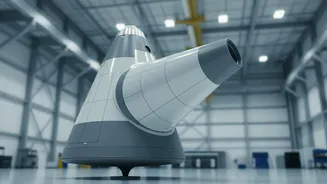
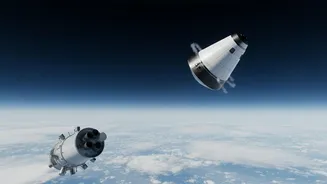
At the heart of this latest achievement is the Crew Escape System (CES). Think of it as the most sophisticated and powerful ejection seat ever built, not for a single pilot, but for the entire capsule carrying the astronauts. The CES is an emergency system
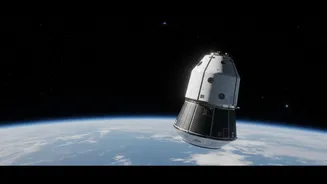
designed to activate in fractions of a second if the launch vehicle malfunctions during its ascent. Its sole purpose is to pull the Crew Module—the pressurized sphere where the astronauts will be—away from the failing rocket with incredible force. This is achieved using a set of specially designed, quick-acting solid motors that fire with immense power, ensuring the crew is propelled to a safe distance before any potential catastrophe unfolds with the main rocket. Validating these powerful thrusters is non-negotiable for ensuring the lives of the 'Gaganauts' are protected above all else.
Why High-Altitude Matters
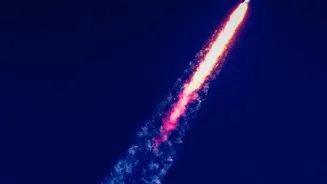
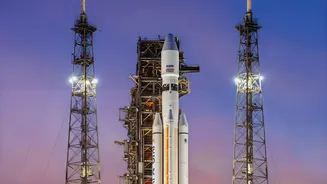
While ISRO has previously conducted tests like the Pad Abort Test to simulate an emergency on the launchpad, this high-altitude flight test is a different and far more complex challenge. An abort scenario during ascent means the rocket is already thousands of metres up, travelling at supersonic speeds and experiencing immense aerodynamic pressure. This test was designed to simulate exactly that kind of mid-flight emergency. The goal was to prove that the Crew Escape System can function flawlessly under the most extreme conditions, detaching from the rocket at high velocity and stabilising itself before beginning its return journey. Successfully performing this manoeuvre at an altitude of around 17 kilometres demonstrates that the escape system can handle the harsh realities of a launch that goes wrong well after lift-off, a critical capability for any human-rated spacecraft.
A Perfect Splashdown
Getting away from the rocket is only half the battle. Once the Crew Escape System has done its job, the Crew Module must return to Earth safely. This is why the tests are conducted over the ocean. After the escape thrusters separate, an automated sequence deploys a series of parachutes to drastically slow the module's descent. The system is designed to bring the capsule down to a gentle splashdown speed in the Bay of Bengal. This recent test validated this entire sequence, from the high-altitude abort to the successful parachute deployment and final splashdown. Indian Navy recovery teams are typically stationed nearby to retrieve the module, practising the same procedures that would be used in a real mission, whether it ends as planned or requires an emergency abort.
The Path to Human Spaceflight
This successful validation is a landmark moment for the Gaganyaan programme. Every human spaceflight mission is built on a foundation of redundancy and safety, and the Crew Escape System is arguably the most critical safety feature of all. By proving its capabilities in a realistic, high-stakes scenario, ISRO has cleared a major technical and psychological hurdle on its path to sending three Indian astronauts into a low-Earth orbit of 400 kilometres. This test builds on years of meticulous work and a series of preceding qualification tests, each one designed to check a different component and scenario. From the structural integrity of the module to the complex separation mechanisms and parachute systems, every part must work perfectly. With the escape system's performance now validated in a demanding flight environment, India moves with greater confidence toward its first uncrewed Gaganyaan test flights, which will pave the way for the historic crewed mission.