



Beyond Illumination: The New Role of Lighting
For years, the approach to lighting in many Indian homes was purely practical: a central fixture for brightness, perhaps a few functional lights in corners. Today, that thinking is fading fast. There is a visible shift from lighting as an afterthought
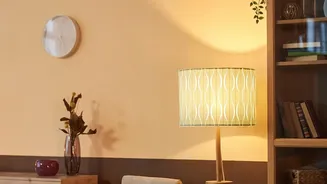
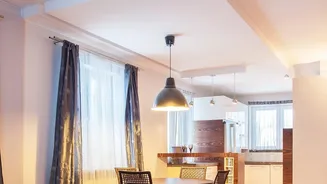
to lighting as a central component of a room's design narrative. Homeowners, architects, and designers are embracing the idea that a light fixture should be as compelling when switched off as it is when switched on. This evolution is driven by rising design consciousness, greater exposure to global trends, and a desire to create personalised, layered interiors that reflect individual taste. The modern approach involves layering ambient, task, and accent lighting to build depth, warmth, and character.
A Renaissance of Indian Craftsmanship
One of the most exciting aspects of this trend is the revival and reinterpretation of traditional Indian crafts. Artisans and design studios are breathing new life into age-old techniques by applying them to contemporary lighting forms. Crafts that were once reserved for decorative objects are now finding expression in stunning lamps and chandeliers. We see the intricate metal-inlay work of Bidri adapted into minimalist forms, the delicate art of leather puppetry and gourd carving used to create unique lampshades, and even weaving techniques applied to create totemic light fixtures. Brands are collaborating with artisan communities to create pieces that are not only beautiful but also support and sustain India's rich craft heritage. This fusion adds a layer of history and soul to modern spaces, offering a bridge between past and present.
The Allure of Tactile and Textured Surfaces
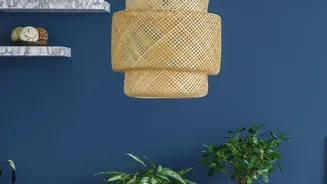
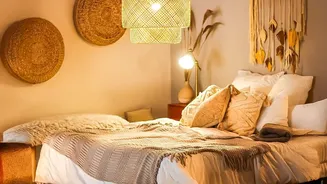
Texture is the unsung hero of modern interior design, and lighting is no exception. The trend is moving away from slick, mass-produced finishes towards materials that engage the senses. Natural fibres like jute, rattan, and even handmade paper are being used to create fixtures that cast a warm, diffused glow. We're also seeing a surge in materials like bouclé, a textured fabric once limited to furniture, now wrapping around lampshades to add softness. Natural stone, particularly travertine and marble, is being carved into solid, monolithic lamp bases that speak of 'quiet luxury'. These materials do more than just look good; they add depth, absorb light in unique ways, and make a space feel more inviting and grounded.
Lighting as Sculptural Art
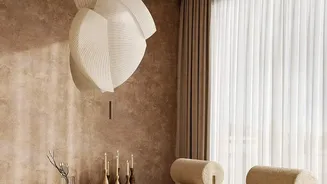
Today's most coveted lights are essentially sculptures that also happen to illuminate a room. Designers are creating bold, expressive, and often oversized pieces that serve as a focal point. Abstract and geometric chandeliers with asymmetrical forms are replacing traditional, ornate crystal fixtures. These statement pieces often feature mixed materials, combining warm metals like brushed brass and copper with elements of smoked or frosted glass. Some designs take inspiration from nature, with botanical or biophilic forms like swirling metallic leaves or fixtures that mimic wildflowers and seed pods. In double-height living rooms or above dining tables, these sculptural lights anchor the space and become conversation starters, demonstrating that lighting's role has expanded from functional to truly artistic.