


For the All-Round Experience: Star Walk 2
Often hailed as one of the best apps for beginners, Star Walk 2 offers a stunning and intuitive interface. Simply point your phone at the sky, and its augmented reality (AR) feature will overlay constellations, planets, and satellites in real-time. The
app uses your device's GPS to show you exactly what's above. It's packed with features like a 'Time Machine' that lets you see the sky in the past or future, detailed information on celestial bodies, and an astronomical calendar to keep you updated on events like meteor showers and eclipses. While the base app is fantastic, a subscription unlocks an even wider universe of stars and deep-sky objects. It’s available for both iOS and Android.
For Simplicity and Quick ID: SkyView Lite
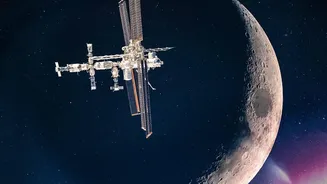
If you want a straightforward app that just works, SkyView Lite is an excellent choice. Its main strength is its simplicity. Like Star Walk 2, you point your device to the sky to identify galaxies, stars, constellations, planets, and even the International Space Station (ISS). The app provides brief but useful information and can function without a Wi-Fi or GPS signal, making it handy for trips to more remote, dark-sky locations. It’s a great, no-fuss entry point into stargazing that helps you learn the basics without feeling overwhelmed by too many features. The 'Lite' version is free, with a paid version available for more features.
For the Aspiring Astronomer: Stellarium Mobile
Stellarium is a classic name in astronomy software, and its mobile version brings a realistic planetarium to your pocket. It shows an accurate simulation of the night sky for any date, time, and location. Beginners will find its minimalist user interface easy to navigate, while those wanting more depth can explore its vast catalogue of stars, nebulas, and galaxies. One of its standout features is the ability to show constellations from different cultures, offering a unique perspective on the stars. The app also has a night mode (red screen) to help preserve your night vision while stargazing. A free version is available, with Stellarium Plus offering access to a much larger database of celestial objects.
For Space News and Missions: The Official NASA App
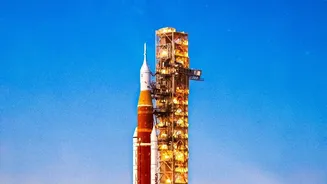
While not a dedicated stargazing map in the same way as the others, the official NASA app is an essential download for any space enthusiast. Considered one of the best for entertainment, it provides a massive library of images, videos, mission information, news, and feature stories. You can get live updates from the International Space Station, learn about upcoming rocket launches, and browse thousands of stunning images from Hubble and the James Webb Space Telescope. It’s the perfect companion app to fuel your curiosity after you’ve identified a planet with another app and want to learn more about the missions exploring it.
Putting Your App to Use
To get the best experience, find a spot away from city lights. Light pollution can wash out fainter stars and meteors. Let your eyes adjust to the darkness for about 15-20 minutes. The red-light 'night mode' feature on apps like Star Walk 2 and Stellarium is designed to protect this dark adaptation. A great opportunity to test your new app is the upcoming Perseid meteor shower. In 2026, it is expected to peak on the night of August 12-13. With the moon being new, the sky will be extra dark, providing ideal conditions for a spectacular show. The Perseids are known for bright, fast meteors and even the occasional fireball.