



Venus: A Tale of Two Planets
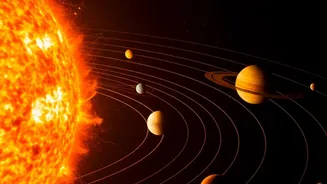
Imagine an Earth-sized planet that took a catastrophic wrong turn. That, in essence, is Venus. It’s similar to our world in size, mass, and density, yet it’s the hottest planet in the solar system, with a surface temperature that can melt lead. Its atmosphere
is over 90 times denser than Earth's and composed almost entirely of carbon dioxide. Scientists believe Venus once may have had liquid water oceans, but it experienced a “runaway greenhouse effect”—a vicious cycle where heat gets trapped, boiling the oceans and filling the atmosphere with more heat-trapping vapour until it became the inferno we see today. Understanding how and why this divergence happened is not just a question for planetary scientists; it holds critical lessons about planetary evolution and climate stability.
Enter Shukrayaan: India's Interplanetary Quest
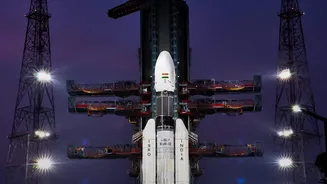
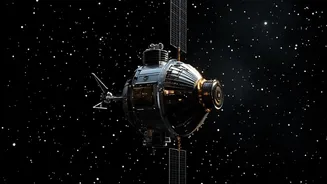
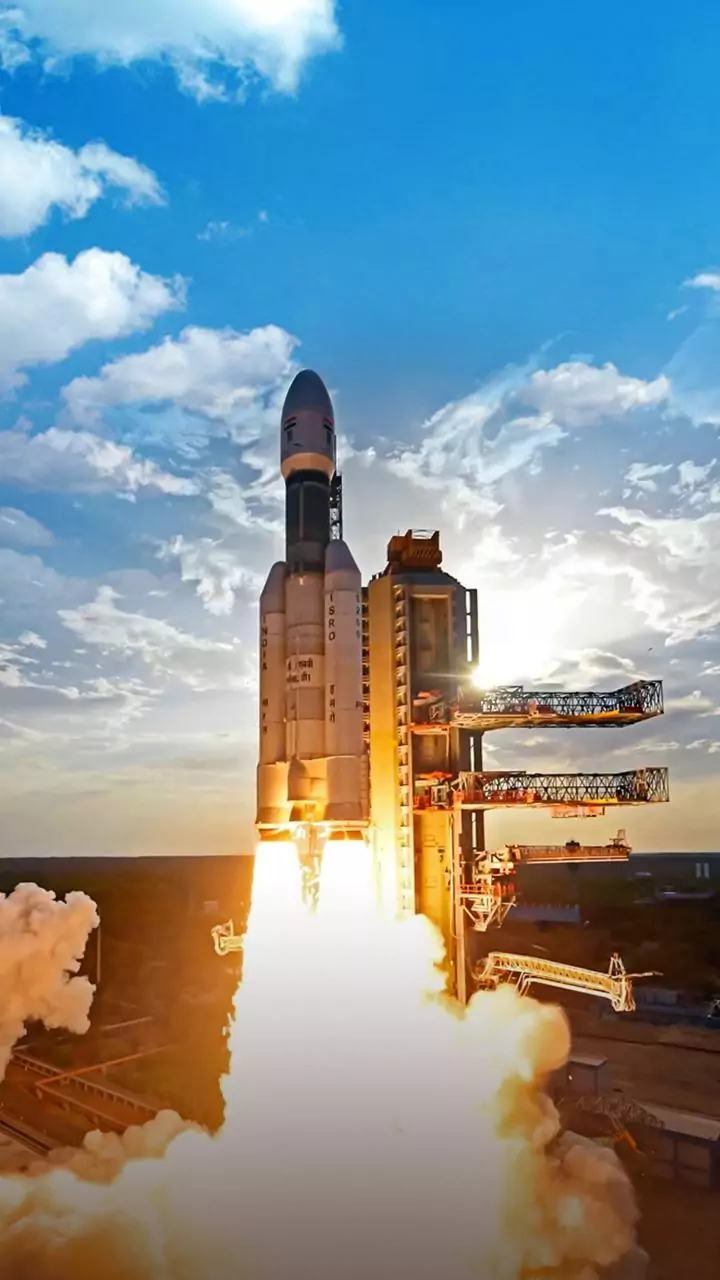
Following the monumental successes of Chandrayaan and the Mars Orbiter Mission (Mangalyaan), the Indian Space Research Organisation (ISRO) is setting its sights on Venus. The Shukrayaan mission, officially the Venus Orbiter Mission (VOM), represents India's first dedicated journey to our nearest planetary neighbour. Formally approved by the government, the mission is currently planned for a March 2028 launch. The spacecraft will embark on a journey of over 100 days to enter a highly elliptical orbit around Venus, beginning a multi-year mission to study the planet in unprecedented detail. This venture places India among an elite group of space agencies aiming to decode the secrets of this challenging world.
The Technology to See the Unseen
So, how do you study a planet that is permanently shrouded in thick, opaque clouds of sulfuric acid? The key is to use instruments that can see in wavelengths beyond visible light. Shukrayaan's primary instrument will be a high-resolution Synthetic Aperture Radar (SAR). Unlike a regular camera, radar can penetrate cloud cover to map the geological features of the surface below, searching for signs of active volcanism and other processes. It will also carry a ground-penetrating radar, a first for Venus, to investigate the shallow subsurface. A suite of other advanced instruments will analyse the composition, structure, and dynamics of the dense atmosphere, measure thermal emissions, and even look for lightning.
What Shukrayaan Aims to Discover
The mission has a comprehensive set of scientific objectives. By mapping the surface and subsurface, scientists hope to understand the planet's geological history and why it lacks the plate tectonics that shape Earth. By studying the super-rotating atmosphere, where winds whip around the planet far faster than the planet itself rotates, researchers aim to solve long-standing mysteries about its dynamics. Another critical goal is to study the interaction between the solar wind—a stream of charged particles from the Sun—and the Venusian ionosphere, which provides clues about atmospheric loss. The mission will also build on international collaborations, carrying instruments developed with partners from Sweden, Russia, and France.
Why Venus Matters for Earth
Studying Venus is not just about understanding another planet; it's about holding up a mirror to our own. Venus serves as a natural laboratory for a climate pushed to its absolute extreme. By analysing its runaway greenhouse effect, scientists can refine the models used to predict climate change on Earth. It provides a cautionary tale of how a planet's climate can be dramatically and irreversibly altered. Exploring Venus helps us answer fundamental questions: How do Earth-like planets evolve? What are the boundaries of habitability? The insights gained from Shukrayaan could provide crucial context for the future of our own planet, making it one of ISRO’s most significant scientific undertakings yet.