



What Exactly Is Sea Ice?
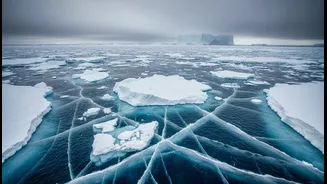
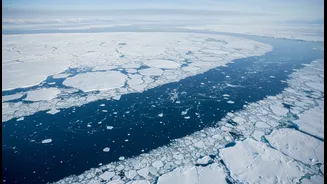
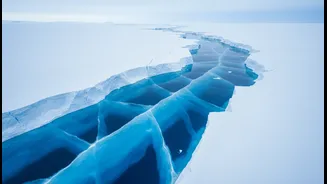
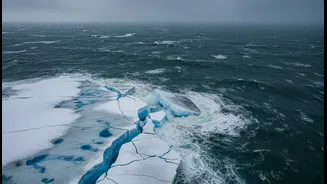
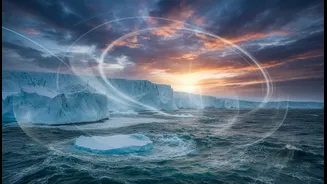
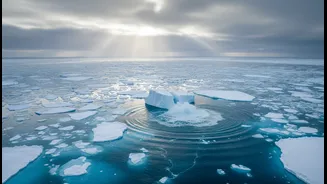
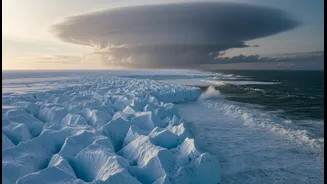
First, let's clarify what we're talking about. Sea ice is simply frozen ocean water. It forms during the cold winter months and melts back during the summer. This seasonal cycle happens in both the Arctic (the North Pole) and the Antarctic (the South
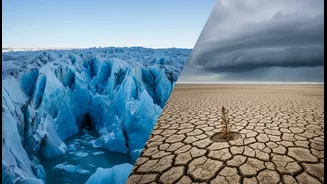
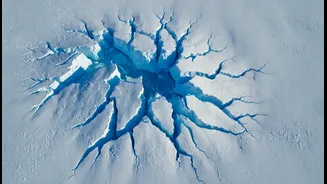
Pole). This massive sheet of white ice acts like a giant mirror for the planet, reflecting the sun's heat back into space. This reflective power, known as the albedo effect, helps keep the polar regions—and by extension, the entire globe—cool. However, as global temperatures rise, this ice is shrinking at an alarming rate. Recent data from early 2026 showed the Arctic's winter ice cover tied for the lowest maximum ever recorded, continuing a decades-long downward trend. When this bright, reflective ice disappears, it exposes the dark ocean water underneath, which absorbs sunlight instead of reflecting it, causing even more warming in a dangerous feedback loop.
How Arctic Melting Disrupts India's Monsoon
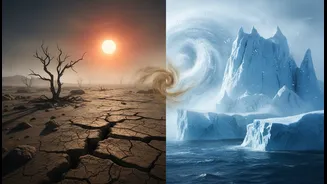
The connection between the Arctic and India's weather lies in the atmosphere. The rapid warming of the Arctic, a phenomenon known as 'Arctic Amplification', disrupts large-scale weather patterns that stretch across the globe. Research, including studies by India's National Centre for Polar and Ocean Research (NCPOR), has found a strong link between declining Arctic sea ice and the behaviour of the Indian summer monsoon. Essentially, changes in the Arctic affect major atmospheric circulations like the jet stream—fast-moving air currents high above the Earth. A warmer Arctic can cause these jet streams to become wavier and more erratic. This disruption alters pressure systems over Asia, which in turn influences the onset, intensity, and distribution of monsoon rainfall. Studies have shown this can lead to unpredictable outcomes: reduced rainfall in western and peninsular India in some conditions, but increased, intense rainfall in central and northern India in others. The result is a monsoon that is becoming more volatile—swinging between devastating floods and prolonged droughts.
The Direct Threat to Our Coastline
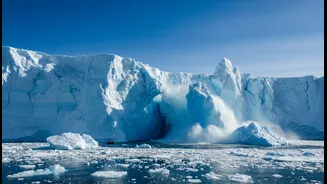
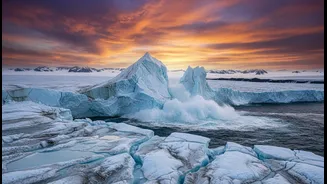
While Arctic ice melt contributes indirectly to sea-level rise, the melting of land-based ice sheets in Greenland and Antarctica is the primary driver. Every bit of melted land ice adds water to the ocean. For India, with its vast 7,500-kilometre coastline, this is an immediate threat. Sea levels along India's coast are rising, with some estimates projecting an increase of up to one metre by the end of the century. This doesn't just mean a slow creep of water inland. It means more frequent and severe coastal flooding, especially during storms and cyclones, which are also becoming more intense due to warmer ocean temperatures. Cities like Mumbai, Kolkata, and Chennai are facing a heightened risk of inundation. Furthermore, rising seas lead to increased erosion, which is already affecting about a third of India's coastline, and saltwater intrusion into freshwater sources, threatening drinking water supplies and agriculture for millions.
A Warning for the 'Third Pole'
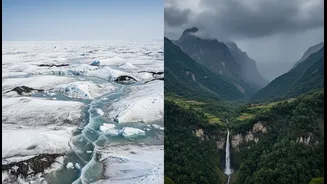
The impact of polar warming isn't confined to the poles. The Hindu Kush Himalayan region is often called the 'Third Pole' because it holds the largest volume of ice and snow outside of the Arctic and Antarctic. These glaciers are the source of major rivers like the Ganga, Indus, and Brahmaputra, which support over a billion people. Just as in the Arctic, temperatures in the Himalayas are rising faster than the global average, causing glaciers to melt at an unprecedented rate. While this initially increases water flow, it also raises the risk of catastrophic Glacial Lake Outburst Floods (GLOFs), where meltwater lakes burst their natural dams. In the long run, the shrinking of these glaciers threatens to turn these mighty, year-round rivers into seasonal ones, drastically reducing water availability for drinking, agriculture, and hydropower, and creating a severe water crisis for a massive part of India's population.