







Jodhpur's New Gateway Opens
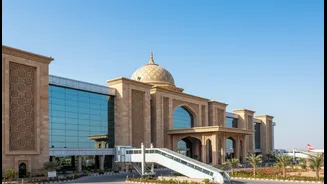
On July 4, 2026, Jodhpur inaugurated a state-of-the-art terminal building, a significant upgrade for one of Rajasthan's key cities. Developed by the Airports Authority of India at a cost of ₹480 crore, the new terminal is designed to handle a much larger
volume of traffic. Spread across more than 23,000 square metres, it can accommodate up to 2 million passengers annually and 1,500 during peak hours. This is a massive increase compared to the old terminal's capacity of about 4 lakh passengers per year. The new building features modern amenities like 20 check-in counters, advanced baggage systems, and six aerobridges to facilitate smoother movement. The design itself is a nod to Rajasthan's royal architectural heritage, incorporating elements like arches and jharokhas while meeting modern standards for energy efficiency.
Understanding the UDAN Scheme
UDAN, which stands for Ude Desh ka Aam Nagrik ('Let the Common Citizen of the Country Fly'), is a Government of India initiative launched in 2016. Its primary goal is to make air travel affordable and accessible, especially by connecting underserved and unserved airports in Tier-2 and Tier-3 cities. The scheme works by providing Viability Gap Funding (VGF) to airline operators, essentially a subsidy to encourage them to fly on routes that might not be immediately profitable. In return, a certain number of seats on these flights are sold at a capped, subsidised price. Since its inception, the scheme has successfully operationalised hundreds of routes, connecting dozens of airports and benefiting over 1.66 crore passengers.
What's New in 'Modified UDAN'?
The government has now launched a revamped version, often called Viksit UDAN or Modified UDAN. Approved in March 2026 and officially launched in July, this next phase comes with a massive outlay of nearly ₹29,000 crore to be spent over the next ten years. The focus is now much stronger on building infrastructure from the ground up. The plan includes developing 100 new aerodromes from existing unserved airstrips, with an investment of over ₹12,000 crore. Additionally, it allocates funds to build 200 modern helipads to improve connectivity in hilly and remote areas. The scheme will also continue to provide VGF to airlines to ensure routes remain viable, alongside support for the maintenance of these smaller airports.
Connecting the Dots: Terminal and Scheme
The inauguration of Jodhpur's new terminal at the same time as the launch of Modified UDAN is no coincidence. It's a clear signal of a two-pronged strategy: building the physical capacity to handle more flights while simultaneously creating the policy framework to encourage those flights. A bigger, more efficient airport like Jodhpur's is essential to support the new regional routes that the Modified UDAN scheme aims to create. An airline is more likely to launch new services to a city that can handle increased passenger flow smoothly. This symbiotic relationship is crucial for transforming Tier-2 cities like Jodhpur into major regional hubs, not just tourist destinations. The government's vision is to ensure infrastructure and connectivity grow hand-in-hand.
The Practical Impact for You
So, what does this all mean for the average traveller and the local economy? For starters, it means more choice. The goal of Modified UDAN is to create more direct flights between smaller cities, reducing the need to transit through major metros like Delhi or Mumbai. This should lead to more competitive fares and reduced travel times. For Jodhpur and western Rajasthan, the increased capacity and connectivity are expected to provide a significant boost to tourism, trade, and investment. A modern airport creates a better first impression for tourists and makes the region more attractive for business. This can lead to job creation and broad economic growth, fulfilling the ultimate goal of making aviation an engine for regional development.