


The Foundation: Your Body as a Barbell
The secret to building muscle isn't about lifting the heaviest weights; it's about challenging your muscles consistently. This is called progressive overload. Whether you use a dumbbell or your own body, the principle is the same: to get stronger, your muscles need
to work against a resistance that is slightly more challenging than what they are used to. Bodyweight exercises are a fantastic way to do this. They are convenient, can be done anywhere, and force you to engage multiple muscle groups at once, which improves balance and functional strength.
Form First, Always
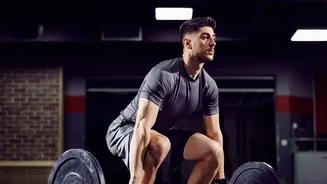
Before you aim for a high number of repetitions, your top priority must be proper form. Good form ensures you are targeting the correct muscles and, most importantly, helps prevent injury. Each movement should be controlled and deliberate. Pay attention to your posture, keep your spine neutral, and engage your core for stability. Focusing on a strong mind-muscle connection—consciously thinking about the muscles you are activating—will make every repetition more effective. Quality over quantity is the golden rule of strength training.
The Core Four: Essential Bodyweight Exercises
You don't need dozens of complicated exercises. Mastering a few fundamental movements will build a solid foundation of full-body strength. These four exercises are the bedrock of any effective bodyweight routine: Push-ups for upper body and core, Squats for lower body power, Lunges for balance and single-leg strength, and Planks for core stability. Together, they work nearly every muscle in your body, making them incredibly efficient.
Upper Body Power: The Push-Up
The push-up is the ultimate upper-body exercise, targeting your chest, shoulders, and triceps. To perform it correctly, start in a high plank position with your hands slightly wider than your shoulders. Lower your body until your chest is close to the floor, keeping your back straight and core tight. Then, push back up. If a standard push-up is too hard, start with incline push-ups (hands on a table or chair) or push-ups on your knees. The goal is to maintain a straight line from your head to your heels (or knees).
Lower Body Strength: Squats and Lunges
Squats are essential for building powerful legs and glutes. Stand with your feet shoulder-width apart and lower your hips as if you’re sitting in a chair, keeping your chest up and back straight. Lunges take this a step further by training each leg individually, which helps correct strength imbalances. For a lunge, step forward or backward and lower your hips until both knees are bent at a 90-degree angle. Push through your front foot to return to the start. Proper knee alignment is crucial in both exercises to protect your joints.
Core Stability: The Plank
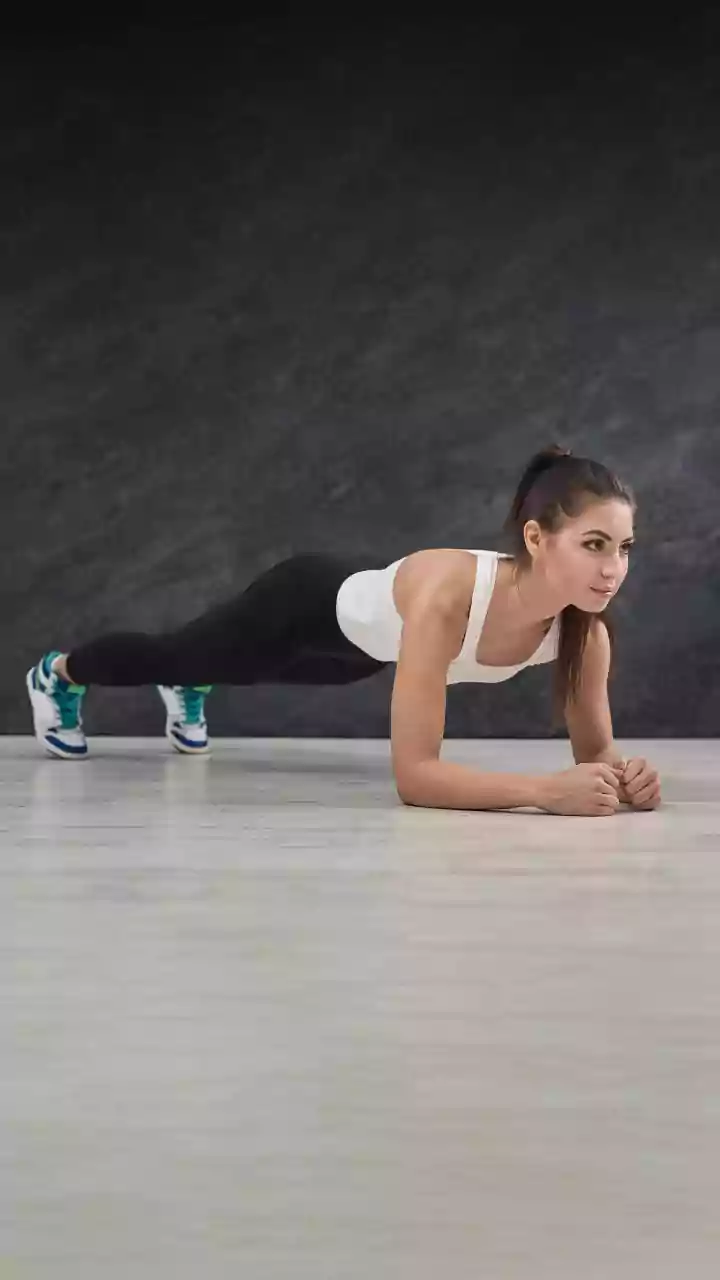
A strong core is the foundation of all movement. The plank is one of the best exercises to build endurance and stability in your abdominal and back muscles. Hold a push-up position, either on your hands or forearms, keeping your body in a perfectly straight line from head to heels. Avoid letting your hips sag or rise too high. Start by holding for 20-30 seconds and gradually increase the time as you get stronger. You can also try variations like side planks to target your obliques.
How to Keep Getting Stronger
To continue building muscle, you must consistently make your workouts more challenging. Once you can comfortably perform an exercise for 12-15 repetitions with perfect form, it's time to progress. You can do this by increasing the number of repetitions or sets, reducing your rest time between sets, or, most effectively, by moving to a more difficult variation of the exercise. For example, progress from knee push-ups to full push-ups, or from standard squats to jump squats or single-leg squats. This ensures your muscles are always adapting and growing stronger.