





As India’s ambitious Gaganyaan mission prepares to send astronauts into orbit, a unique challenge is being tackled right here on Earth: what will they eat? This is not just about packing snacks; it's a high-tech culinary quest.
The Ultimate Meal Prep Challenge
When you’re orbiting the
Earth at 28,000 kilometres per hour, you can’t just order a takeaway. Every single meal for India's first human spaceflight mission, Gaganyaan, must be planned, prepared, and packaged years in advance. This task has fallen to the scientists at the Defence Food Research Laboratory (DFRL) in Mysuru, a lab under the DRDO with decades of experience in creating specialised food for the armed forces. For Gaganyaan, they are pushing the boundaries of food technology. The goal is to provide Indian astronauts with a taste of home, ensuring the food is not only nutritious and safe but also comforting during a mission in the isolated, extreme environment of space.
No Crumbs Allowed
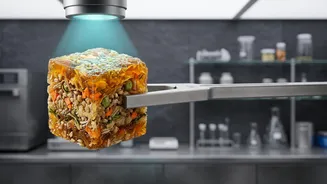
Eating in space is governed by one fundamental rule: no mess. In the microgravity environment of a spacecraft, a stray crumb from a biscuit or paratha doesn’t fall to the floor. Instead, it floats, posing a serious risk if it gets into an astronaut’s eyes or clogs critical electronic equipment. Similarly, liquids like water or dal can’t be poured into an open cup; they would form floating globules. This is why space food must be carefully engineered to have low fragmentation. DFRL scientists use techniques and food binders to ensure meals stay intact. Liquids and beverages are stored in special packets, consumed using straws that prevent any droplets from escaping.
A Taste Of India In Orbit
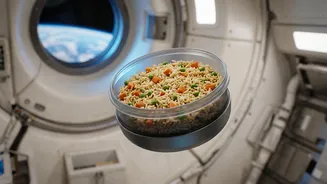
So, what will India's astronauts be dining on? The menu is a delightful mix of familiar Indian comfort foods, designed to cater to the national palate. Both vegetarian and non-vegetarian options are available. The list includes dishes like chicken biryani, vegetable pulao, shahi paneer, dal makhani, aloo paratha, and khichdi. For breakfast, there might be idli-sambar or upma. And for dessert, astronauts can look forward to moong dal halwa or sooji halwa. Even staples like mango pickle are on the menu, ensuring the crew gets a true taste of home. These meals are developed in consultation with the astronauts to ensure they are palatable and enjoyable.
The Science Behind The Menu
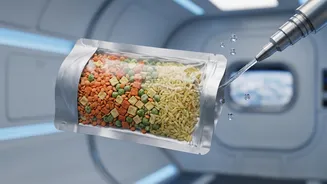
Creating this menu is a scientific feat. One major hurdle is that astronauts' sense of taste and smell is often dulled in space, similar to having a cold. This is due to fluid shifts in the body caused by microgravity. To counter this, the food is made flavourful, and reports suggest extra spice sachets may be included for those who prefer a spicier palate. Nutritionally, each astronaut requires about 2,500 calories a day. The meals are fortified with essential nutrients and designed with controlled salt levels and adequate fibre to support bone and gut health in space. To ensure a long shelf life without refrigeration, the food is preserved using methods like dehydration, thermostabilisation (heating to sterilise), and irradiation. To prepare a meal, an astronaut will simply inject a measured amount of water into the food packet and often warm it in a specially designed heater.