




What Are Green Crackers?
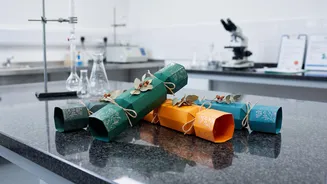
First, let's clear up a common misconception: green crackers are not pollution-free. They are, however, designed to be significantly less harmful to the environment than traditional firecrackers. Developed by the Council of Scientific and Industrial Research
(CSIR) and its National Environmental Engineering Research Institute (NEERI), these crackers have a modified chemical composition to reduce emissions by 30-40%. They aim to balance the cultural traditions of Diwali with the urgent need to curb air and noise pollution, a compromise framed by Supreme Court rulings. The core idea is to allow for celebration without the severe environmental and health consequences associated with conventional fireworks.
The Chemical Standard: What's Banned
The most important standard for green crackers involves the chemicals they contain—or rather, what they don't contain. Following Supreme Court orders, green crackers are strictly forbidden from using certain toxic and heavy metals. The biggest prohibited ingredient is barium nitrate, a chemical that was a staple in traditional crackers and a major cause of particulate matter pollution. Additionally, a ban is in place on hazardous elements like arsenic, lithium, antimony, mercury, and lead. Instead, formulations for green crackers use substitutes like potassium nitrate or strontium salts. The goal is to eliminate the most dangerous compounds that linger in the air long after the festivities are over.
Emission and Noise Reduction Rules
Beyond the chemical bans, green crackers must meet specific performance standards. A key requirement is a significant reduction in particulate matter (PM) emissions, generally targeted at 30% or more compared to their traditional counterparts. This is achieved through optimised fuel-to-oxidant ratios and additives like zeolites that help suppress dust. There are also strict noise limits. The sound produced by a green cracker must not exceed a prescribed limit, often cited around 125 decibels. Some green cracker variants, like SWAS (Safe Water Releaser), even release water vapour, which helps to settle dust and pollutants. These standards ensure that the crackers are not just chemically safer but also contribute less to both air and noise pollution.
The Approval and Licensing Process
For a manufacturer to legally produce and sell green crackers, they must follow a two-step approval process. First, their cracker formulations must be tested and validated by CSIR-NEERI to ensure they meet the required chemical and emission standards. Once NEERI provides a report for an approved formulation, the manufacturer must then get a licence from the Petroleum and Explosives Safety Organisation (PESO). PESO is the government body that regulates the manufacturing, storage, and sale of all explosives in India, including fireworks. Only manufacturers with a valid PESO licence for NEERI-certified formulations can legally produce green crackers.
How to Identify Genuine Green Crackers
For consumers, telling the difference between a genuine green cracker and a counterfeit one is crucial. All legitimate green cracker packages must display two key identifiers. The first is the official CSIR-NEERI green logo. The second, and perhaps more important, is a scannable QR code. When you scan this QR code with your smartphone, it should lead you to a page that verifies the product's authenticity and provides details about its manufacturing. If a box is missing these marks, or if the QR code doesn't work or leads to an unrelated page, it is likely not a compliant green cracker. Buying from licensed sellers and checking for these official marks ensures you are complying with the law and celebrating more responsibly.