







The Unskippable Safety Net: ABS
Let’s start with the most critical feature for any monsoon machine: the Anti-lock Braking System (ABS). On slick, rain-washed roads, the greatest danger is your wheels locking up during sudden braking, leading to a skid. ABS prevents this by rapidly modulating
brake pressure, allowing you to maintain steering control even during a panic stop. Single-channel ABS (acting on the front wheel) is good, but dual-channel ABS (acting on both wheels) is the gold standard for wet conditions. It’s the single most important piece of technology that separates a manageable rainy ride from a hazardous one. When you're navigating unpredictable city traffic on a wet evening, knowing your brakes won't lock up provides a level of confidence that is simply priceless.
Grip and Go: The Right Tyres
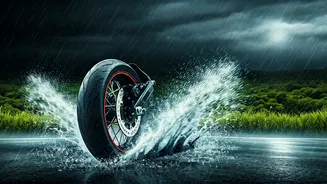
Your tyres are your only connection to the road, and in the rain, their job becomes exponentially harder. The 'ultimate' rainy ride has tyres that are designed to effectively channel water away from the contact patch, reducing the risk of aquaplaning. Look for tyres with deep, well-defined grooves and a softer rubber compound that offers better grip on wet tarmac. It’s not just about the type of tyre, but its condition. Riding on bald or worn-out tyres during the monsoon is an invitation for disaster. Before the season begins, check your tyre tread depth. If it's below the recommended limit, a new set of tyres is not an expense—it's an essential safety investment.
Protected Internals: Engine and Electricals
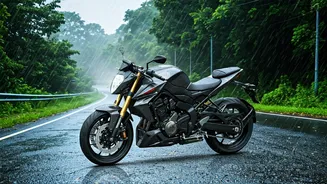
A bike that sputters to a halt in the middle of a downpour is nobody’s idea of 'ultimate'. Water and electronics are natural enemies. A great rainy-day bike has well-sealed electrical components. Look for covered wiring harnesses, protected fuse boxes, and a battery that is shielded from direct water spray. Similarly, the engine character matters. An engine with aggressive, jerky power delivery can easily overwhelm traction on a wet surface. A bike with smooth, linear, and predictable power output allows for much finer control, letting you gently apply torque without spinning the rear wheel. This is why many adventure-tourers and modern commuter bikes, with their refined fuel-injection systems, perform so admirably in the wet.
Visibility Is a Two-Way Street
During a heavy downpour, visibility drops dramatically for everyone. You need to see, and you desperately need to be seen. Modern LED lighting is a massive advantage here. A powerful LED headlamp can cut through the rain and spray far better than a conventional halogen bulb, illuminating potholes and other hazards hidden by the water. Equally important is a bright, conspicuous tail lamp and functioning indicators. This ensures that the car or truck behind you has a better chance of seeing you brake or turn. Some riders even add auxiliary lights or reflective tape to their bikes and gear, a small but highly effective trick to increase your presence on the road.
Built to Endure: Ergonomics and Build Quality
Finally, consider the physical design of the motorcycle. An upright, comfortable riding position (often found on commuter bikes and ADVs) gives you better command and visibility than an aggressive, hunched-over sport riding posture. You can scan the road ahead more effectively for water-filled potholes or obstacles. Good ground clearance and well-designed mudguards are also crucial. They help in clearing waterlogged streets without the engine drowning and reduce the amount of filthy water sprayed onto you and the bike's critical components. A bike built with high-quality, rust-resistant parts will also better withstand the relentless assault of moisture, ensuring it remains reliable season after season.