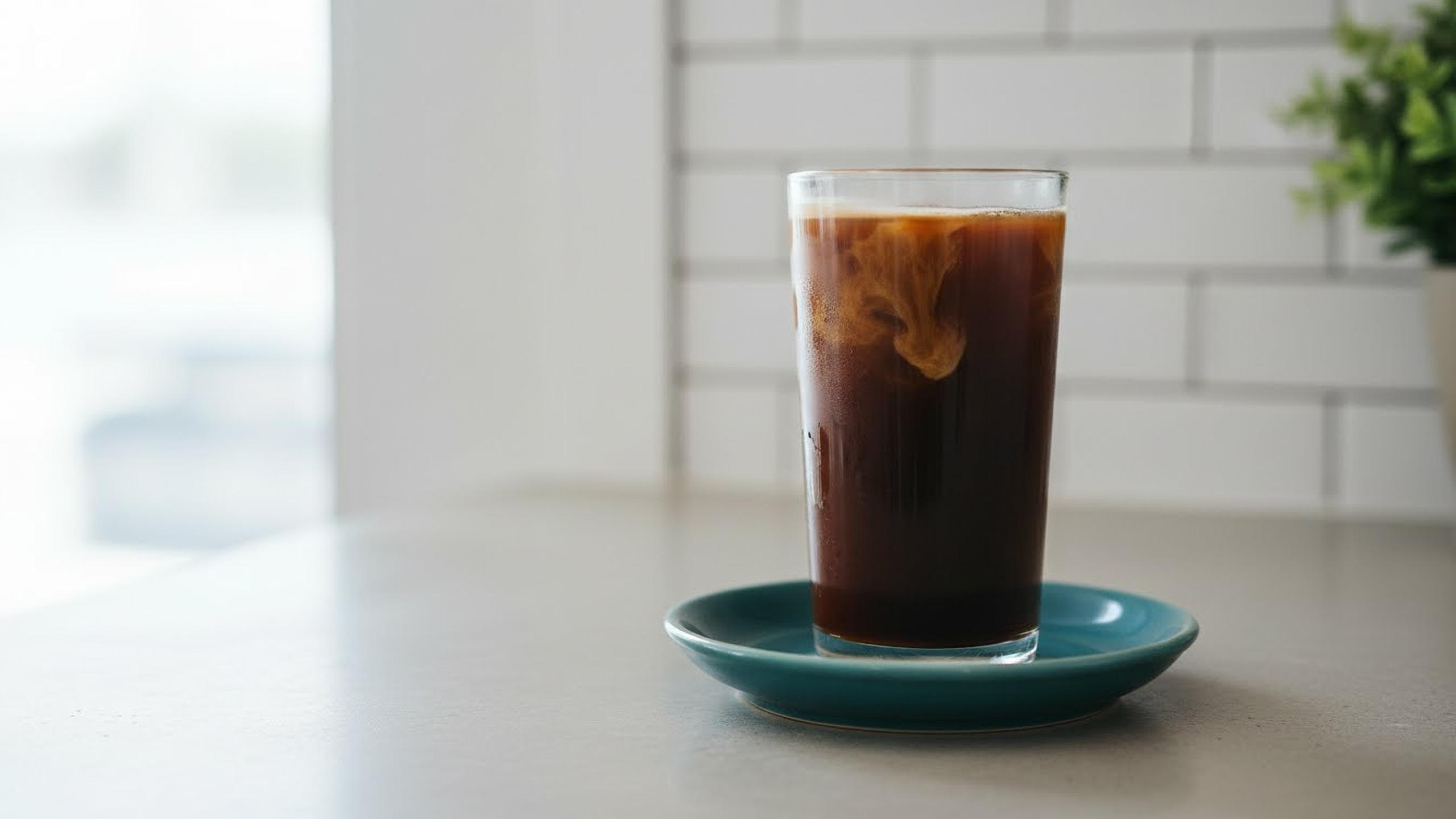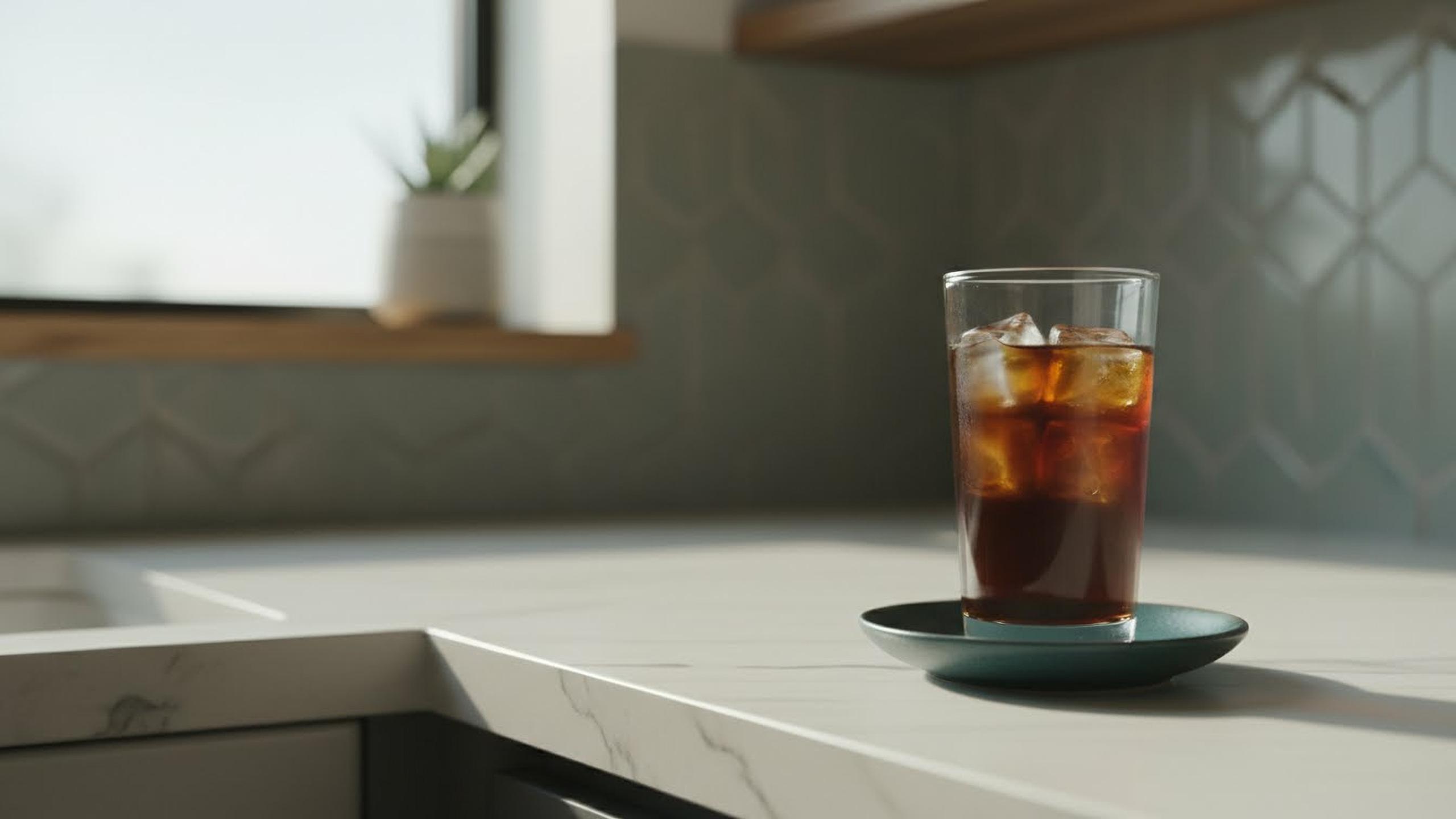








Why Cold Brew is Naturally Smoother
The secret to cold brew's signature mellow taste lies in the temperature. Unlike regular coffee that uses hot water to quickly extract flavour, cold brew steeps grounds in cold or room-temperature water for an extended period, typically 12 to 24 hours.
This slow, gentle process fundamentally changes the chemical extraction. Hot water pulls out more of the coffee bean's acidic compounds, which can lead to a sharp or bitter taste. Cold water, on the other hand, extracts fewer of these compounds, resulting in a coffee that is significantly less acidic and naturally sweeter. Many find this method produces a coffee that is easier on the digestive system.
Gathering Your Basic Equipment
You don’t need a dedicated cold brew maker to get started. In fact, you likely have everything you need in your kitchen right now. The essentials are simple: a large container for brewing, a filter, and another vessel to store the final product. A large glass mason jar, a pitcher, or even a French press will work perfectly as your brewing container. For filtering, you have several options. A fine-mesh sieve, cheesecloth, a nut milk bag, or even a clean tea towel or a standard paper coffee filter placed in a strainer will effectively separate the grounds from your finished brew.
The Right Coffee and Grind Size
While you can use any coffee beans you enjoy, darker roasts tend to be naturally lower in acidity, making them a great choice for this brewing method. The most critical factor, however, is the grind size. For cold brew, you must use a coarse grind, similar in texture to raw sugar or breadcrumbs. Using a grind that is too fine will result in a cloudy, silty, and often bitter coffee because it over-extracts. If you don't have a grinder at home, you can buy whole beans from a local coffee shop and ask them to grind it for you on a coarse setting.
Finding Your Perfect Ratio and Steep Time
The ratio of coffee to water determines the strength of your brew. A great starting point for a versatile concentrate is a 1:8 ratio by weight—that means for every 1 gram of coffee, you'll use 8 grams of water. If you don't have a scale, a ratio of about 1 cup of coffee grounds to 4 cups of water is a good approximation. Once combined, the steeping process can take anywhere from 12 to 24 hours. A good sweet spot for balanced flavour is between 16 and 18 hours. You can steep your coffee on the counter at room temperature for a slightly faster extraction or in the refrigerator. Steeping longer than 24 hours is not recommended, as it can introduce woody and bitter flavours.
Step-by-Step Brewing and Straining
Making your cold brew is a simple process of combining and waiting. First, add your coarsely ground coffee to your jar or pitcher. Next, pour the cold, filtered water over the grounds, ensuring you stick to your desired ratio. Stir gently with a long spoon to make sure all the grounds are fully saturated. Cover the container and let it steep at room temperature or in the fridge for your chosen duration, anywhere from 12 to 24 hours. When the time is up, it's time to filter. Slowly pour the coffee concentrate through your chosen filter (cheesecloth, fine-mesh sieve, etc.) into a clean container. Avoid squeezing or pressing the grounds, as this can force out bitter compounds.
Storing and Serving Your Concentrate
Congratulations, you've just made cold brew concentrate. Because it's quite strong, it's meant to be diluted. A common starting point is a 1:1 or 1:2 ratio of concentrate to water or milk. Pour your desired amount of concentrate over a glass full of ice, then top it off with cold water, milk, or a plant-based alternative. Give it a stir and taste. You can adjust the strength by adding more water or more concentrate. Your homemade cold brew can be stored in a sealed container in the refrigerator for up to a week, though the flavour is best within the first few days.