


Understanding Cat-Cow
Cat-Cow is not one, but two poses linked together by breath and movement: Marjaryasana (Cat Pose) and Bitilasana (Cow Pose). You flow between them to create a sequence that gently massages the spine, improves flexibility, and prepares your body for more
activity. It's frequently used at the beginning of yoga classes as a warm-up, but it's also a fantastic standalone stretch to do in the morning to ease stiffness or after a long day of sitting. The rhythmic motion helps to increase circulation to the discs in your spine, release tension in the back and neck, and calm the mind.
How to Do Cat-Cow Step-by-Step
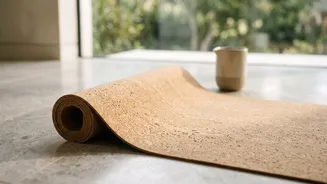
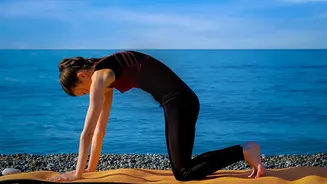
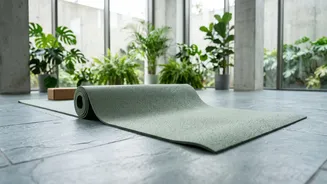
Proper alignment is key to getting the most out of this pose and preventing strain. Start on a yoga mat or a soft surface to cushion your joints. Begin in a tabletop position on your hands and knees. Place your hands directly under your shoulders and your knees directly under your hips, creating a 'box' shape with your body. Spread your fingers wide to distribute your weight evenly, and keep your spine in a neutral, straight line. Your gaze should be soft and directed towards the floor between your hands.
The Flow: Movement and Breath
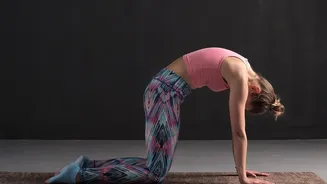
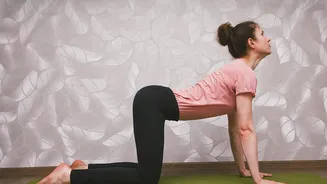
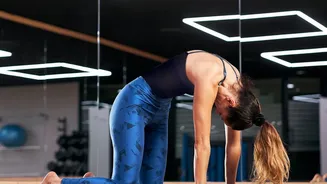
The magic of Cat-Cow lies in syncing your movement with your breath. Move slowly and intentionally. From your neutral tabletop position: 1. Inhale for Cow Pose (Bitilasana): As you take a slow breath in, drop your belly toward the floor. Lift your chest and tailbone toward the ceiling, creating an arch in your spine. Broaden across your collarbones and look gently forward or slightly upward without crunching your neck. 2. Exhale for Cat Pose (Marjaryasana): As you breathe out, reverse the movement. Press firmly into your hands to round your spine toward the ceiling, like a cat stretching its back. Tuck your tailbone under and gently release your head, bringing your chin toward your chest. Feel the stretch between your shoulder blades. Continue flowing between Cow on your inhales and Cat on your exhales. Aim for 5 to 10 rounds, focusing on the sensation of each vertebra moving.
Major Benefits for Your Body and Mind
Even a few minutes of Cat-Cow can offer significant benefits. Physically, it improves spinal flexibility and mobility, which can help alleviate back pain, especially from prolonged sitting. It stretches the muscles of the back, neck, shoulders, chest, and abdomen. The gentle movement also massages the abdominal organs, which can aid in digestion. Mentally, the synchronized breath and movement have a calming effect on the nervous system, helping to reduce stress and improve focus. It’s a form of active meditation that enhances body awareness and promotes a sense of balance.
Common Mistakes to Avoid
To ensure a safe and effective practice, watch out for a few common errors. First, avoid rushing the movement; slow, controlled motions provide the most benefit. Second, don't let your lower back sag excessively in Cow Pose, which can compress the spine. Instead, focus on lengthening from your tailbone to the crown of your head. Also, be mindful not to crunch your neck by looking up too far in Cow Pose; keep it as a natural extension of your spine. Finally, make sure to press the floor away in Cat Pose to truly round the upper back, rather than just dropping your head.
Modifications for Every Body
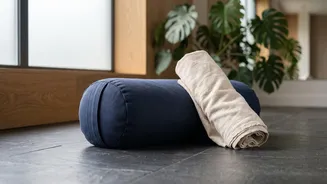
Cat-Cow is highly accessible, but you can adjust it to fit your needs. If you have sensitive knees, place a folded blanket or towel underneath them for extra cushioning. For wrist pain, you can come down onto your forearms instead of your hands, or make fists and rest on your knuckles. If being on your hands and knees isn't comfortable, you can perform a seated version of Cat-Cow in a chair. Simply place your hands on your knees and follow the same spinal movements, inhaling to arch your back and exhaling to round it.