




What Exactly Are Making Charges?
Making charges are simply the fee you pay for the labour and craftsmanship required to transform raw gold into a piece of wearable jewellery. This cost covers everything from the initial design to the intricate work of the artisan and the final polishing.
It’s a separate cost from the value of the gold itself and can range significantly, typically from 6% to as high as 25% of the gold's value. Since these charges are not recovered when you sell or exchange the jewellery, minimising them at the time of purchase is key to a smarter investment.
How Jewellers Calculate These Charges
Jewellers in India primarily use two methods to calculate making charges. The first is a percentage of the total gold value. For example, if a piece has gold worth ₹1,00,000 and a making charge of 15%, you will pay ₹15,000 for labour. The second method is a fixed rate per gram of gold, such as ₹500 per gram. For a 10-gram chain, this would amount to ₹5,000 in making charges. The per-gram method is often more transparent, as the percentage-based charge can fluctuate if the daily gold rate changes, even though the labour involved remains the same. Always ask your jeweller to clarify which method they are using.
Making Charges vs. Wastage Charges
Another term you'll frequently encounter is 'wastage charges' or 'Value Addition' (VA). This fee is meant to compensate the jeweller for the tiny amount of gold that is lost or 'wasted' during the manufacturing process—for instance, when cutting, filing, or polishing. This typically ranges from 5% to 7% but can be higher for complex designs. Some jewellers bundle making and wastage charges together under a single 'VA' heading, while others list them separately. It is crucial to ask for a detailed bill that breaks down the cost of gold, making charges, and wastage charges individually.
The Power of Negotiation
Contrary to what some might believe, making charges are almost always negotiable. Unlike the daily gold rate, which is fixed, the making charge is part of the jeweller's margin and often has room for discussion. This is especially true for simpler, machine-made items or during bulk purchases for weddings. Don't hesitate to compare the charges at two or three different stores before making a decision. During festive seasons, many jewellers run offers with discounts or waivers on making charges, which can lead to significant savings.
Design Complexity and Jewellery Type Matter
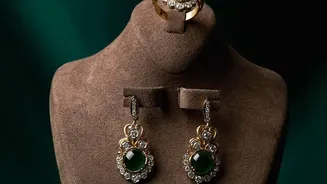
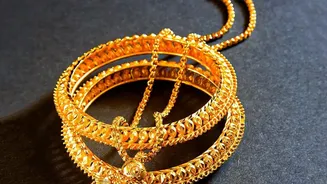
The amount you pay in making charges is directly linked to the intricacy of the design. Simple, machine-made items like plain gold chains or bangles will have lower making charges, often in the 3% to 10% range. In contrast, intricate, handcrafted jewellery like temple, kundan, or filigree designs requires immense skill and time, pushing making charges up to 20-25% or even higher. Even gold coins and bars have a minimal making charge, though it's much lower than for jewellery because the fabrication process is simpler.
Don't Forget the Hallmark
While focusing on reducing making charges, never compromise on the purity of the gold. Always insist on buying BIS hallmarked jewellery. The Hallmark Unique Identification (HUID) number is a six-digit alphanumeric code that assures you of the gold's claimed purity. This guarantees the value of the metal itself, which is crucial since making charges are not refundable upon resale. A detailed bill should always include the gold's purity (e.g., 22K/916), weight, the HUID number, and a clear breakdown of all charges and applied GST.