






A landmark 30-year treaty governing one of South Asia's most vital water sources, the Ganges, is set to expire in December 2026. This deadline is forcing India and Bangladesh to confront difficult questions about a new water-sharing future.
The 1996 Treaty: A Diplomatic Milestone
Signed on December
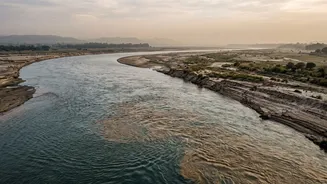
12, 1996, the Ganges Water-Sharing Treaty was a significant achievement in India-Bangladesh relations. It resolved a decades-long dispute that began after India commissioned the Farakka Barrage in 1975. The barrage, located in West Bengal just upstream from the border, was built to divert water into the Hooghly River to flush out silt and keep the Kolkata Port navigable. For Bangladesh, a lower riparian nation, this diversion raised fears of devastating consequences, especially during the dry season from January to May. The 1996 treaty, signed by then-Prime Ministers H. D. Deve Gowda of India and Sheikh Hasina of Bangladesh, established a specific formula for sharing water at Farakka during this lean period. The agreement was designed to provide long-term predictability and was hailed as a success in water diplomacy, recognising Bangladesh's rights as a downstream country.
Why Renewal Is Not a Simple Matter
While the treaty is renewable by mutual consent, a straightforward extension is unlikely. The world has changed dramatically since 1996. Both countries face new and intensified pressures that the original agreement did not fully anticipate. For India, there is sharply increasing domestic demand for freshwater in states like Bihar and West Bengal for agriculture, industry, and power generation. Officials in Bihar have stressed that the state's interests must be protected in any new arrangement. For Bangladesh, concerns over receiving adequate water to prevent desertification, protect the delicate Sundarbans ecosystem from salinity intrusion, and sustain agriculture remain paramount. The current political climate, with a different government in Dhaka than the one that signed the treaty, adds another layer of complexity. The Bangladesh Nationalist Party (BNP) has historically been critical of the 1996 deal, arguing it does not adequately protect the country's interests.
The Overwhelming Impact of Climate Change
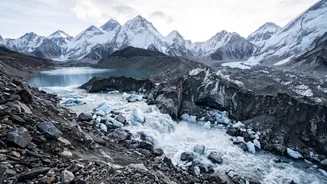
Perhaps the greatest challenge is climate change, which is altering the Ganges' very nature. Scientists report that the river's flow has declined to historically low levels in recent decades, surpassing even severe droughts from centuries ago. The Himalayan glaciers that feed the river, often called 'Asia's water towers', are retreating at an alarming rate. While this may cause more flooding in the short term due to accelerated melting, it threatens to severely reduce water availability in the long run. Climate models also predict more erratic monsoons and a potential reduction in the Ganges' winter flow by as much as 30% over the next 50 years. These hydrological shifts mean the baseline data used for the 1996 treaty, which was based on flows from 1949-1988, may no longer be relevant. Any new agreement must be 'climate-ready' and adaptable to this new environmental reality.
The Geopolitical Stakes
The Ganges treaty does not exist in a vacuum. It is a cornerstone of the India–Bangladesh relationship, and its successful renegotiation is critical for regional stability. The issue is a politically sensitive one in Bangladesh, where water access is tied to national sovereignty and livelihood. Broader geopolitical currents, including China's extensive dam–building on the Brahmaputra upstream, also influence regional water diplomacy, making a stable, cooperative relationship with Dhaka strategically important for New Delhi. The discussions are managed through the bilateral Joint Rivers Commission (JRC), which was established in 1972 and covers over 50 shared rivers. While technical–level meetings have been ongoing, the path to a new consensus will test the diplomatic skills of both nations.
The Path Forward to 2026
As the December 2026 deadline approaches, both sides must navigate a complex set of demands. Bangladesh is seeking a revised, longer–term agreement, potentially with a 'guarantee clause' to secure its share during the driest periods. India must balance its international commitments with growing internal water needs and the political concerns of its federal states. Experts suggest that a new framework should move beyond a simple volumetric formula. It may need to incorporate mechanisms for adaptive management, real–time data sharing, and addressing issues like sediment management and ecosystem health. Some have even called for a more comprehensive river basin approach that could involve other countries in the region, like Nepal. The upcoming negotiations are more than a technical exercise; they are a critical opportunity to redefine a shared future on a changing river.