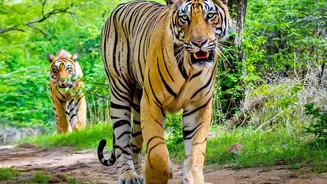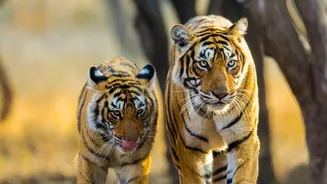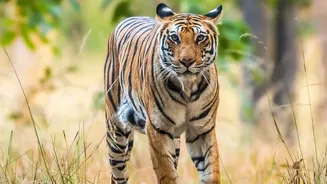





What is Prey Base Enrichment?
At its core, prey base enrichment is the process of increasing the population of a predator's natural food source within a specific habitat. For tigers, this means ensuring a thriving and sustainable population of animals like sambar, chital (spotted
deer), nilgai (blue bull), and wild pigs. It's not just about having a few deer around; it's about achieving a specific 'prey density' — a minimum number of animals per square kilometre. This ecological foundation is the most important factor determining if a reintroduced tiger population will survive, breed, and establish a new generation. Without it, a reintroduction is simply releasing an animal into a food desert.
A Tiger's Appetite
To understand why prey density is so vital, one must appreciate the caloric demands of an apex predator. A single adult tiger needs to kill between 50 and 60 large prey animals every year just to sustain itself. A female with cubs needs even more to produce milk and feed her growing young. Conservation science suggests that for a tiger to reliably hunt those 50 animals, there needs to be a standing population of at least 500 potential prey animals within its territory. This 10% 'off-take' rate ensures that the tiger can eat without depleting its food source, allowing the prey population to remain stable and reproductive. Anything less, and the predator-prey balance collapses.
A Tale of Two Reserves: Sariska and Panna
The importance of this principle is starkly illustrated by two of India's most famous tiger reintroduction stories. In 2005, it was confirmed that Sariska Tiger Reserve in Rajasthan had lost all its tigers, primarily to poaching. When tigers were first reintroduced there in 2008, the program struggled. One of the key issues, alongside continued human disturbance and poaching, was an inadequate prey base. The tigers failed to establish territories and reproduce successfully in the initial years. In contrast, Panna Tiger Reserve in Madhya Pradesh, which also lost all its tigers by 2009, became a celebrated success. Before reintroducing tigers, authorities focused on strengthening protection and ensuring the habitat could support them. Panna already had good grasslands and water sources, which supported a robust population of herbivores. Because the 'pantry' was full, the reintroduced tigers thrived, bred quickly, and established a self-sustaining population that is now a global benchmark for successful conservation.
How is the Prey Base Rebuilt?
Enriching a prey base is a multi-pronged effort. It often involves the translocation of herbivores from areas where they are abundant. For example, truckloads of chital or gaur might be moved into the target forest to bolster existing numbers. This is coupled with intensive habitat management. This can include developing grasslands and meadows by clearing invasive plant species, ensuring perennial water sources through the creation of waterholes, and implementing controlled burning to promote the growth of fresh, nutritious grass. Crucially, this entire process is protected by a shield of strict anti-poaching measures. The same illegal hunting that can wipe out tigers also decimates their prey, so protecting deer and wild boar from poachers is just as important as protecting the tigers themselves.