




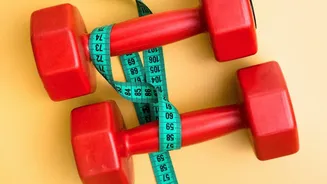


What is Resistance Training?
Resistance training, often called strength training, is any exercise that causes your muscles to contract against an external resistance. This doesn't necessarily mean you have to become a professional bodybuilder. The resistance can come from free weights
like dumbbells, weight machines, elastic resistance bands, or even your own body weight through exercises like push-ups, squats, and planks. The goal is to challenge your muscles, prompting them to adapt and become stronger over time. The American Heart Association endorses this type of exercise as a key component of a healthy physical activity routine.
How Strength Supports Your Heart
While aerobic exercise strengthens the heart muscle itself, resistance training helps the entire cardiovascular system function more efficiently. Building lean muscle mass has a profound metabolic effect, helping your body manage blood sugar more effectively and burn more calories, even at rest. This helps in maintaining a healthy weight and reducing harmful visceral fat, including fat around the heart, which is a known risk factor for heart disease. Furthermore, studies show that a combination of aerobic exercise and resistance work can help raise HDL (good) cholesterol and lower LDL (bad) cholesterol, creating a healthier lipid profile.
A Key Weapon Against High Blood Pressure
One of the most significant cardiovascular benefits of resistance exercise is its impact on blood pressure. While your blood pressure temporarily increases during a lift, consistent training helps lower your overall resting blood pressure. Stronger muscles perform daily tasks with less strain, which reduces the demand on your heart. Research indicates that regular resistance training can improve blood vessel function and flexibility, allowing blood to flow more easily. Some studies have found that resistance training can lower systolic blood pressure by a significant margin, making it a valuable lifestyle intervention for people with elevated blood pressure or hypertension.
How Much Is Enough?
You don't need to spend hours in the gym to reap the benefits. The American Heart Association recommends muscle-strengthening activity on at least two nonconsecutive days per week. Updated scientific statements suggest the maximal benefit for reducing cardiovascular disease risk occurs with just 30 to 60 minutes of resistance training per week. An effective routine would involve 8 to 10 exercises that target the major muscle groups. For each exercise, a single set of 8 to 12 repetitions performed to the point of fatigue is generally sufficient for most people to see benefits. The key is consistency and challenging the muscles enough to stimulate growth and adaptation.
Getting Started Safely and Effectively
For those new to strength training, it is crucial to start slowly and prioritize proper form to prevent injury. Bodyweight exercises are an excellent starting point. Simple movements like squats, lunges, push-ups (which can be modified by doing them on your knees), and planks are highly effective and require no equipment. As you get stronger, you can gradually increase the challenge by adding more repetitions or incorporating light weights or resistance bands. Variety is also helpful for keeping your routine interesting and working different muscles. Combining resistance training with the recommended 150 minutes of moderate-intensity aerobic activity per week provides the most comprehensive benefit for your heart and overall health.