






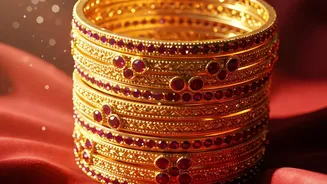

Understanding Gold EMIs
Buying gold jewellery on EMI allows you to take home your desired ornament immediately and pay for it over a period of months through fixed payments. This is different from traditional gold savings schemes where you pay instalments first and collect the
jewellery at the end of the tenure. EMI options are widely available through credit cards, debit cards, and financing partnerships between jewellers and Non-Banking Financial Companies (NBFCs). The tenure for these plans can range from a few months to a year or more, making big-ticket purchases feel more manageable without depleting your savings all at once.
The Allure: Why EMIs Are Tempting
The primary benefit of an EMI is affordability. It breaks down a large, intimidating sum into smaller, predictable monthly payments, which can be especially helpful for planned purchases like a wedding or festival. For salaried individuals with a stable income, this can be a practical way to manage a significant expense. An EMI plan also allows you to lock in the gold price at the time of purchase, protecting you from future price hikes. This instant gratification—getting the jewellery now and paying for it later—is a powerful draw for many buyers who don't want to postpone their purchase.
The Reality Check: Hidden Costs and Risks
The convenience of EMIs often comes at a cost. Many plans, even those advertised as 'no-cost EMI', may have hidden charges like processing fees or a higher making charge bundled into the price. It's essential to understand that you will also pay GST of 3% on the gold's value and 5% on the making charges, regardless of the payment method. Furthermore, the interest and fees you pay do not add to the resale value of the gold. If you end up paying more than the sticker price due to interest, that extra amount is an unrecoverable cost. Most importantly, missing an EMI payment can negatively impact your credit score, making future loans more difficult to obtain.
Your Financial Litmus Test
Before signing up for an EMI, ask yourself these critical questions. First, what is the total cost? Calculate the sum of all EMIs plus any down payment and processing fees to see the actual price you're paying. Second, can your monthly budget truly handle this new expense without strain? A new EMI should not push your essential spending and savings off track. Third, have you read the fine print? Look for clauses on pre-payment penalties, late fees, and what happens if you default. Finally, is your income source stable enough to guarantee payments for the entire tenure? An EMI is a firm financial commitment, not a flexible one.
Exploring Smarter Alternatives
If an EMI feels like a stretch, or if the purchase is not urgent, there are other paths to owning gold. For disciplined savers, simply setting aside a fixed amount each month in a separate savings account to buy gold later is the most cost-effective method. For those interested in gold as an investment rather than for wearing, there are more efficient options. Gold Exchange Traded Funds (ETFs) and Gold Mutual Funds track the price of gold and can be bought and sold like shares, eliminating making charges and purity concerns. Digital gold is another option that allows you to buy 24K gold online in small increments. These alternatives often provide better liquidity and value for your money if your primary goal is investment.