






A Nationwide Rainfall Deficit
The numbers from the India Meteorological Department (IMD) confirm a worrying trend. The country as a whole received rainfall that was just 87% of the long-period average. The distribution was highly uneven across the four-month season and across different
regions. While Central India recorded near-normal rainfall, the South Peninsula and the East and Northeast regions were left with significant deficits of around 24% and 25% respectively. This shortfall, linked to strengthening El Niño conditions, means that the primary source for refilling India's water bodies underperformed, setting the stage for scarcity in the months ahead.
Reservoirs at a Ten-Year Low
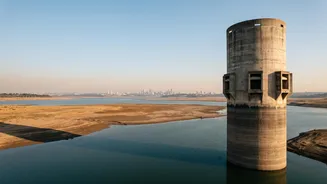
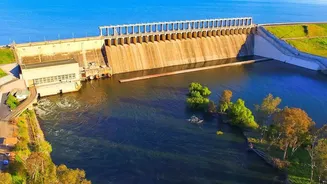
The most immediate consequence of a poor monsoon is seen in the country's major reservoirs. As of late September 2026, the combined water storage in India's 178 major reservoirs stood at just 70% of their total capacity, the lowest level for this time of year in a decade. This is significantly below the 10-year average of about 77%. The situation is especially alarming in southern India, where reservoirs are holding only about 50% of their capacity, a steep drop from 87% at the same time last year. Cities across the country depend on these reservoirs for their drinking water supply. When these levels are low, urban local bodies are forced to implement water cuts and rely more heavily on other, often over-stressed, sources.
The Strain on Urban Groundwater
With surface water sources like reservoirs under pressure, the default backup for many cities is groundwater. However, this is a savings account that is already severely overdrawn in many parts of India. A 2026 UN-backed report highlighted a persistent decline in India's groundwater, noting that over-extraction is a major driver. Regions like Northwest India were already facing a groundwater crisis before the dry monsoon. Cities like Delhi, Bengaluru, and Chennai have long struggled with the depletion of underground aquifers. A weak monsoon fails to adequately recharge these aquifers, intensifying the crisis. This forces cities to dig deeper wells, increasing energy costs and often yielding water of poorer quality, posing a threat to public health.
A Test of Urban Resilience
This situation is a stark test of urban water resilience—the ability of a city to manage its water resources through shocks like a drought. Much of India's urban water infrastructure is considered archaic, with significant losses due to leakage in distribution pipelines. For years, experts have warned that cities must move from a supply-focused approach (finding new water sources) to a demand-management one. This includes fixing leaks, promoting rainwater harvesting, and large-scale recycling of wastewater. Some cities are showing signs of progress. Puri's 'Drink from Tap' mission is a notable success story in providing continuous, safe water, while other municipalities are experimenting with decentralized treatment systems. However, these efforts are not yet at the scale needed to counter a systemic shock like a nationwide monsoon failure.
Ripple Effects Beyond the Tap
The impact of a dry monsoon on urban life extends beyond just drinking water shortages. Water scarcity can affect power generation from hydroelectric dams, which rely on reservoir storage. It can also lead to higher food prices, as lower agricultural output in surrounding rural areas impacts urban markets. Furthermore, industries located in and around cities face operational challenges when water supply is restricted. This confluence of factors—affecting households, businesses, and public finances—reveals how interconnected the urban ecosystem is with the annual monsoon. A single disrupted season can trigger a synchronized shock to a city's food, water, and energy grids.