

An Underground Solution
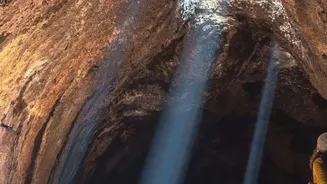
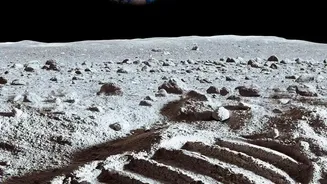
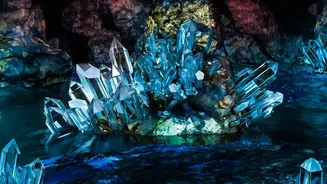
Imagine vast, hollow tunnels, some large enough to house entire cities, hidden beneath the Moon's cratered surface. These are not science fiction; they are lunar lava tubes, and they represent one of the most promising solutions for building a sustainable
human presence beyond Earth. Formed billions of years ago when the Moon was still volcanically active, these subterranean caverns were created by flowing rivers of lava. As the outer layers of the lava cooled and solidified, the molten rock inside continued to flow, eventually draining out and leaving behind immense, hollow conduits. For decades, scientists have theorized about their existence, but recent data from orbiters like NASA's Lunar Reconnaissance Orbiter has provided compelling evidence, revealing collapsed sections of these tubes, known as 'skylights', which could serve as potential entryways.
The Invisible Danger of Space
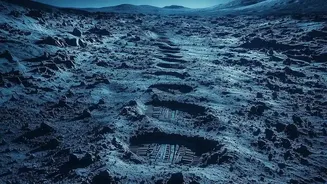
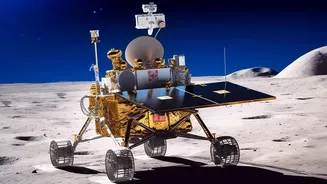
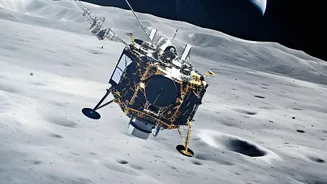
On Earth, we are shielded by our planet's magnetic field and thick atmosphere. The Moon has neither, leaving its surface completely exposed to the harsh environment of space. Astronauts there face a dual radiation threat. First, there are the relentless Galactic Cosmic Rays (GCRs), high-energy particles from distant exploding stars that can slice through cells and increase the long-term risk of cancer and other degenerative diseases. Second are the unpredictable Solar Particle Events (SPEs), or solar flares, which unleash intense bursts of radiation that can deliver a lethal dose in hours. Data from China's Chang'e 4 lander revealed that radiation levels on the lunar surface are 200 to 1,000 times higher than on Earth. Any long-term habitat would need significant shielding to keep astronauts safe.
Nature's Perfect Shelter
This is where lava tubes become so critical. The several meters of solid rock and lunar soil (regolith) that make up the roof of a lava tube provide a natural, ready-made shield. Studies have shown that a sufficient overburden of rock can slash the radiation exposure inside a tube to levels comparable to what we experience on Earth, effectively neutralizing the threat from both GCRs and SPEs. Beyond radiation, these caves offer other crucial advantages. The surface of the Moon experiences wild temperature swings, from a scorching 121°C in daylight to a frigid -146°C in darkness. Inside a lava tube, however, the temperature remains at a stable, albeit cold, -20°C. This stable environment drastically simplifies the engineering required for habitats and protects against another constant threat: micrometeoroid impacts.
Robots First, Humans Later
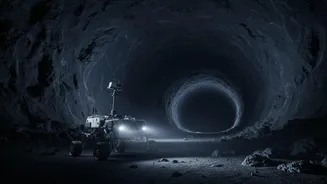
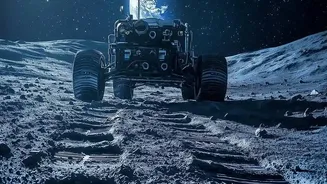
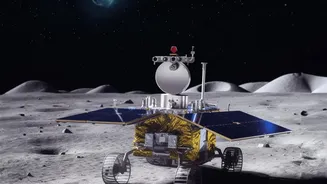
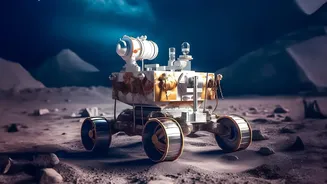
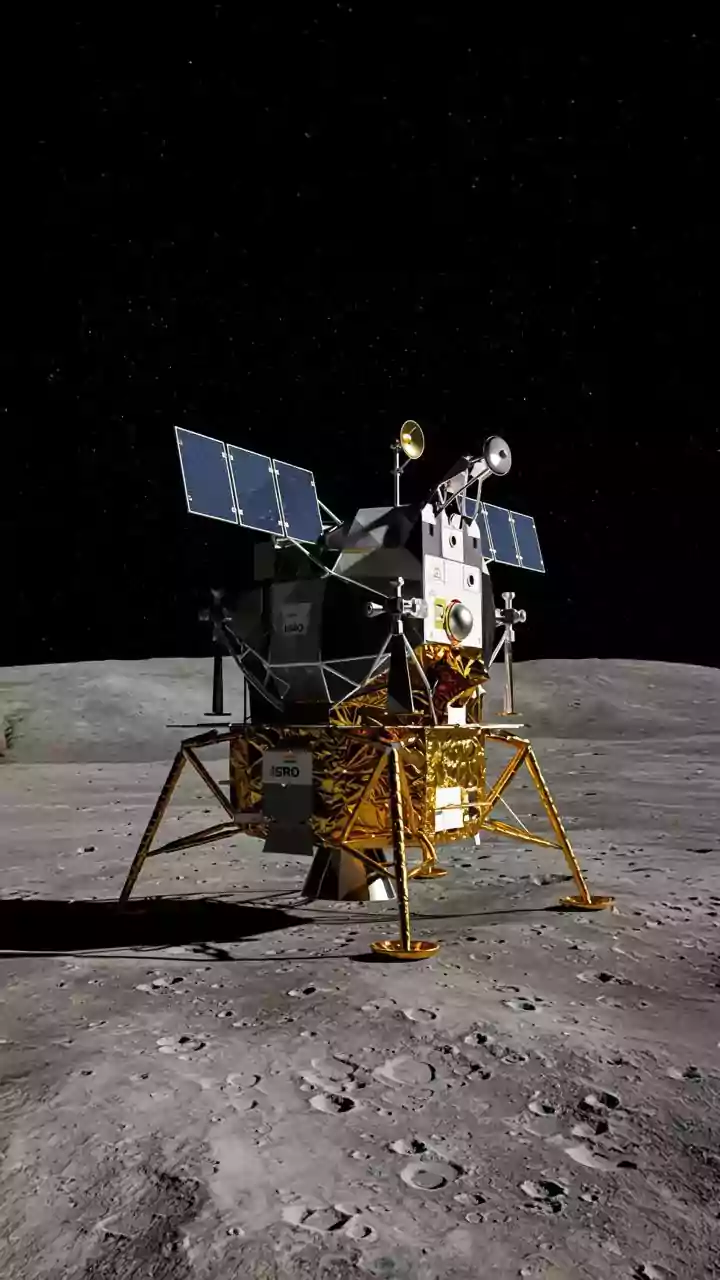
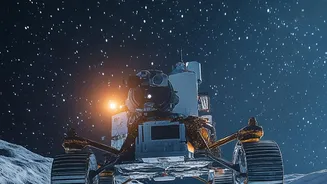
Before we can move in, we need to know exactly what we are getting into. Exploring these dark, unknown, and potentially treacherous tunnels is a job for robots. Space agencies like the European Space Agency (ESA) are actively developing missions to do just that. One concept, known as Daedalus, involves lowering a spherical probe into a pit to create a 3D map of the interior. Another multi-robot approach, tested in the volcanic caves of Lanzarote, Spain, uses a team of autonomous rovers. One rover acts as an anchor at the surface, lowering a smaller scout rover into the cave to explore and map the terrain, while another performs surface analysis with ground-penetrating radar. These robotic pioneers will assess the structural integrity, identify resources, and find the safest locations for future human outposts.