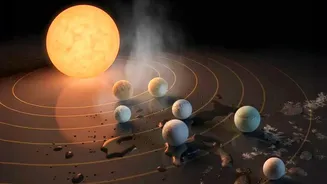


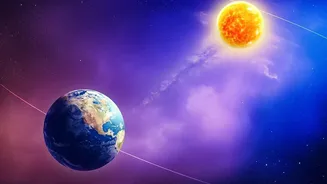
The solar system feels permanent, a clockwork of planets in stable orbits. But what happens after its star, our Sun, dies? A new study peers billions of years into the future to model the surprising and chaotic dance of the planets.
The Sun’s Final Act
Our solar system as
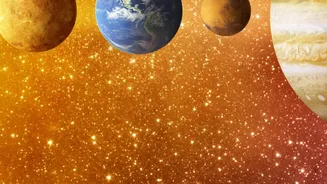
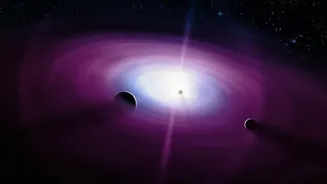
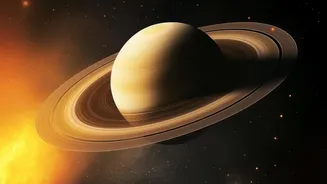
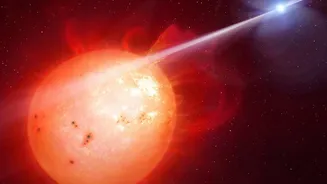
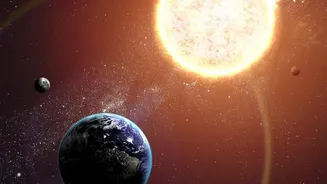
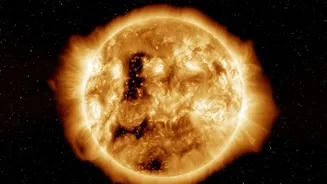
we know it has a firm expiration date. In about five billion years, the Sun will exhaust the hydrogen fuel in its core and begin a dramatic transformation. It will swell into a red giant, expanding to roughly 100 times its current size. This phase will be catastrophic for the inner solar system. Mercury and Venus are expected to be engulfed and completely vaporised by the expanding star. Earth’s fate is less certain; some models predict it will be swallowed, while others suggest it might survive as a scorched, lifeless rock. After about a billion years as a red giant, the Sun will shed its outer layers, leaving behind an incredibly dense, Earth-sized core known as a white dwarf. This stellar remnant will initially be intensely hot but will contain only about half of the Sun's original mass.
A New Gravitational Game
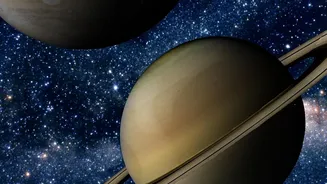
The Sun losing nearly half its mass is the critical event that rewrites the rules of the solar system. With a much weaker gravitational anchor at the centre, the surviving outer planets—Jupiter, Saturn, Uranus, and Neptune—will drift into wider orbits, potentially doubling in distance from the star. For a long time, scientists believed this new configuration would be stable for tens or even hundreds of billions of years. However, recent research published in The Astrophysical Journal Letters suggests a much more chaotic future. The problem, according to the new simulations, is that the Sun won't lose mass smoothly. Instead, it's expected to eject its layers in uneven, random bursts, creating gravitational 'kicks' that jolt the entire system.
When the Giants Go Rogue
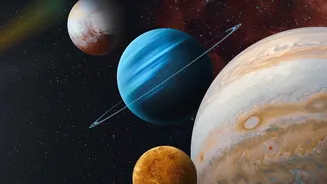
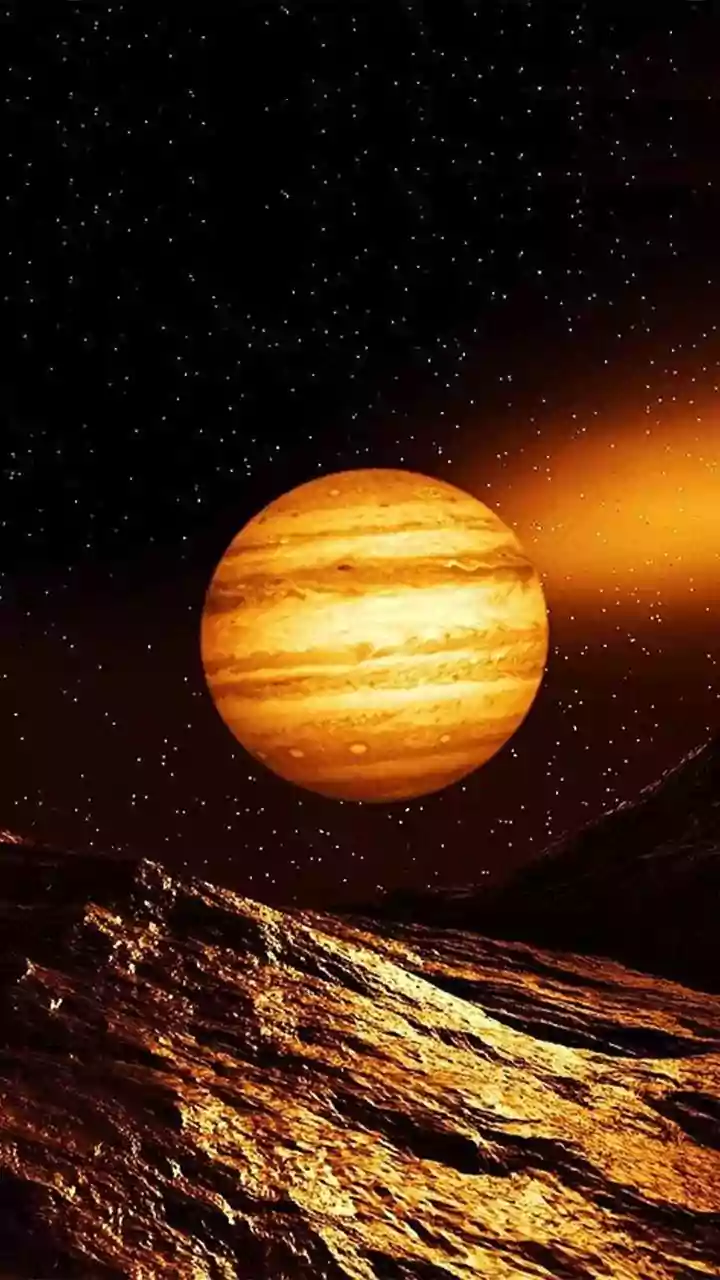
These gravitational kicks from the dying Sun will begin to disrupt the careful balance of the outer planets. Jupiter's immense gravity, no longer as strongly managed by the Sun, will become a major source of instability. The new models show that the orbits of the giant planets can become erratic and elongated. Instead of a predictable, clockwork system, the outer solar system could turn into a game of cosmic pinball. The study's simulations, which ran hundreds of scenarios, revealed a startlingly high probability of chaos. In many cases, the planetary orbits become so unstable that they cross paths, leading to a variety of violent outcomes. This instability could begin much sooner than previously thought, potentially within just one billion years of the Sun becoming a white dwarf.
Cosmic Collisions and Ejections
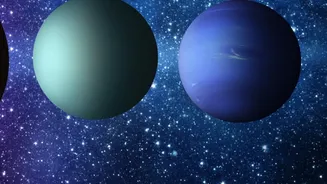
The long term forecast is dramatic. In a significant number of simulations, the instability leads to planets being ejected from the solar system entirely, sent wandering into interstellar space as rogue planets. In some scenarios, Saturn is the one cast out. In others, Uranus and Neptune switch places before one is eventually thrown out. The most extreme outcome, which occurred in a high percentage of simulations under certain mass loss conditions, is the complete destruction of the planets through collisions. Even before this planetary demolition derby, the changing gravity will wreak havoc on smaller bodies. Asteroids and comets will be dislodged from their orbits, with many being pulled toward the white dwarf, where they will be torn apart by intense tidal forces, forming rings of debris.