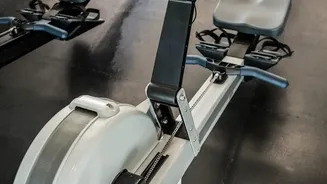







Choosing a workout can feel overwhelming. Do you opt for the rhythmic pull of a rowing machine or the graceful, yet demanding, movements of a ballet-inspired class? Both promise a great workout, but they affect your heart in very different ways.
The Case for Steady-State
Rowing
is a prime example of steady-state cardiovascular exercise. The goal here is consistency. By maintaining a rhythmic, continuous pace, you keep your heart rate elevated within a moderate, stable zone, typically around 60-70% of your maximum heart rate. Think of it as a long-distance run for your entire body. This type of training is exceptional for building aerobic endurance and improving the heart's efficiency. Over time, regular steady-state sessions can lead to a lower resting heart rate and better blood pressure because the heart becomes stronger, pumping more blood with each beat. The full-body, low-impact nature of rowing engages over 85% of your muscles, making it a highly effective way to demand oxygen and improve cardiovascular function without punishing your joints.
The Power of the Peak
Interval-based ballet or barre classes operate on a different principle. These workouts, often blending elements of ballet, Pilates, and strength training, function more like high-intensity interval training (HIIT). Instead of a constant effort, they involve bursts of intense work followed by brief periods of recovery. This structure pushes your heart rate into a higher zone (often 80-95% of your max) for short periods, followed by a drop. This 'up-and-down' pattern is fantastic for boosting your metabolism, burning a significant number of calories in a shorter time, and creating a post-exercise 'afterburn' effect where your body continues to burn calories even after the workout is over.
A Tale of Two Heart Rate Graphs
So, why does rowing create a more consistent heart rate chart? The answer lies in the nature of the work. The continuous, rhythmic motion of rowing provides a steady workload, allowing your heart to settle into a consistent rhythm to supply oxygen to your muscles. An interval-based ballet class, with its mix of small, intense pulses, larger movements, and brief rests, creates a fluctuating demand for oxygen. Your heart rate spikes to meet the demands of intense intervals and then recovers during the less strenuous moments, creating a graph with peaks and valleys rather than a steady line. Both approaches challenge the cardiovascular system, just in different ways. The consistent stress of steady-state builds endurance, while the sharp peaks of intervals can improve your body's ability to handle intense efforts and recover quickly.
Beyond the Heart Rate
The decision shouldn't be based on heart rate alone. Each workout offers a unique set of secondary benefits. Rowing provides a powerful, fullbody strength and cardio workout in one. It is renowned for being a lowimpact exercise, which is great for protecting your joints while still building muscle and bone density. On the other hand, ballet and barre classes excel at developing functional strength, balance, posture, and flexibility. The focus on small, controlled movements and core stability can lead to long, lean muscle definition and improved body awareness that translates into more graceful and efficient movement in everyday life.
Which Workout Is Right for You?
The 'better' workout is the one that aligns with your specific goals, fitness level, and, most importantly, your enjoyment. If your primary goal is to build a strong aerobic base, improve cardiovascular endurance for longduration activities, or you need a lowimpact option, the steady, predictable work of rowing is an excellent choice. If you're short on time, want to maximize calorie burn, and enjoy a dynamic, challenging class environment that also improves flexibility and posture, an intervalbased ballet or barre class could be the perfect fit. Many experts agree that the ideal fitness routine includes a mix of both steadystate and highintensity training to reap the full spectrum of benefits.