

The No-Sew Fabric Canvas
One of the simplest ways to create high-impact art is to treat fabric like paint. This no-sew method involves stretching a striking piece of fabric over a blank artist’s canvas or a simple wooden frame. For this, you’ll need a canvas, your chosen fabric,
and a staple gun. First, iron your fabric to remove any creases. Lay the fabric face down and place the canvas on top. Starting on one side, pull the fabric taut and staple it to the back of the wooden frame. Continue on the opposite side, pulling tightly to ensure a smooth surface, before repeating on the remaining two sides. The corners can be folded neatly like a present and secured with staples. This is a perfect way to display a larger piece of remnant fabric with a bold pattern and can be completed in under an hour.
The Modern Patchwork Tapestry
For those with a collection of smaller, coordinating scraps, a patchwork tapestry is an ideal project. This technique involves sewing together square or rectangular pieces of fabric to create a larger, quilt-like panel. To begin, cut your various fabric scraps into uniform shapes. A rotary cutter and mat can make this step much faster. Arrange the pieces on a flat surface to plan your design before you start sewing. A common method is to sew four small squares together to form a larger block, and then sew these blocks together to form the final piece. Once your patchwork front is complete, you can attach a solid piece of backing fabric. To create a channel for a hanging dowel, simply fold the top edge over and stitch it down, leaving enough space for a rod to slide through. This method allows for endless creativity in color and pattern mixing, resulting in a piece that’s uniquely yours.
Woven and Braided Wall Art
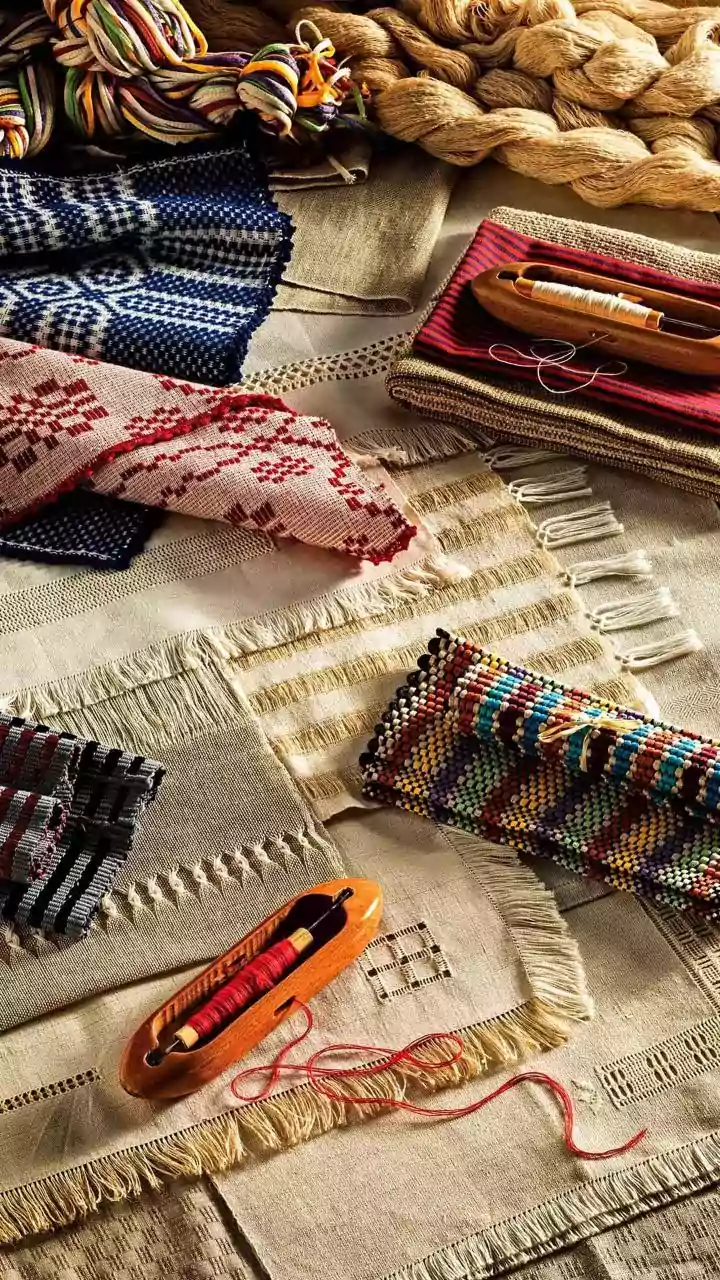
Transform fabric scraps into a highly textured, bohemian-style wall hanging by cutting them into strips and weaving or braiding them. For weaving, you can create a simple loom from a sturdy piece of cardboard or use a basic frame loom. By weaving the fabric strips, you can create different patterns and even incorporate other materials like yarn or wool roving for more texture. Another approach is to create long braids from the fabric strips. These braids can then be coiled and stitched together to form a circular hanging, or hung vertically in a group from a wooden dowel for a colourful, cascading effect. This is an excellent way to use up even the most oddly shaped scraps, from old t-shirts to linen remnants.
Framed and Floating Fabric Art
An embroidery hoop is a perfect, inexpensive frame for smaller pieces of beautiful fabric. Simply secure your fabric within the hoop, pull it taut, and tighten the screw. You can trim the excess fabric from the back or leave it for a more rustic look. Grouping several hoops of different sizes with coordinating fabrics creates a compelling gallery wall. For a more formal presentation, you can also frame fabric within traditional picture frames. For an especially modern look, use a floating frame, which places the fabric between two panes of glass. This is particularly effective for delicate or sheer fabrics like lace or embroidered textiles, giving them an airy, elevated appearance.
Fabric Decoupage Creations
Decoupage is a classic craft technique that can be beautifully applied to fabric. Using a medium like Mod Podge, you can adhere fabric scraps to a surface like a wooden panel or a canvas. Start by cutting your fabric into desired shapes; you can create a collage, a geometric pattern, or even a landscape scene. Apply a thin layer of the decoupage glue to the canvas, place your fabric piece on top, and then seal it with another layer of glue over the fabric. This process not only secures the fabric but also gives it a durable, protected finish. This mixed-media approach works wonderfully for combining different patterns and textures into one cohesive piece of art.