






Why Monsoon Drainage is Critical
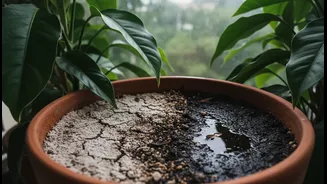
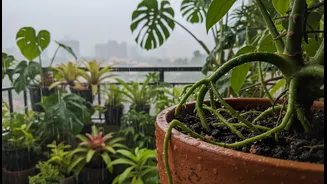
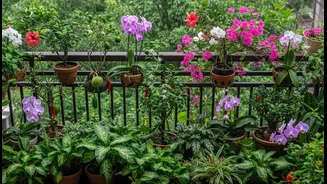
For container plants, especially tropical varieties, the monsoon is a double-edged sword. While they adore humidity, their roots hate being submerged in water. Unlike plants in the ground, balcony pots have limited space and can quickly become waterlogged
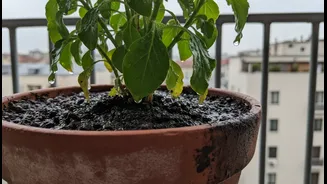
during incessant rains. This suffocates the roots, depriving them of oxygen and creating a perfect breeding ground for fungal diseases like root rot. Symptoms like yellowing leaves, a wilting appearance despite wet soil, and a sour smell from the pot are all warning signs that your plant's roots are in distress. Proactive drainage fixes are not just helpful; they are essential for survival.
Step 1: Audit Your Pots and Planters
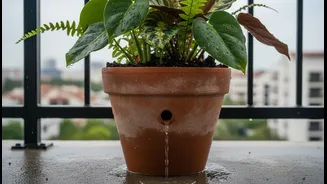
Before the heavy showers begin, inspect every pot. The single most important feature is the drainage hole. Ensure these holes at the bottom of your containers are clear of soil, debris, or tangled roots. If a pot is blocked, use a screwdriver or a similar tool to clear the obstruction. Consider the pot's material; unglazed terracotta is more breathable than plastic and allows moisture to evaporate through its walls, which can be a significant advantage during the damp monsoon months. Also, never let your pots sit flat on the balcony floor or in a saucer full of water. Elevate them using pot feet, bricks, or simple stands to create an air gap underneath, allowing water to escape freely.
Step 2: Amend Your Potting Soil
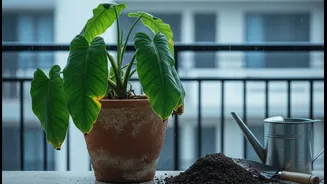
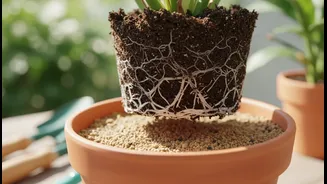
Heavy, clay-rich garden soil is a death sentence for potted plants in the monsoon as it retains too much water and compacts easily. A good potting mix for this season must be light and airy. You can significantly improve your existing soil's drainage by amending it. Mix in materials like perlite, coarse sand, or orchid bark to create more air pockets and help water flow through more quickly. These materials don't retain excess moisture, ensuring that even after a downpour, the roots have access to the oxygen they need. If you are repotting, aim for a mix that is about 20-30% of these inorganic materials.
Step 3: Prune and Position Strategically
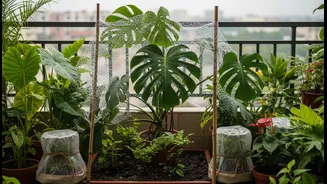
A dense canopy of leaves can trap humidity and prevent air from circulating, which is a major contributor to fungal growth. Before the monsoon sets in, give your plants a light trim. Prune away any dead or weak branches and thin out overcrowded foliage. This not only reduces the risk of disease but also makes the plant less susceptible to damage from strong monsoon winds. For particularly vulnerable plants like succulents, or those with delicate leaves, consider their placement. Moving them to a more sheltered part of the balcony, away from the direct force of the rain and wind, can make all the difference.
Step 4: Adjust Your Watering and Feeding Routine
It’s a common mistake to assume that plants don't need watering during the monsoon. Plants under a roof or overhang might get very little rain and still dry out. The key is to check the soil. Before watering, insert your finger a couple of inches deep; if the soil feels damp, leave it alone. Furthermore, heavy rains leach nutrients from the soil. However, this is not the time for aggressive fertilizing. Instead, apply a slow-release organic option like compost or vermicompost before the rains start. This provides a steady supply of nutrients without overwhelming the plants.
Step 5: Watch for Pests and Fungal Infections
High humidity makes a perfect environment for pests and diseases like powdery mildew, leaf spot, and other fungal infections. Be vigilant and inspect your plants regularly. Look for tell-tale signs like white powdery coatings, dark spots on leaves, or wilting. If you spot an issue, act quickly. Remove any infected leaves immediately to prevent the disease from spreading. Having a natural antifungal solution, like a neem oil spray, on hand can be very effective for both prevention and treatment. Good air circulation, achieved through proper spacing and pruning, remains your best defense.