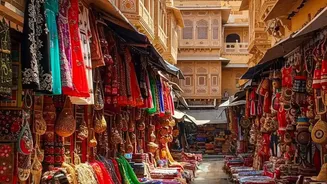







From Monsoon to May Heat
In a country of diverse and extreme weather, knowing a market’s layout is crucial. During the monsoon, open-air markets like many parts of Delhi's Sarojini Nagar or Mumbai's Hill Road can become a maze of puddles and limited shelter, making it hard to
browse. Conversely, the intense summer heat can make strolling through uncovered bazaars draining and even risky. A covered or semi-covered market, on the other hand, offers a refuge, allowing you to shop in relative comfort regardless of the torrential rain or blazing sun outside. These structures not only protect you from the elements but also the goods, ensuring a better shopping experience for everyone. The choice between a covered bazaar and an open-air one can define your entire outing.
How to Do Your Homework
A little reconnaissance can save you a lot of trouble. The easiest first step is a simple online search. Travel blogs, city guides, and news articles often describe the structure of popular markets. For instance, you can quickly learn that Crawford Market in Mumbai is a largely covered heritage structure, while Dilli Haat in Delhi is a planned open-air space. Google Maps is another invaluable tool. Use the Street View feature for a virtual walkthrough to see the extent of permanent roofing. Reading recent reviews can also provide clues, as shoppers often mention their experience with the weather. Finally, don't underestimate the power of local knowledge. Asking friends, family, or even a quick post on a city-specific social media group can yield the most practical and up-to-date advice.
Covered Sanctuaries vs Open-Air Adventures
India offers a fantastic variety of both market types. Historic covered markets like Kolkata's New Market or Mumbai’s Crawford Market are worlds unto themselves, with labyrinthine alleys protected from the elements. These are ideal destinations for a rainy day, where you can spend hours exploring without an umbrella. Recently, even parts of historically open markets like Chandni Chowk are seeing the development of modern, air-conditioned arcades to offer an all-weather shopping experience. In contrast, open-air markets offer a different kind of charm. Think of the sprawling weekly haats or the vibrant street-side setups of Colaba Causeway. While they are more exposed, they often provide a more dynamic and spontaneous shopping experience. For these, timing is everything. An early morning or late evening visit during hot months, or a brief trip during a break in the rain, is often the best strategy.
A Quick Market Layout Guide
To help you plan, here’s a general guide to the layout of some of India's most famous markets: Chandni Chowk, Delhi: A sprawling mix. It's largely a network of open-air streets and narrow lanes, but many shops are deep-set, and there are now some covered mall-like arcades. Crawford Market, Mumbai: Mostly covered. This historic market offers great protection from both sun and rain, making it a reliable monsoon shopping spot. Johari Bazaar, Jaipur: Primarily open-air streets lined with shops. The uniform buildings offer some shade, but the main thoroughfares are exposed to the elements. New Market, Kolkata: Largely covered. With over 2,000 shops under its roof, it’s a classic destination to escape the weather. Sarojini Nagar, Delhi: Predominantly an open-air market. While some lanes have temporary tarps, it offers little protection during heavy rain or peak summer heat. Laad Bazaar, Hyderabad: A narrow, bustling street market which is mostly open, though the sheer density of the shops and crowds provides some incidental cover.