




First Off, What Is an eVTOL?
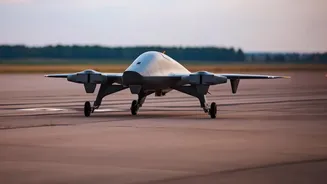
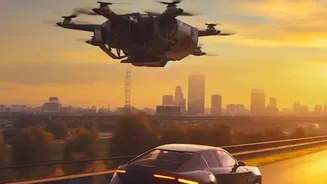
Before we get ahead of ourselves, let's break down the jargon. eVTOL stands for electric Vertical Take-Off and Landing. Think of it as a helicopter's smarter, quieter, and greener cousin. These aircraft are powered by electricity, making them significantly
less noisy and more environmentally friendly than traditional helicopters. They are designed to carry a handful of passengers—typically between two and six—on short urban routes, taking off and landing vertically from small pads called vertiports. This ability to operate without a runway is what makes them perfect for navigating dense city landscapes.
India's Big Bet on Air Taxis
India's government and private sector are moving assertively to establish an urban air mobility ecosystem. The Civil Aviation Minister, Ram Mohan Naidu, has stated a target to see these machines flying in India by 2028, with testing expected to accelerate in 2027. A major partnership is between InterGlobe Enterprises, the parent company of IndiGo, and US-based Archer Aviation. This venture plans to launch services in Delhi, Mumbai, and Bengaluru, and includes a deal to potentially purchase up to 200 of Archer's 'Midnight' aircraft. At the same time, homegrown startups are making significant strides. Chennai's The ePlane Company, incubated at IIT Madras, has already unveiled a full-scale prototype of its e200X aircraft and established a dedicated production facility. Another key player is Bengaluru-based Sarla Aviation, which has received crucial design approval from the Directorate General of Civil Aviation (DGCA) for its indigenous air taxi, Shunya.
From Connaught Place to Gurugram in 7 Minutes
The potential impact on commuting is staggering. A car journey from Connaught Place in Delhi to Gurugram can take 60 to 90 minutes in traffic. The proposed InterGlobe-Archer air taxi service aims to cover that same 27-kilometre distance in approximately seven minutes. In Bengaluru, a trip from the airport to Electronics City, which can take up to three hours by road, could be reduced to just 19 minutes. The initial cost for the Delhi-Gurugram route is estimated to be between ₹2,000 and ₹3,000, a slight premium over a high-end app-based cab but for a fraction of the time. Sarla Aviation estimates a fare of around ₹1,700 for its Bengaluru airport route.
The Hurdles Before Takeoff
Despite the excitement, the path to a sky full of air taxis has its share of turbulence. The biggest challenge is regulation. While the DGCA has released foundational guidelines for vertiports and aircraft certification, a comprehensive policy for urban air mobility is still being finalised. Every eVTOL will need to undergo a rigorous type certification process before it can carry passengers. Then there's the infrastructure. Cities will need a network of vertiports, complete with charging stations, which requires significant investment and coordination on land acquisition and planning. Creating a low-altitude air traffic management system that can safely integrate thousands of new aircraft into the airspace above crowded cities is another monumental task. Finally, public acceptance, affordability, and ensuring safety standards are paramount.
So, When Can We Expect to Fly?
The timeline is becoming clearer. InterGlobe and Archer have repeatedly stated their goal to launch services in India in 2026, following their US launch. However, the Indian government's official target for seeing operations commence is 2028, with widespread testing to happen from 2027. Indigenous players like The ePlane Company are targeting flight tests for certification in mid-2027, with a unique strategy of first launching an air ambulance service before entering the passenger taxi market. Sarla Aviation is also aiming for a 2028 commercial launch, starting in Bengaluru before expanding to Mumbai and Delhi. While the first flights might be just a few years away, it will take longer for air taxis to become a common and widely accessible mode of transport.