





Start with Drainage
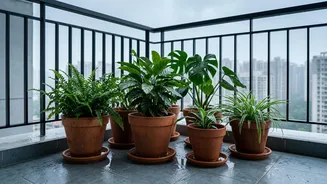
The most critical post-rain check is for drainage. A healthy balcony garden efficiently sheds excess water. Look for pooling water on the floor, which indicates the main balcony drain might be clogged with leaves, soil, or other debris. If water is collecting,
clear the blockage immediately to prevent it from backing up. Also, check the pots themselves. Water that sits on the soil's surface long after the rain has stopped is a sign that the container's drainage holes are blocked or the soil is too compacted. A simple fix is to gently elevate your pots using pot feet or small bricks, allowing water to escape more freely and preventing pots from sitting in puddles.
Assess Soil and Plant Health
Heavy rain can be tough on both soil and plants. Saturated, waterlogged soil is a major risk, as it can lead to root rot. If the soil in your containers feels spongy or overly wet to the touch hours after the rain, it may be too dense. You can help it dry out by temporarily removing any mulch and gently aerating the top layer of soil with a small fork, being careful not to disturb the roots. Physically inspect your plants for damage. Strong downpours can break delicate stems or flatten foliage. Prune any broken or dead plant parts immediately to help the plant recover and prevent disease from setting in.
Look for Pests and Diseases
Wet, humid weather creates an ideal breeding ground for pests and fungal diseases. Slugs and snails, which thrive in moist conditions, may have come out to feast on your plants; look for their tell-tale trails or irregular holes in leaves. Persistent moisture also encourages fungal issues like powdery mildew or leaf spot, which appear as discoloured patches or spots on foliage. Good air circulation is key to prevention, so ensure your plants aren't too crowded. Removing affected leaves promptly can help stop the spread.
Inspect for Structural Stress
Water is heavy, and rain-soaked soil adds a significant amount of weight to your containers, shelves, and hanging baskets. This is the perfect time to perform a safety check. Look closely at any shelves or brackets holding pots, ensuring they show no signs of bending or pulling away from the wall. Gently test your railings to make sure they are secure and not wobbly. Check for any new cracks in the balcony floor or walls, as these can be early signs of structural strain. Also, look for rust stains near metal railings or supports, which can indicate water is getting into places it shouldn't and causing corrosion.
Clean and Tidy Up
Finally, a heavy rain often makes a mess, washing soil out of pots and scattering leaves and petals across the balcony. This isn't just an aesthetic issue; accumulated debris can block drains and create slippery surfaces. Once the rain has stopped, take the opportunity to sweep the floor, wipe down surfaces, and return any displaced soil to your containers. This quick clean-up prevents bigger problems down the line and keeps your balcony garden a safe and pleasant space to enjoy. Covering exposed roots with fresh soil or compost will also protect them from sun damage as the weather dries out.