


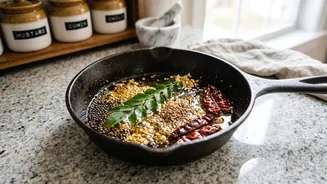
What is Tadka?
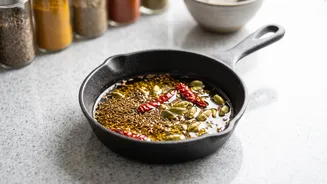
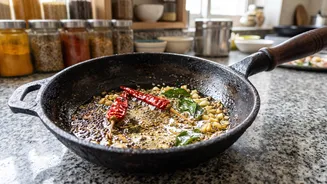
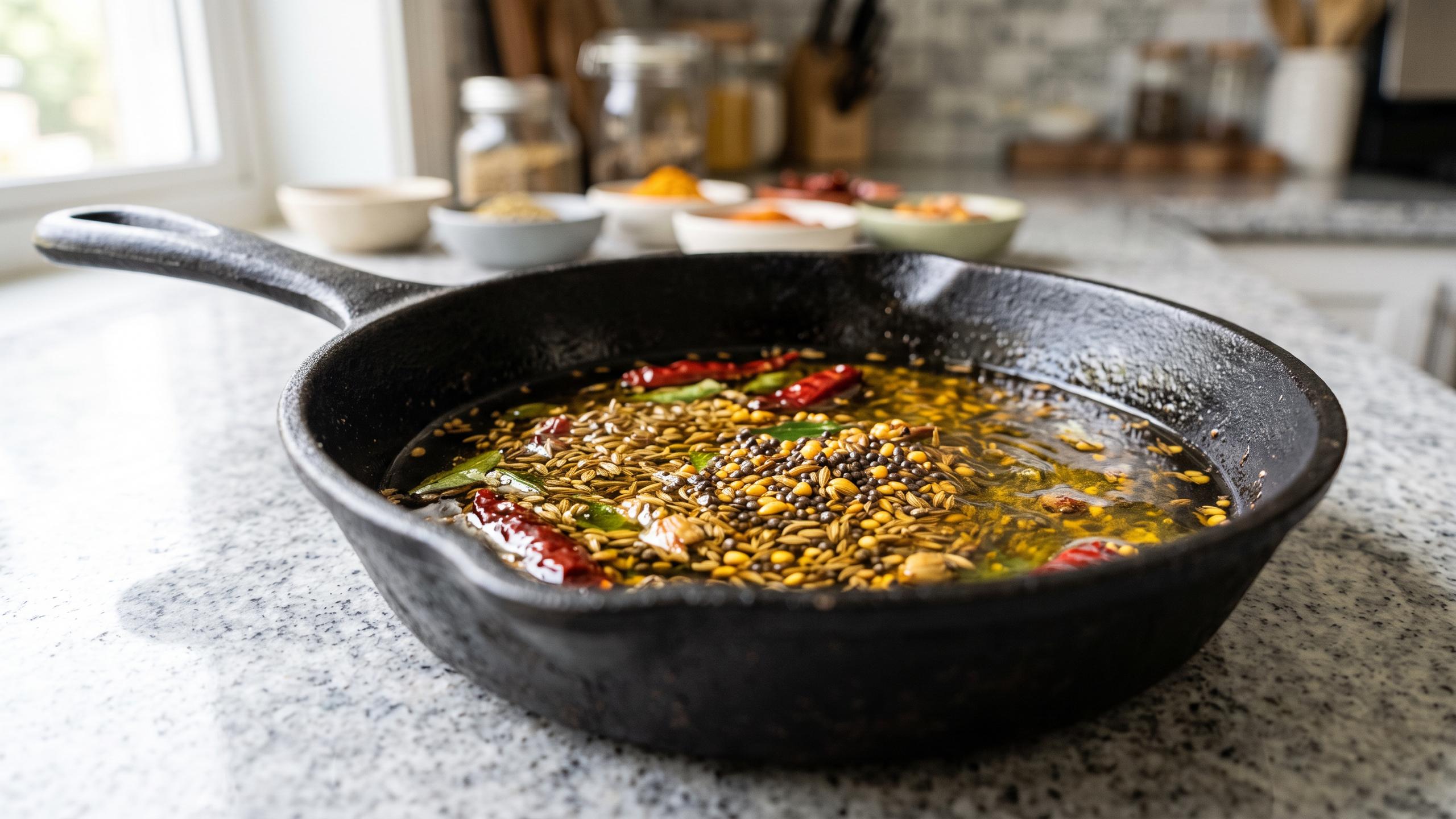
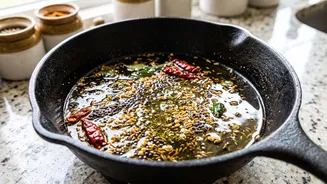
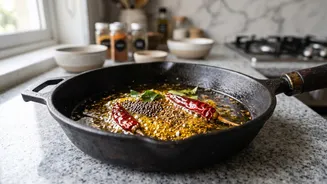
At its core, tadka—also called chaunk, baghar, or phodni depending on the region—is the process of briefly heating whole or ground spices in hot fat like oil or ghee. This fragrant, infused fat is then either used as the flavour base for a dish or poured
over the top as a final flourish. It's the technique that transforms a simple pot of boiled lentils into a complex, aromatic dal and gives countless curries their signature depth. While it may look like an intuitive, almost reflexive action, tadka is a precise, controlled chemical reaction designed to get the most out of every single spice.
The Science of Fat and Heat
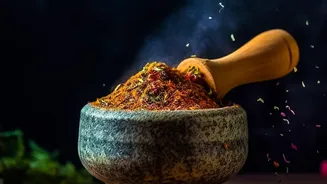
The magic of tadka lies in the powerful combination of fat and heat. Many of the aromatic compounds responsible for the distinct flavour and scent of spices like cumin, mustard, and coriander are fat-soluble, not water-soluble. This means they dissolve far more efficiently in oil than they would in water. The hot fat acts as a solvent, a carrier that pulls these essential oils out of the spices and distributes them evenly throughout the dish. Heat is the catalyst that makes this happen. When spices hit the hot oil, the high temperature works to rupture their tough cellular walls, unlocking the volatile oils trapped inside. These volatile compounds, which evaporate at low temperatures, are what we perceive as aroma. The heat quite literally awakens the spices, releasing a fragrant cloud that signals the flavour transformation has begun.
A Masterclass in Timing
True mastery of tadka is revealed in the order and timing of adding spices. Different spices release their compounds and burn at different temperatures. A skilled cook understands this delicate window, which can be mere seconds long. Hardy, heat-tolerant whole spices like mustard and cumin seeds go in first, into oil just below its smoking point. The audible pop of a mustard seed is the signal that its internal moisture has turned to steam, rupturing the seed and releasing its pungent flavour. More delicate ingredients like dried red chillies, garlic, or ground spices are added later, as they can burn in seconds and turn the entire mixture bitter. This sequential process is not random; it is a way of ensuring every spice in the blend hits its peak flavour at the perfect moment, creating a symphony of aromas rather than a chaotic mess.
More Than Just Flavour
Beyond creating incredible flavour, the tadka process also offers nutritional benefits. Many of the beneficial compounds in spices become more bioavailable when consumed with fat. Turmeric, for instance, contains curcumin, a powerful bioactive compound that the human body struggles to absorb on its own. However, studies show that consuming curcumin with fat and heat significantly improves its absorption. Similarly, spices known for their digestive properties, like cumin, fennel, and asafoetida (hing), become more effective when tempered in oil. This ancient technique doesn't just make food taste better; it can also make it more nutritious and easier to digest.