







Inspect Your Tyres Thoroughly
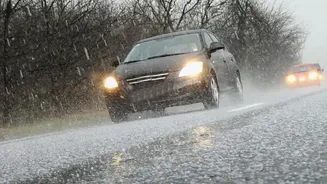
Your tyres are the only part of your car in contact with the road, making them the most critical safety component on wet, winding terrain. On rain-soaked roads, the risk of aquaplaning—where tyres lose grip and skid across a layer of water—is significantly
higher. Before your trip, check that the tyre tread depth is well above the minimum recommendation; experts suggest at least 3mm for optimal performance in the rain. Tyres with deep treads are better at channelling water away, ensuring a firm grip. Also, inspect for any cracks or bulges and ensure the tyre pressure, including the spare, is at the manufacturer's recommended level. Incorrect pressure can severely affect handling and braking.
Test Your Braking System
Effective brakes are non-negotiable, especially when navigating steep descents on slippery hill roads. Moisture can reduce brake efficiency, and worn-out brake pads will significantly increase your stopping distance. Before you leave, listen for any squeaking or grinding sounds when you apply the brakes, as these are clear warning signs. If you notice the car pulling to one side or any unusual vibrations while braking, get the system checked by a professional immediately. It's also wise to have the brake fluid level and quality checked; dark or cloudy fluid may have absorbed moisture and needs to be replaced.
Ensure Maximum Visibility
Heavy rain and fog are common in the hills during the monsoon, drastically reducing visibility. Your first line of defence is a perfectly functioning set of wiper blades. If your current blades leave streaks, make noise, or fail to clear water effectively, replace them. Top up your windshield washer fluid with a proper cleaning solution to help cut through road grime. Equally important are your lights. Do a walk-around of your car and check that all lights—headlights (low and high beam), taillights, brake lights, and fog lamps—are working correctly. Clean headlamp lenses can make a big difference in how well you can see and be seen.
Check the Battery and Electricals
The increased use of wipers, lights, and the defogger puts extra strain on your car's battery during the monsoon. A battery failure in a remote, rainy location can be a nightmare. Before your trip, ensure the battery terminals are clean, free of corrosion, and securely connected. If your battery is more than three years old or has shown signs of weakness, it's a good idea to have it professionally tested. Also, check that your car's horn and other electrical components are functioning correctly, as they are crucial for alerting other drivers in low-visibility conditions.
Don't Forget the Defogger
High humidity during the monsoon can cause your windshield and windows to fog up from the inside, severely impairing your vision. Your car's air conditioning system is key to solving this. The AC helps to remove moisture from the cabin air, clearing the glass much faster than just wiping it. Before you start your journey, test the AC and the defogger/demister function to ensure they are working effectively. A strong and functional defogger is essential for maintaining clear sightlines on misty mountain roads.
Pack a Hill-Driving Emergency Kit
While not a direct maintenance step, preparing an emergency kit is a crucial part of your pre-trip check. For hill driving in the rain, your kit should be more comprehensive than usual. Include essentials like a tow rope, a powerful flashlight, jumper cables, and a puncture repair kit. Also pack a first-aid kit, a reflective warning triangle, an umbrella, and a fully charged power bank for your phone. Getting stranded is never ideal, but being prepared for it can make a difficult situation much more manageable, especially in areas with patchy network coverage.