
An Unexpected Discovery
For decades, the Moon has been considered a sterile, lifeless world. Its surface is a brutal landscape, bombarded by unfiltered ultraviolet (UV) radiation from the sun and subject to wild temperature swings. Yet, a recent study published in Science Advances
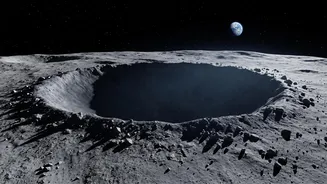
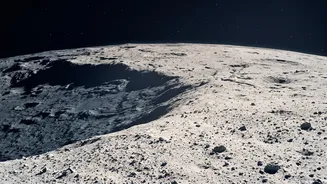
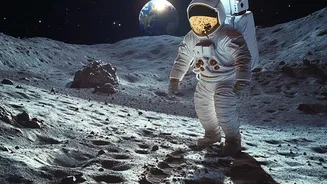
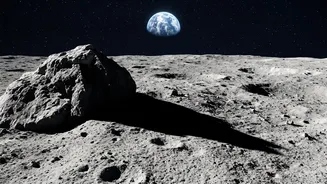
suggests this view may be incomplete. Researchers led by NASA's Goddard Space Flight Center have found that certain microbes from Earth could likely survive in specific pockets on the lunar surface, particularly in the shadowed craters of the Moon's South Pole. Using data from NASA's Lunar Reconnaissance Orbiter, the team created sophisticated models to map out potential 'survivable niches'—areas shielded from the most intense radiation and heat. The results were surprising: these habitable zones could be as large as a crater floor or as small as the shadow cast by an astronaut's boot print.
The Ultimate Survivors
The study focused on five types of microorganisms, including three bacteria and two fungi, all commonly found in environments associated with human spaceflight, like the International Space Station (ISS). One of the standout survivors was a fungus called Aspergillus niger, a common type of black mold often found in bathrooms. Previous experiments had already shown it could withstand the vacuum of space on the exterior of the ISS. In the new lunar simulations, it proved exceptionally resistant to UV radiation, able to survive even in areas with some partial sunlight—a remarkable feat given that UV light is powerful enough to be used for sterilization in hospitals. What stunned scientists was that these organisms are not typically classified as 'extremophiles,' the super-hardy microbes known for thriving in Earth's most punishing environments. Their resilience suggests that even common microbes are tougher than previously believed.
Surviving, Not Thriving
It’s crucial to understand what 'survival' means in this context. The study indicates these microbes could enter a dormant state of suspended animation, known as cryptobiosis, to endure the harsh conditions. They wouldn't be growing, reproducing, or colonizing the Moon. Instead, they would essentially be 'playing dead,' waiting for more hospitable conditions that, on the Moon, would likely never arrive. The models suggest that in the most protected, ultra-cold shadowed regions, some microbes could remain viable for short periods, potentially weeks or months, but not indefinitely. The primary threats remain the vacuum, extreme temperatures, and radiation, which would eventually destroy them. Nonetheless, the fact that they could survive at all is a game-changer.
A Question of Contamination
These findings present a dual challenge and opportunity for space exploration. On one hand, it complicates the search for pristine lunar chemistry and potential signs of ancient, native life. Astronauts are natural carriers of microbes, and it's impossible to create a perfectly sterile human mission. If Earth microbes can survive on the Moon, they could contaminate the very areas scientists want to study, making it difficult to know if any organic molecules discovered are truly lunar or just terrestrial hitchhikers. This is especially critical as NASA's Artemis program targets the Moon's South Pole, the very region identified as having these survivable niches. Scientists now emphasize the need to establish a clear baseline of the Moon's environment before human missions arrive, to ensure we don't mistake our own biological baggage for an alien discovery.
A Natural Laboratory in Space
On the other hand, the Moon could become an invaluable natural laboratory. Researchers argue that these tough microbes could be used in carefully controlled experiments to test the absolute limits of life in an environment that is nearly impossible to replicate on Earth. This research also fuels speculation about panspermia—the theory that life could be seeded between planets by meteorite impacts. If Earth microbes are this resilient, it's conceivable that ancient impacts could have blasted microbe-laden rocks from Earth to the Moon, where they might be preserved in a deep freeze within polar craters. In this sense, as one scientist noted, the Moon could act as 'Earth's freezer,' holding clues to our own planet's distant biological past. This new understanding forces us to think about the Moon not just as a dead rock, but as a dynamic scientific frontier with a story to tell.