





A Healthier, Kinder Scoop
The move towards plant-based desserts isn't just a fleeting trend; it's a significant shift driven by evolving consumer consciousness in India's cities. A growing awareness around health, ethics, and sustainability is inspiring many to seek out dairy-free
alternatives. Health is a major factor, with a significant portion of the Indian population experiencing some degree of lactose intolerance. This has created a ready market for desserts that offer indulgence without discomfort. Beyond digestion, urban consumers are increasingly adopting what they perceive as cleaner lifestyles, avoiding artificial preservatives and seeking out low-sugar options. Simultaneously, ethical considerations about animal welfare and the environmental footprint of the dairy industry are influencing purchasing decisions, especially among younger, globally-connected city dwellers.
The Nut of the Matter
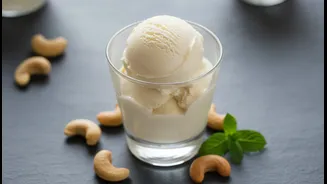
While early vegan ice creams often relied on soy or coconut milk, today's premium offerings are increasingly built on a foundation of nuts—primarily cashews and almonds. The reason is simple: texture and taste. Nuts, particularly cashews, are celebrated for their high fat content, which is crucial for mimicking the rich, creamy mouthfeel of traditional dairy ice cream. When blended, cashews create a remarkably smooth and neutral-tasting cream. This neutrality is a key advantage, providing a versatile canvas that allows other flavours, from delicate saffron to bold chocolate, to shine without being overpowered by a 'beany' soy aftertaste or a dominant coconut flavour. Almonds, while creating a lighter base, are also a popular choice, especially as brands innovate to overcome their tendency to freeze harder.
From Niche to Mainstream
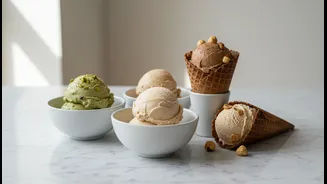
What was once a niche product found only in speciality health stores is now becoming a fixture in mainstream dessert culture, thanks in large part to a wave of innovation. Artisanal and new-age brands in metropolitan hubs like Mumbai, Delhi, and Bengaluru are leading the charge. They are moving beyond basic flavours, creating gourmet options inspired by traditional Indian sweets like kulfi and thandai, using ingredients such as rose, pistachio, and cardamom. The market is expanding rapidly, with market research projecting significant growth for vegan ice cream in India over the next decade. This growth is also fuelled by accessibility; the rise of quick commerce and food delivery apps means these premium desserts are just a few taps away for urban consumers.
The Science of Creaminess
Creating a vegan ice cream that stands up to its dairy counterpart is a feat of food science. The challenge is to replicate the role of milk fat and proteins, which create a smooth texture by preventing large ice crystals from forming. Nut butters and creams provide the necessary fat content, which helps achieve that desirable, slow-melting richness. Formulators also use natural stabilisers like guar gum and ingredients like oat milk to enhance texture and chewiness. Some brands even use sweeteners like maple syrup or dates not just for flavour, but because their composition helps inhibit ice crystal formation, contributing to a smoother final product. This careful balancing act of fats, solids, and sweeteners is how modern producers turn a simple nut milk into a decadent frozen dessert.