







Why the Pin Is Being Pulled
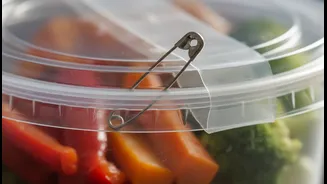
The Food Safety and Standards Authority of India (FSSAI) has issued an immediate ban on the use of metallic pins, staples, and wires for sealing or securing food packages. The order, issued in mid-June 2026, stems from a growing number of consumer complaints
and safety incidents where pins have been found inside food parcels and, alarmingly, even used as decorative or structural supports within cakes. Health experts have warned that accidentally ingesting a small metal pin can cause serious internal injuries, choking hazards, and dental damage. The FSSAI stated that the risk to public health is significant, prompting a nationwide directive that applies to everyone from local sweet shops to large-scale food delivery operators. Non-compliance carries the risk of heavy fines and penal action under the Food Safety and Standards Act, 2006.
A Challenge for Kitchens Big and Small
For decades, the stapler has been a quick, cheap, and effective tool for securing everything from paper bags to cake boxes, providing a basic level of tamper evidence. Its sudden removal from the equation presents a significant operational hurdle. For cloud kitchens, where packaging is the primary physical touchpoint with the customer, a secure and professional seal is non-negotiable. These delivery-only outfits, which often operate in high-pressure environments with hundreds of orders a day, rely on fast and efficient packaging processes. The challenge is to find an alternative that is just as quick and affordable but meets the new safety standards. Small bakeries and local eateries, which often operate on thin margins, now face the unexpected cost and logistical challenge of overhauling their entire packaging workflow.
Innovating Beyond the Staple
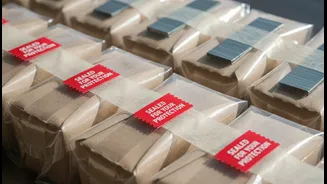
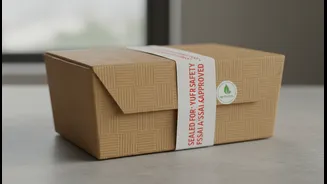
The ban is accelerating a shift towards more sophisticated packaging solutions. Businesses are now scrambling to adopt safer alternatives that maintain the integrity of their deliveries. Among the leading replacements are food-grade adhesive tapes and sticker seals, which can also serve as a branding opportunity. Many companies are exploring tamper-evident labels that tear or leave a 'VOID' message if disturbed, assuring the customer that their food has not been opened in transit. Other solutions include investing in cleverly designed boxes with interlocking flaps that create a secure closure without any external fasteners. While options like heat sealing have been suggested, the most practical and immediate swaps involve adhesives and smarter structural packaging designs that can be easily integrated into a fast-paced kitchen.
The Price of a Safer Package
While enhanced safety is the undeniable goal, it comes at a cost. Alternative packaging like compostable containers or those with specialized seals can be 15-30% more expensive than their basic plastic or paper counterparts. This added expense, coupled with the cost of writing off old inventory of staple-friendly packaging, can be a significant burden, especially for smaller businesses. Furthermore, some adhesive solutions may raise new questions about sustainability, depending on the materials used. The move is part of a broader regulatory push towards safer and more sustainable packaging, with rules around single-use plastics also tightening. For many businesses, this moment is a forced reckoning, pushing them to balance cost, consumer safety, operational efficiency, and environmental responsibility all at once.
What This Means for Your Next Order
As a consumer, the most immediate change you'll notice is the absence of staples on your food parcels. Instead, you might see branded paper seals, adhesive tapes, or boxes that lock shut more securely. The primary benefit is a significant reduction in the risk of finding a foreign metal object in your meal. This move is designed to build greater trust in the food supply chain, particularly in the booming delivery sector where the package is the final handshake between the brand and the buyer. While kitchens adjust, there may be a brief period of transition, but the ultimate outcome is a safer and more reliable food experience for everyone. The end of the stapler pin signals a small but meaningful step forward in India's food safety standards.