


What 'Peak Brilliance' Means
Venus is consistently the brightest planet in our sky, but on September 18, it will be exceptionally luminous. This event is known as its 'greatest brilliancy'. At this point, it will shine at a magnitude of -4.8, making it brighter than any other star-like
object in the night sky. This peak brightness isn't a one-night-only affair; Venus will appear spectacularly bright for several evenings before and after this date, but the 18th marks its maximum illuminated extent from our perspective on Earth. Even from light-polluted cities, its glow will be unmistakable.
The Science Behind the Spectacle
Venus's incredible brightness is due to a combination of factors. Its atmosphere is covered in thick clouds of sulfuric acid that are highly reflective of sunlight. The term 'greatest brilliancy' occurs when the planet's position relative to Earth and the Sun creates the perfect balance between its proximity to us and the amount of its sunlit surface we can see. During this period, Venus is in a crescent phase, similar to our Moon. While it's not fully illuminated from our viewpoint, it is relatively close to Earth in its orbit, making its apparent size larger and its overall brightness more intense. This moment happens about a month before or after Venus passes between Earth and the Sun, an event called inferior conjunction.
General Viewing Guide for India
The best time to look for Venus will be shortly after sunset. Look towards the low western or west-southwestern horizon. As twilight deepens, Venus will emerge as a brilliant, steady point of light. You won't need any special equipment to see it; its brightness will make it easily visible to the naked eye. On September 14, just a few days before its peak, a thin crescent Moon will appear near Venus, creating a beautiful pairing in the evening sky. This offers a fantastic photo opportunity and a great way to orient yourself before the main event. Observers in parts of Asia may even witness the Moon pass in front of Venus during the daytime on September 14.
City-by-City Timings
While the general direction is west, the exact viewing window depends on your local sunset time. The key is to start looking about 30 to 45 minutes after the sun goes down, when the sky darkens enough for Venus to pop into view. Here are approximate times to begin your watch on September 18, 2026: Delhi: Look west-southwest from around 6:45 PM onwards. Mumbai: Start observing the western sky from approximately 7:00 PM. Kolkata: Your viewing window will begin earlier, around 6:15 PM, in the western sky. Chennai: Look towards the west-southwest from about 6:30 PM. * Bengaluru: Begin your search in the west-southwest around 6:40 PM. These times are estimates. The planet will be low on the horizon, so finding a spot with an unobstructed view to the west is crucial.
Tips for the Best Viewing Experience
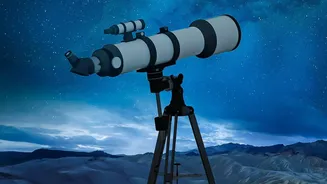
To make the most of this celestial show, a little preparation goes a long way. First, find a location with a clear, unobstructed view of the western horizon, away from tall buildings and trees. While Venus is bright enough to pierce through city lights, escaping to a darker area will always enhance the experience. Give your eyes at least 15 minutes to adapt to the darkness. If you have a pair of binoculars, bring them along. While you won't need them to spot Venus, they will be powerful enough to reveal its beautiful crescent phase, a sight that is truly rewarding. Any standard pair of binoculars (like 10x50) should be sufficient to show that Venus is not just a point of light.