




Our Microbial Shadow
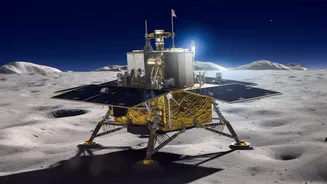
Humans are walking ecosystems. Every person carries trillions of microorganisms, with about a million bacteria on every small patch of skin. These microbes inevitably escape from spacesuits, habitats, and equipment, a process known as forward contamination.
While robotic missions can be sterilized at high heat, this isn't possible for crewed missions. As a result, wherever humans go in the cosmos, a cloud of terrestrial life follows, raising a critical question: what happens when these microbes land on another world?
A New, Complicated Frontier
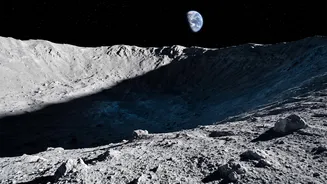
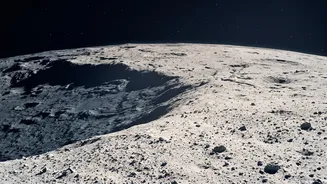
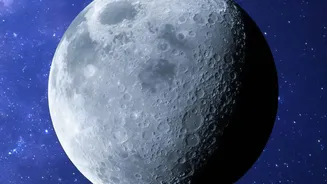
For decades, the Moon was considered so hostile—with its lack of atmosphere, extreme temperature swings, and intense radiation—that it was deemed of little interest for biological studies. Planetary protection protocols were far less stringent than for a world like Mars, where the potential for life has been a key scientific driver. However, recent discoveries and future plans have changed this view entirely. The focus of modern lunar exploration, including NASA's Artemis program, is the Moon's south pole. This region is home to permanently shadowed craters where temperatures are incredibly cold and water ice may be preserved. These are the very resources that make a long-term base feasible, but they also create potential havens for our microbial hitchhikers.
Survival, Not Thriving
A recent NASA study published in August 2026 has brought this issue into sharp focus. Using simulations based on data from the Lunar Reconnaissance Orbiter, scientists found that certain microbes could survive in the shadowed nooks and crannies near the lunar south pole. These shaded areas, some no larger than an astronaut's bootprint, can protect organisms from the sun's most intense radiation. The research showed that while most bacteria would have a tough time, some fungi like Aspergillus niger—a common black mold found in our bathrooms—could potentially survive for more than a week. It's crucial to note that this is about survival, not growth or reproduction. The microbes would likely enter a dormant state, but their very presence creates a new challenge for science.
The Scientific Stakes
The primary concern is the integrity of lunar science. Scientists want to study the pristine chemistry of the Moon to understand its geological history and the early solar system. If the areas they sample are already contaminated with Earth life, it becomes incredibly difficult to distinguish between what is authentically lunar and what we brought with us. This contamination could compromise the search for prebiotic molecules or other chemical clues that have been locked in the lunar soil for billions of years. Establishing a clear baseline of what's on the Moon before we establish a long-term presence is therefore seen as critically important.
An Unavoidable Experiment
Some scientists, however, see an opportunity in this unavoidable situation. The Moon, with its extreme but now better-understood conditions, could serve as a valuable natural laboratory. By carefully monitoring the microbes we introduce, researchers can study the absolute limits of terrestrial life in an environment that is impossible to perfectly replicate on Earth. This could provide vital insights for future missions to Mars and beyond, where planetary protection will be even more critical. Understanding how our microbial companions fare on the Moon will help develop better protocols and technologies to ensure that when we search for life elsewhere, we don't just find a reflection of ourselves staring back.