







The Invisible Contamination Challenge
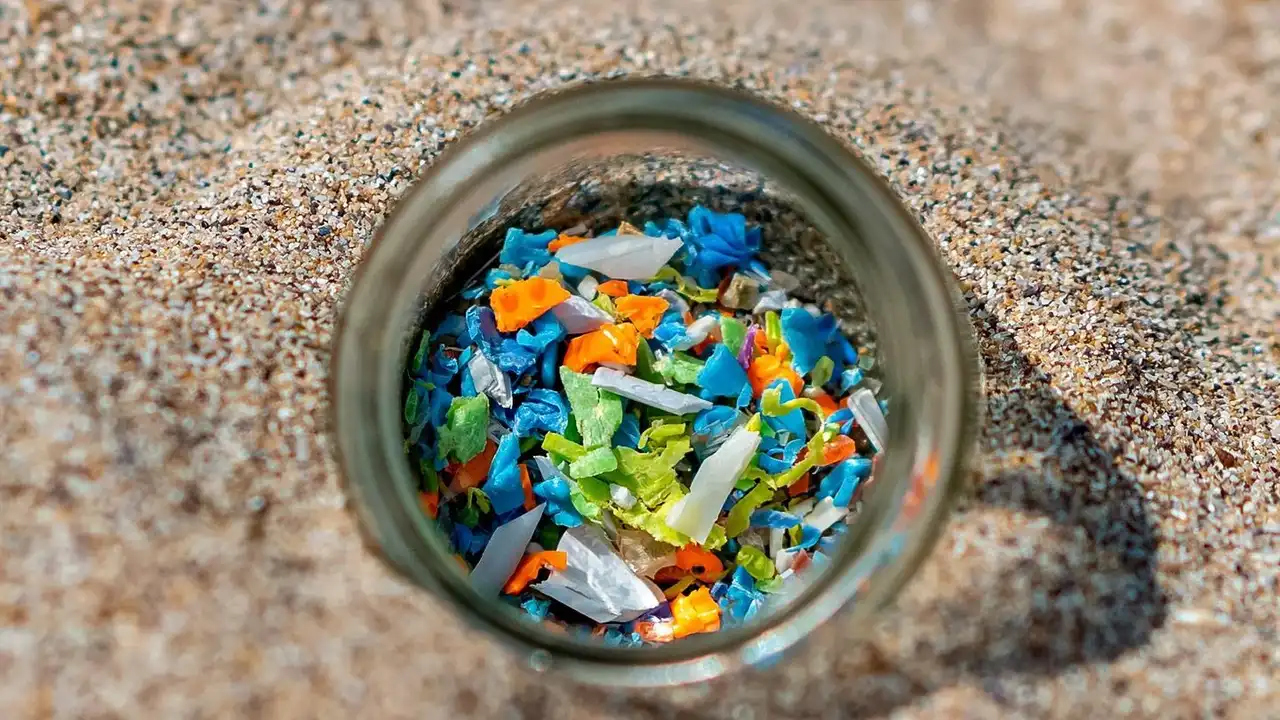
For years, the conversation around microplastics has been unsettlingly vague. We know they are everywhere—tiny plastic particles less than 5 millimetres in size, originating from degraded plastic waste, synthetic textiles, and packaging. They have been found
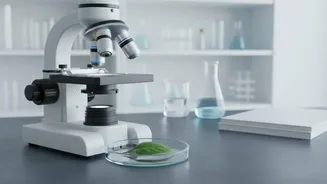
in everything from seafood and salt to bottled water and honey. But for scientists, simply knowing they are present isn't enough. The real challenge has been accurately detecting, counting, and identifying these particles within complex food items. Food is a messy matrix of proteins, fats, and carbohydrates, making it incredibly difficult to isolate minuscule plastic fragments without damaging them or losing them in the process. Early methods often relied on manually counting particles under a microscope, a slow, error-prone process that couldn't reliably identify the type of plastic or detect the smallest, potentially most harmful, particles.
Spectroscopy: Shining a Light on Plastics
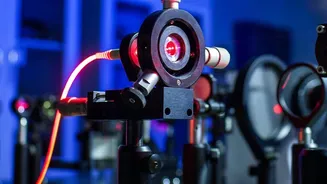
To move beyond simple counting, researchers have turned to more sophisticated analytical techniques, primarily vibrational spectroscopy. The two leading methods are Fourier-Transform Infrared (FTIR) spectroscopy and Raman spectroscopy. Think of these techniques as high-tech fingerprinting for materials. FTIR works by shining infrared light on a sample and measuring which wavelengths of light are absorbed by the chemical bonds in the plastic. Raman spectroscopy works in a complementary way, shining a laser on a particle and measuring how the light scatters. Each type of plastic—like polyethylene (PE), polypropylene (PP), or PET—has a unique spectral 'fingerprint', allowing scientists to not only confirm that a particle is plastic but also to identify its exact chemical composition. This is crucial because different plastics contain different chemical additives, some of which are known to be harmful to human health.
Refining the Methods for Smaller Particles
These spectroscopic methods have transformed the field, but they are not without their own challenges. FTIR microscopy is highly effective for identifying particles down to about 10-20 microns, but Raman microscopy has a higher spatial resolution, enabling it to detect particles as small as 1 micron. As the particles get smaller, the analysis becomes more difficult. To improve accuracy, labs are developing new workflows. This often involves a multi-step process: first, the food sample is treated with enzymes or chemicals to gently digest the organic matter, leaving the plastic particles behind. The particles are then filtered and isolated for spectroscopic analysis. Some labs even use fluorescent dyes that selectively stain plastic particles, making them easier to spot and distinguish from natural debris like bone or shell fragments.
The Rise of AI and Automation
Analysing a single food sample can reveal thousands of potential particles, making manual analysis impossible at a large scale. This is where artificial intelligence (AI) and automation are becoming game-changers. New software can now automate the entire process, using microscopy to scan a filter, identify every particle, and then direct the spectrometer to analyse each one. Furthermore, researchers are training AI models, specifically neural networks, to recognise the spectral fingerprints of plastics. Recent studies have shown that AI can identify microplastics directly on the surface of foods like fish fillets with high accuracy, potentially bypassing the need for time-consuming chemical digestion. These AI-driven approaches are faster, more consistent, and can process vast amounts of data, helping to build a much clearer picture of contamination levels.
The Critical Push for Standardization
One of the biggest hurdles holding back microplastic regulation has been the lack of standardized methods. If one lab uses a different detection method than another, their results can't be reliably compared. This makes it impossible to establish trends, assess the global scale of the problem, or set safety limits for food. Recognizing this, international bodies are now working to create uniform protocols for sampling, sample preparation, and analysis. For example, new standards like ASTM D8401-24 and ISO 24187 are providing a much-needed framework for labs to follow, ensuring that data is consistent and defensible. This effort is a crucial precursor to creating any meaningful regulations on microplastics in our food supply.