




A Chilly New Tool in Orbit
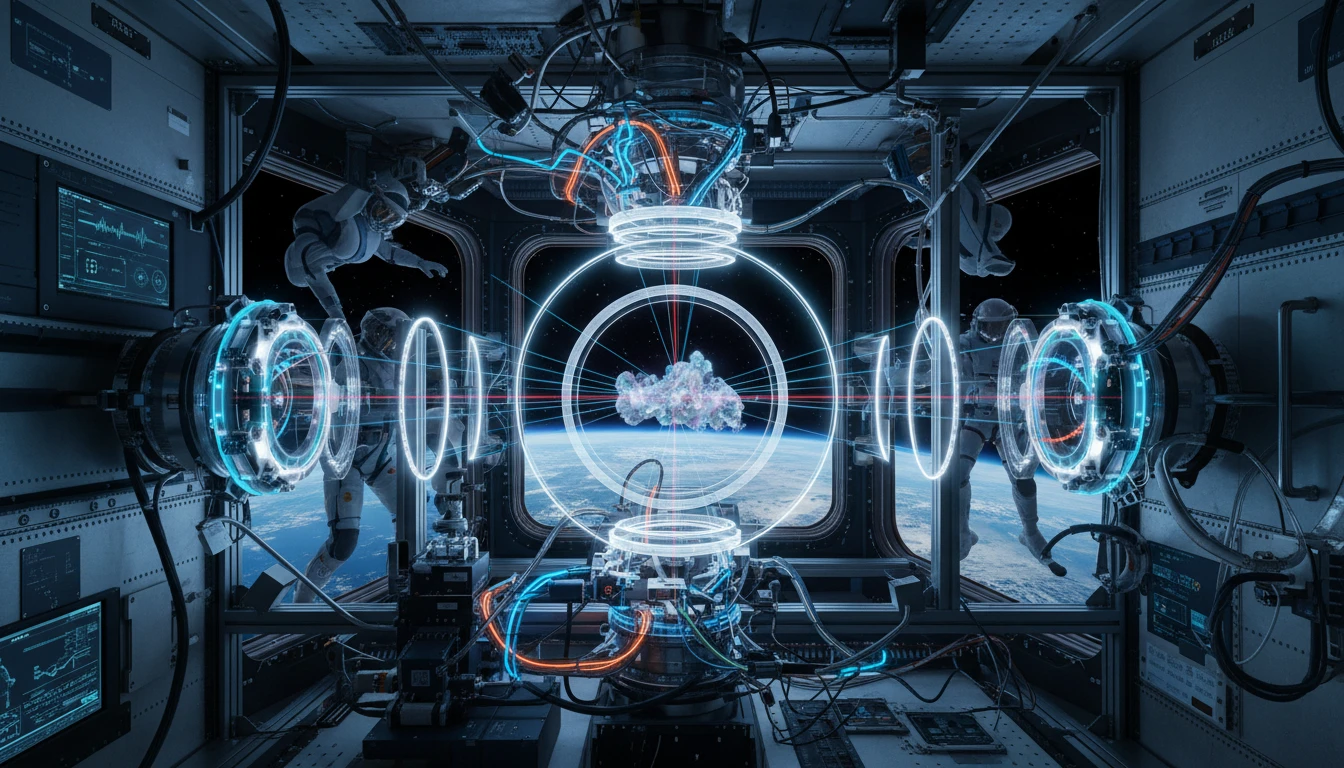
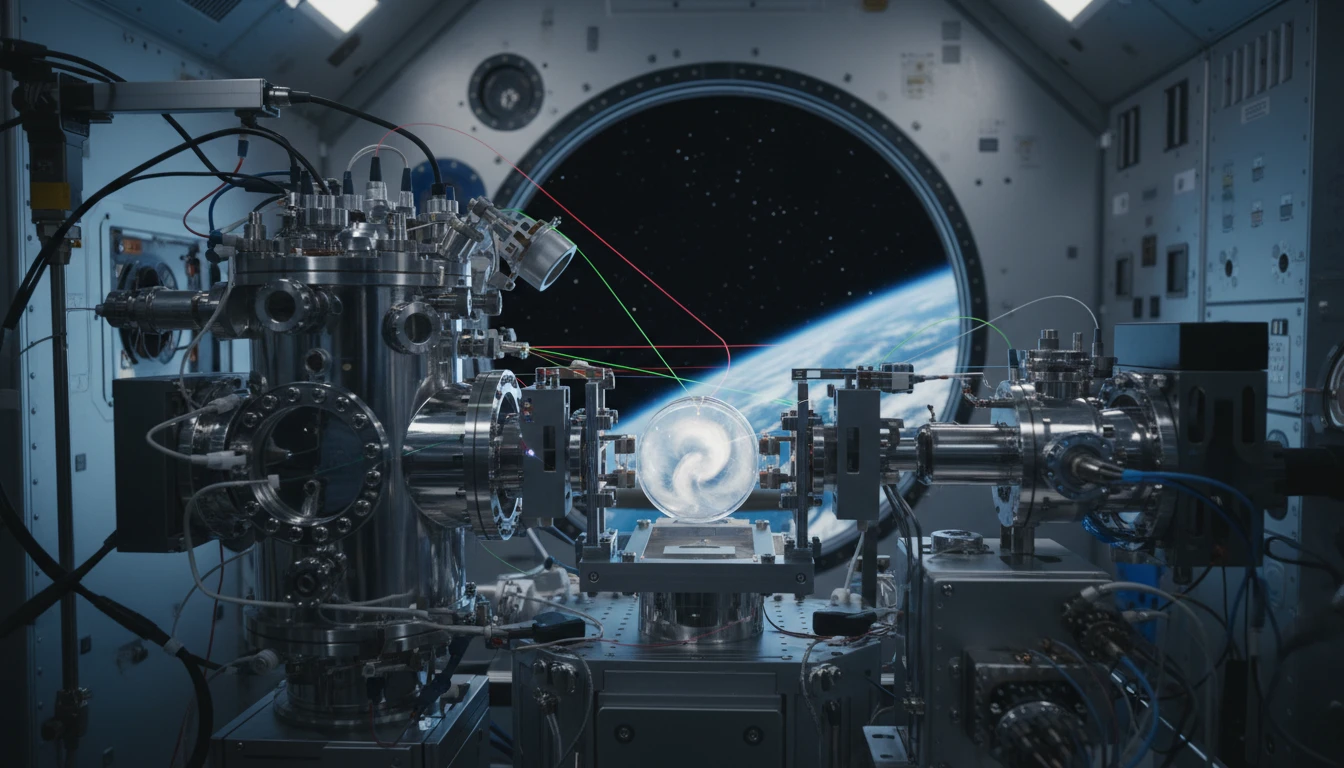
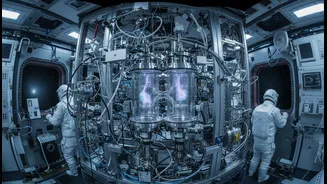
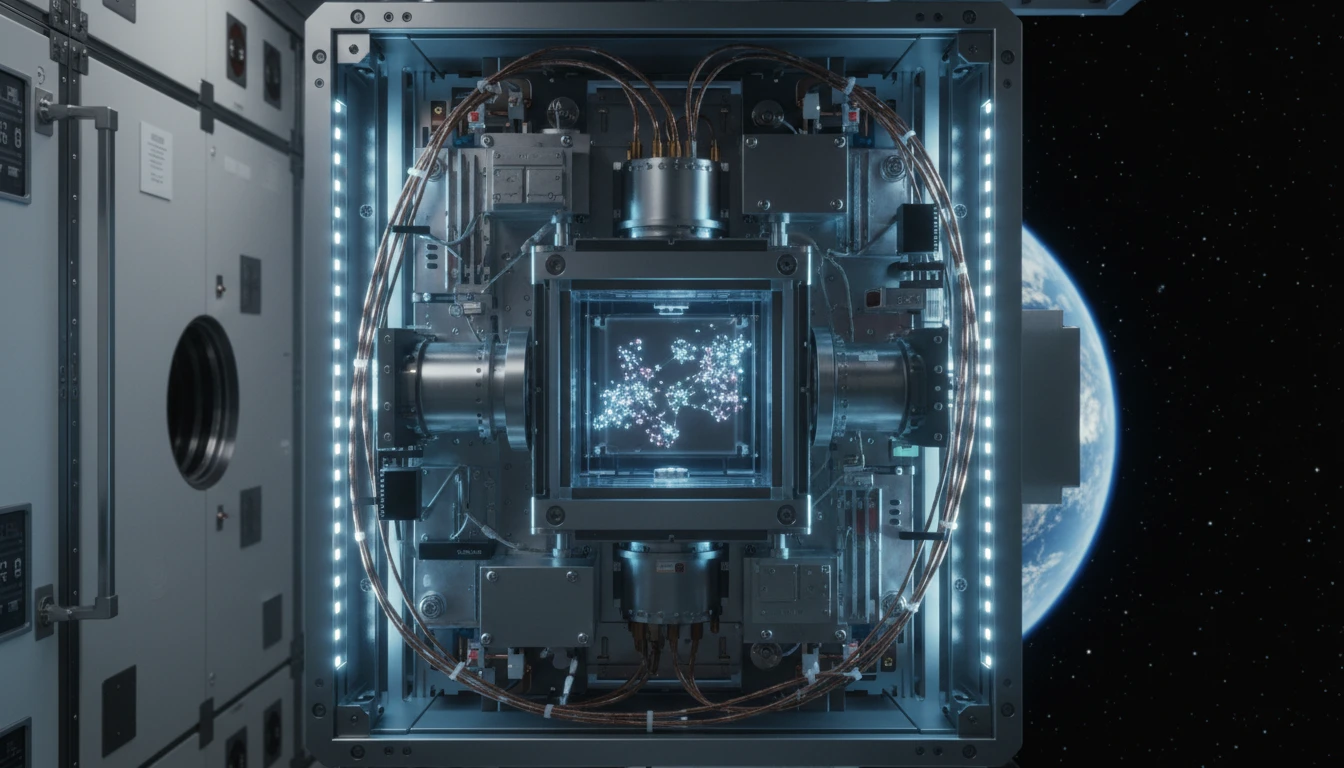
The instrument at the heart of this leap forward is NASA's Cold Atom Laboratory (CAL), a facility roughly the size of a mini-fridge that has been operating on the ISS since 2018. In mid-2026, astronauts completed the fourth major upgrade to this remarkable
lab. The new hardware, launched in April and installed in May, includes a redesigned magnetic trap and improved atom sources. These enhancements give scientists on the ground unprecedented control to study matter at its most fundamental and bizarre level. The CAL is a multi-user facility, supporting five international research teams dedicated to probing the frontiers of physics.
The Science of Absolute Zero
The Cold Atom Lab’s purpose is to chill atoms to temperatures just a fraction of a degree above absolute zero, or minus 273.15 degrees Celsius. At these extreme temperatures, atoms slow to a near standstill and begin to exhibit strange quantum properties on a macroscopic scale. They can form a mysterious fifth state of matter, predicted by Satyendra Nath Bose and Albert Einstein in the 1920s, known as a Bose-Einstein Condensate (BEC). In this state, a cloud of individual atoms starts to behave like a single, unified quantum wave. On Earth, creating and observing these fragile BECs is a challenge; gravity quickly pulls the atom clouds apart, giving researchers only milliseconds for their experiments.
The Power of Microgravity
This is where the ISS provides an unparalleled advantage. In the persistent freefall of orbit, the effects of gravity are negligible. This allows the Cold Atom Lab to create BECs that can be observed for many seconds, a huge increase compared to terrestrial labs. This extended observation time is crucial. It allows the quantum waves to grow larger and evolve undisturbed, giving scientists a much clearer window into their behaviour. The recent upgrades further enhance this capability, allowing for the creation of larger condensates and giving scientists the ability to manipulate the clouds into different shapes, like bubbles or flat sheets, to study how this impacts their quantum properties.
From Deep Space to Daily Life
While studying the wave-like nature of matter in space seems abstract, the implications could be profound. This research is part of what scientists call “quantum 2.0,” the direct manipulation of quantum states to build new technologies. As Ethan Elliott, a deputy project scientist for CAL, points out, the first quantum revolution gave us lasers, mobile phones, and MRI machines. This new wave of research could lead to ultra-precise quantum sensors. Such devices could enable navigation without relying on GPS, create incredibly detailed maps of Earth’s gravitational field, or even help in the search for mysterious forces like dark energy. In essence, by pushing the boundaries of fundamental science, the Cold Atom Lab is paving the way for technologies that could transform everything from space exploration to how we monitor our own planet.