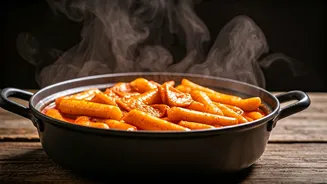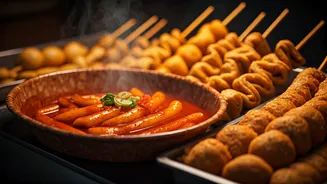


The Rise of Ramyeon and the 'Fire Noodle' Craze
The gateway for many has been instant noodles, or *ramyeon*. Brands like Samyang, Nongshim, and Ottogi have become household names, transforming the category long dominated by a few legacy players. [2, 7] In particular, Samyang’s Buldak Hot Chicken Flavor
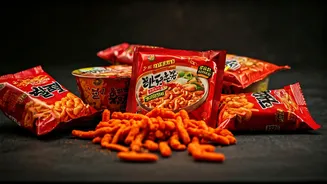
Ramen—often called 'fire noodles'—has achieved cult status. [3] This isn't just about heat; it's about a 'cultural experience'. [6] The appeal lies in its chewy noodles and a complex, lingering spice that feels new. The viral 'spicy noodle challenges' on social media platforms further amplified the trend, turning a simple meal into an event and a statement. [2] The demand is no longer confined to metro cities like Delhi, Mumbai, and Bengaluru; it's rapidly expanding into Tier-2 and Tier-3 cities through e-commerce and quick delivery platforms. [2]
Fuelled by the Hallyu Wave
This culinary shift is inseparable from the Hallyu, or Korean Wave—the global explosion of South Korean pop culture. [5] K-dramas and K-pop have provided a powerful window into Korean life, and food is a central part of that picture. [11] Scenes of characters sharing a bubbling stew or devouring a bowl of ramyeon sparked a curiosity that quickly became a craving. [2, 11] According to one report, viewership of K-dramas in India jumped 370% in one year, and the demand for Korean noodles followed with a 162% volume growth. [5] For millions of Gen Z and millennial fans, eating Korean food is a way to connect more deeply with the culture they admire. [6, 12] This has created a powerful market pull that brands, both Korean and Indian, are eager to satisfy. [15]
A Familiar Yet Different Kind of Spice
One reason for the seamless adoption is the flavour compatibility. The Indian palate has a deep appreciation for bold, layered spices, and Korean cuisine offers a similar intensity. [5, 11] However, the heat profile is distinct. Much of Korean spice comes from *gochugaru* (chilli powder) and *gochujang* (fermented chilli paste). [10, 28] Unlike many Indian chillies that deliver a sharp, pungent heat, *gochugaru* often has a fruitier, smokier, and milder profile. [10, 29] *Gochujang* adds another layer of complexity, bringing together sweetness, saltiness, and a deep umami flavour from fermented soybeans. [23, 28] This sweet-and-spicy combination has found a genuine audience, offering a novel experience that still feels comfortably familiar. [20]
From Niche Imports to Mainstream Fusion
The trend that started with imported noodles is now influencing India's domestic food industry. Major Indian FMCG companies are launching their own Korean-inspired products. [21] ITC has introduced Korean-style potato chips and noodles under its Bingo! and YiPPee! brands, while Lay's has rolled out a "Korean Chilli" flavour. [6, 21] Even Nestlé has launched a Korean barbecue flavour for its Maggi noodles, adopting the fiery red packaging typical of Korean brands. [15] This fusion extends to restaurants, with chefs experimenting with dishes like kimchi dosas and gochujang chicken tikka. [3, 5] The market for Korean packaged food in India is now a multi-crore category, growing from just Rs 2 crore in 2021 to over Rs 65 crore by 2023. [7, 15] This indicates a structural shift in the Indian snack market, proving the trend has significant commercial power. [3, 8]