







A Quick Refresher: What is Gaganyaan?
Gaganyaan is the Indian Space Research Organisation's (ISRO) ambitious programme to send a crew of three Indian astronauts into a Low Earth Orbit of 400 kilometres for a three-day mission and bring them back safely. The mission will make India the fourth
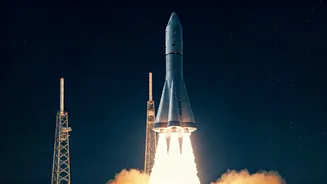
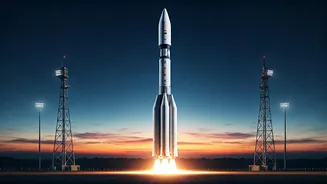
country in the world to have an independent human spaceflight capability, after the United States, Russia, and China. This isn't just about planting a flag; it's a monumental leap for Indian science, technology, and industry, expected to generate thousands of jobs and inspire a new generation. The spacecraft consists of a Crew Module, where the astronauts will live, and a Service Module providing support. This entire assembly will be launched by a human-rated version of ISRO's most powerful rocket, the LVM3.
The Gauntlet of Trials: No Margin for Error
When human lives are at stake, there is no room for error. This is why the Gaganyaan mission is preceded by a comprehensive and demanding series of tests. ISRO's philosophy is simple: test, test, and test again. These trials are designed to validate every system, from the rocket's performance to the crew's emergency escape and recovery procedures. This includes a wide range of simulations and hardware tests. Major milestones already achieved include successful hot-fire tests of the Service Module's propulsion system, which is vital for steering in orbit and returning to Earth. The Indian Navy has also conducted recovery trials using a mockup of the crew capsule, rehearsing the crucial process of retrieving the astronauts safely from the sea after splashdown.
The All-Important Abort Tests
Among the most critical trials are the abort missions. These are designed to test the Crew Escape System (CES), which acts like an ejector seat to pull the crew capsule and its astronauts to safety in case of a problem with the launch vehicle. ISRO has already conducted the first successful Test Vehicle Abort Mission-1 (TV-D1) in October 2023. During this test, a simulated anomaly was triggered, and the escape system flawlessly pulled the module away from the rocket at transonic speeds, followed by a successful parachute deployment and splashdown. This was a nerve-wracking but perfectly executed demonstration of the safety systems. ISRO plans to conduct at least three more such abort tests to validate the system under different flight conditions before an astronaut ever boards the rocket.
Next Up: The Uncrewed Flights
The next major step will be the uncrewed orbital test flights. These are full-dress rehearsals of the entire mission, from launch to landing, but without astronauts on board. The first uncrewed mission, designated G1, is a top priority for ISRO and is anticipated for the latter half of 2026. Instead of a crew, these flights will carry a humanoid robot named 'Vyommitra' to simulate the human presence and collect vital data on life support, environmental controls, and flight dynamics. There are expected to be at least two uncrewed missions. These flights will test the human-rated LVM3 rocket, the orbital module's performance, the crew module's re-entry aerodynamics, and the all-important recovery operations from the sea. Every successful step in these uncrewed missions builds confidence for the final, crewed launch.
The Final Countdown to History
Each successful test, from engine firings to parachute deployments and uncrewed flights, is a crucial piece of the puzzle. The data gathered from these trials directly feeds into ensuring the final Gaganyaan system is as safe and reliable as humanly possible. While timelines in space exploration can be fluid due to the complex nature of the technology, the current trajectory points toward the first crewed flight, H1, around early 2027, following the successful completion of the uncrewed test campaigns. These upcoming trials, therefore, are not just procedural checks; they are the very foundation upon which India's historic leap into human spaceflight will be built. The success of Gaganyaan rests entirely on the success of these meticulous, high-stakes rehearsals.