




The Allure of Contrast and Texture
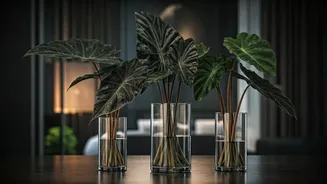
Why does this combination work so beautifully? It’s all about contrast. The deep, rich, often near-black leaves of certain Alocasia varieties absorb light, creating a sense of depth and mystery. Their velvety texture adds a layer of softness and luxury.
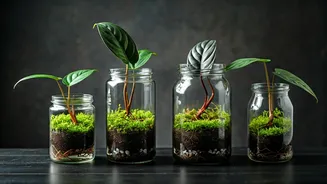
When placed within a clear glass vase, the transparent container does the opposite: it reflects light and feels crisp, clean, and unobtrusive. The vase doesn't compete with the plant; it frames it. This pairing allows the intricate details of the leaves—their dark surfaces, bright veins, and unique shapes—to become the undisputed focal point, creating a minimalist yet impactful statement in any room.
Choosing the Right Glass Vessel
The secret to success lies in treating the glass vase as a decorative cachepot, not a planter. Never plant your Alocasia directly in a vase without drainage holes; this is a fast track to root rot. Instead, keep the plant in its plastic nursery pot and simply slip it inside the glass vase. This allows you to easily remove the plant for watering. Look for a vase that is slightly wider and taller than the nursery pot. A simple cylindrical vase offers a clean, contemporary look, while a footed urn or a vessel with a subtle tint can add a touch of vintage elegance. Ensure the glass is heavy enough to prevent tipping as your plant grows.
The Icon: Alocasia 'Black Velvet'
Alocasia reginula 'Black Velvet' is the quintessential star for this look. Its heart-shaped leaves are a deep, matte black with a texture that genuinely feels like crushed velvet. Contrasting silvery-white veins slice through the darkness, adding a striking graphic element. Being a more compact 'jewel' Alocasia, it's perfect for desktops and shelves. To style it, choose a simple, unadorned cylindrical vase that lets the plant's dramatic foliage do all the talking. Care Tip: 'Black Velvet' thrives in bright, indirect light and high humidity. Water when the top two inches of soil feel dry, and be careful not to let it sit in water. A layer of decorative moss or pebbles on top of the soil inside the nursery pot can complete the look seen through the glass.
The Contender: Alocasia 'Ninja'
Often mistaken for 'Black Velvet', Alocasia 'Ninja' is a distinct and equally stunning variety. Its leaves are a similar dark green-black but are thicker, more rounded, and have a shinier, more leathery texture. The silver veins are more pronounced and create a bolder pattern. The 'Ninja' has a robust, compact structure that makes it an excellent candidate for a glass display. Its glossy finish provides a beautiful counterpoint to the matte texture of a 'Black Velvet' if you decide to group them. Pair it with a vase that has a slightly wider mouth to accommodate its broad, shield-like leaves. Care Tip: Its care is very similar to 'Black Velvet', requiring consistent moisture without being waterlogged. It appreciates a humid environment, so a spot in a well-lit bathroom or near a humidifier is ideal.
The Moody Grey: Alocasia 'Maharani'
For a different take on 'dark and dramatic', consider the Alocasia 'Maharani', also known as the 'Grey Dragon'. While not black, its leaves have a deep, stormy grey-green hue and a fascinating, almost reptilian texture. The foliage is thick and stiff, giving it a strong, architectural presence. This stony appearance looks incredible inside a clear glass vase, creating a study in textures—smooth glass against a rough, prehistoric-looking leaf. The 'Maharani' brings a sophisticated, moody vibe that feels both organic and sculptural. Care Tip: This hybrid is known for being slightly more forgiving than other jewel Alocasias. It still prefers bright, indirect light and well-draining soil but can tolerate slightly less humidity.