





What Are Hydrogen Trains?
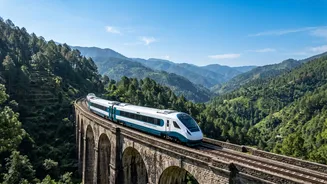
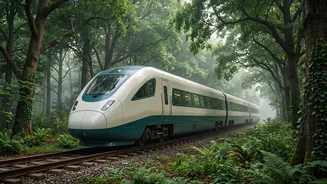
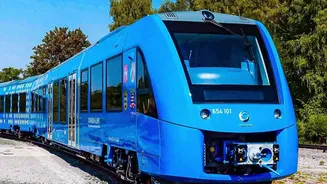
Imagine a train that glides through scenic hills, emitting only water vapour instead of diesel fumes. That's the promise of hydrogen fuel cell trains. These are essentially electric trains that create their own power on board. Inside a fuel cell, hydrogen stored
in tanks reacts with oxygen from the air to produce electricity. This electricity then powers the motors that move the train. Unlike diesel engines that burn fossil fuels and release carbon dioxide and other pollutants, the only byproduct of this process is clean, drinkable water. This technology allows for zero-emission travel on routes where installing overhead electric lines is difficult or undesirable, making it a key part of the green transition. India's first indigenously built hydrogen-powered train was launched on July 17, 2026, on the Jind-Sonipat section of the Northern Railway, marking a major milestone.
The 'Hydrogen for Heritage' Initiative
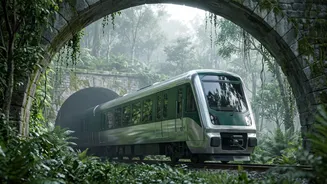
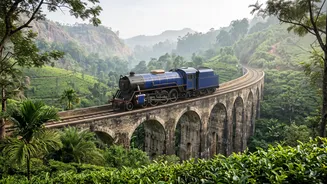
Indian Railways has strategically chosen its world-famous heritage corridors to debut this futuristic technology under the 'Hydrogen for Heritage' initiative. Routes like the Kalka-Shimla Railway, Darjeeling Himalayan Railway, and others are set to receive these clean-energy trains. The logic is twofold. Firstly, these routes are major tourist attractions, and running zero-emission trains enhances their charm and eco-friendly appeal. It's a powerful statement that combines preserving history with adopting sustainable technology. Secondly, these hill railways are often on narrow-gauge lines where electrification can be challenging and visually intrusive. By retrofitting existing Diesel Electric Multiple Unit (DEMU) coaches with hydrogen fuel cells, the Railways can decarbonise these sensitive ecosystems without costly and complex infrastructure overhauls.
A Crucial Step Towards 'Net Zero'
The hydrogen train project is a high-profile component of a much larger mission: Indian Railways' goal to become a 'Net-Zero Carbon Emitter' by 2030. As the fourth-largest rail network in the world, its carbon footprint is significant, and its decarbonisation efforts will have a major impact on India's national climate commitments. The primary strategy towards this goal is the massive electrification of its broad-gauge network, which was already 99.6% complete as of March 2026. Hydrogen power serves as a complementary solution, targeting those specific routes where electrification isn't feasible. This multi-pronged approach, which also includes installing vast solar and wind power capacity, is transforming the lifeline of the nation into one of the greenest mass transit systems globally.
The Road Ahead: Progress and Challenges
While the vision is clear, the journey has just begun. The launch of the first hydrogen train on the Jind-Sonipat route is a pilot project to demonstrate the technology's feasibility in Indian conditions. Indian Railways plans to roll out 35 hydrogen trains across its heritage routes. However, significant hurdles remain. The primary challenge is the high cost and limited availability of 'green' hydrogen, which is produced using renewable energy. Building the necessary infrastructure for hydrogen production, storage, and refuelling from scratch is another substantial investment. Early trials have also shown that advanced technology alone doesn't guarantee success; the pilot on the Jind-Sonipat route has seen very low passenger numbers, prompting a review of the route to ensure the service matches actual travel demand.