
The Joy of Zero-Waste Preserving
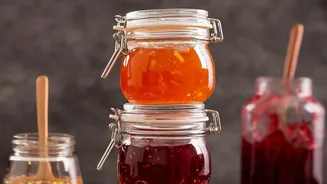
Making marmalade is a timeless kitchen tradition, a perfect way to capture the bright flavour of citrus. More than that, it’s a brilliant exercise in zero-waste cooking. Instead of discarding the peels, this process uses the entire fruit, transforming
what might be considered waste into a gourmet treat. The peels, pith, and juice all play a crucial role. The zest provides the essential oils and signature bitter notes, while the pith and seeds are rich in natural pectin, the gelling agent that gives marmalade its perfect set without needing commercial additives. Embracing this method not only gives you a superior tasting product but also connects you to a more sustainable way of living, one peel at a time.
Gather Your Ingredients and Tools
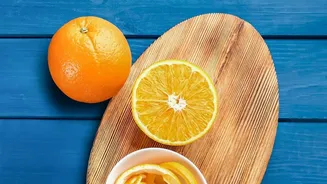
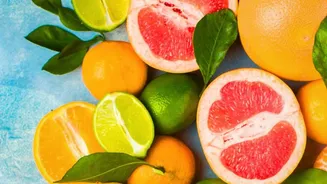
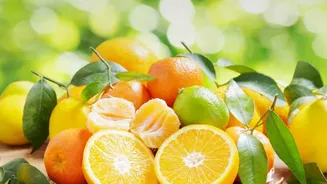
This recipe is beautifully simple and relies on just a handful of basic ingredients. For about three to four half-pint jars, you will need: Oranges: About 1 kg of oranges. Organic or unwaxed oranges are best since you'll be using the peel. While traditional recipes call for bitter Seville oranges, which are high in pectin, you can use common varieties like Navel or Cara Cara. If using sweeter oranges, adding a lemon is key. Lemon: One large lemon provides extra acidity and pectin, which is crucial for achieving a good set, especially when using sweet oranges. Sugar: About 1 kg of granulated white sugar. Sugar is not just for sweetness; it’s a preservative and is essential for helping the marmalade to gel properly. Water: For boiling and soaking the peels. You will also need a large, heavy-bottomed saucepan, a sharp knife, a chopping board, a weighing scale, and several clean glass jars with tight-fitting lids.
Step 1: Prepare the Citrus
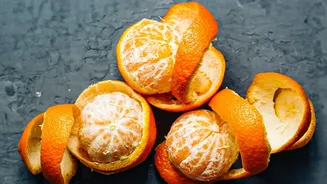
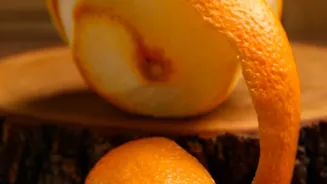
The preparation of the fruit is the most important step. Start by washing the oranges and lemon thoroughly. Cut the fruits in half and squeeze out all the juice, setting it aside. Don't discard the juiced halves. With a spoon, scrape out the inner membranes and any seeds. Tie these membranes and seeds into a small piece of muslin cloth; this little bag is a pectin powerhouse that will help your marmalade set beautifully. Now, focus on the peels. Using a sharp knife, slice the peels into thin strips. The thickness is a matter of preference—some prefer a fine-cut marmalade, while others enjoy chunkier pieces. A little bit of the white pith is good as it contains pectin, but too much can make the marmalade excessively bitter.
Step 2: The Cooking Process
Place the sliced peels and the muslin bag of seeds into your large saucepan. Cover them with about 2 litres of water and bring the mixture to a boil. Reduce the heat and let it simmer for about 1 to 1.5 hours, or until the peels are very soft and tender when pierced with a fork. This long, slow simmer is essential for softening the rind and extracting the pectin. Once the peels are tender, remove the muslin bag. Squeeze it firmly against the side of the pan with a spoon to release all the concentrated, pectin-rich liquid before discarding it. Now, add the reserved orange and lemon juice to the pan along with the sugar. Stir over low heat until all the sugar has completely dissolved. Once dissolved, increase the heat and bring the mixture to a rolling boil. Cook for 15-25 minutes, stirring occasionally to prevent it from sticking.
Step 3: The Wrinkle Test for a Perfect Set
Knowing when your marmalade is ready is key to success. The most reliable method is the wrinkle test. Before you start boiling the sugary mixture, place two or three small plates in your freezer to chill. Once the marmalade has been boiling rapidly and starts to look thick and glossy, it's time to test. Turn off the heat, take one of the cold plates from the freezer, and spoon a small dollop of the marmalade onto it. Let it cool for a minute, then gently push the edge with your fingertip. If the surface wrinkles and holds its shape, your marmalade is ready. If it's still liquid and runs back together, it needs more boiling time. Continue boiling for another 5 minutes and test again. A kitchen thermometer is also useful; the setting point for marmalade is around 105°C (221°F).
Step 4: Jarring and Storing Your Marmalade
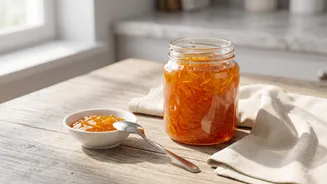
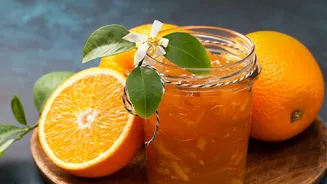
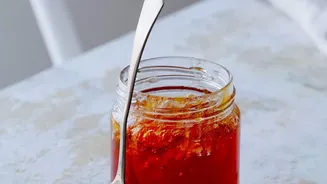
While the marmalade is reaching its setting point, you should sterilise your jars. Wash the jars and lids in hot, soapy water, rinse them well, and place the jars on a baking tray in an oven preheated to 140°C for about 10 minutes. The lids can be boiled in water for a few minutes. Once the marmalade has reached its setting point, remove it from the heat and let it sit for about 10 minutes. This allows the peel to distribute evenly throughout the mixture instead of rising to the top of the jars. Carefully ladle the hot marmalade into the hot, sterilised jars, leaving about a quarter-inch of headspace at the top. Wipe the rims clean, seal tightly with the lids, and let them cool completely. As the jars cool, you should hear a satisfying 'pop' as the vacuum seal forms. Store in a cool, dark place for up to a year. Once opened, keep it in the refrigerator.