



The Gentle Path to a Flexible Body
The secret to sustainable flexibility isn't about forcing yourself into pretzel-like shapes. It's about consistent, gentle movement. Yoga excels here by encouraging your joints to move through their full, natural range of motion. Unlike high-impact exercises
that can jolt the body, yoga focuses on slow, controlled stretches that lubricate the joints by stimulating synovial fluid. This process helps reduce stiffness and maintain the space between vertebrae, leading to better posture and a feeling of ease in your body. By pairing these movements with conscious breathing, you also help calm the nervous system, which allows muscles to relax and release tension more effectively, preventing injury and making each stretch more productive.
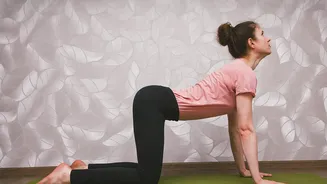
1. Cat-Cow Pose (Marjaryasana-Bitilasana)
This foundational sequence is a perfect warm-up for the spine and a favorite for beginners. Starting on your hands and knees, you'll inhale to drop your belly and lift your chest (Cow Pose), then exhale to round your back and tuck your chin (Cat Pose). This flowing movement gently awakens the entire spine, relieving stiffness in the back and neck. It's exceptionally low-impact because it doesn't place heavy loads on any single joint. Instead, it promotes mobility and strengthens the core muscles that support your back, improving posture over time without any straining or twisting.
2. Downward-Facing Dog (Adho Mukha Svanasana)
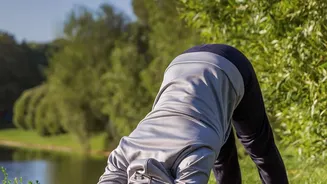
Arguably yoga's most iconic pose, Downward-Facing Dog is a full-body stretch that targets the hamstrings, calves, and spine. For beginners, it's crucial to approach it gently. You can keep a generous bend in your knees to prioritize a long, straight spine and take pressure off tight hamstrings. This pose uses your own body weight to create a safe, effective stretch. To protect your wrists, focus on spreading your fingers wide and pressing down through your knuckles to distribute the weight evenly. This asana not only builds strength in the arms and shoulders but also helps to lengthen the entire back side of the body.
3. Bridge Pose (Setu Bandhasana)
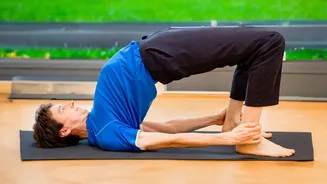
Bridge Pose is a gentle backbend that helps open up the chest and shoulders, areas that often become tight from sitting at a desk. Lying on your back with your knees bent, you lift your hips toward the ceiling. This action strengthens the glutes and hamstrings, which in turn helps support the lower back and knees. It provides a wonderful stretch for the hip flexors without putting any direct pressure on the knee joints. For those who find lifting their hips challenging, placing a supportive block under the sacrum can create a restorative version of the pose that still delivers the chest-opening benefits.
4. Seated Forward Bend (Paschimottanasana)
This pose is a classic for targeting tight hamstrings, a common issue for many people. While sitting with your legs extended, you hinge forward from your hips. The key to keeping this pose joint-friendly is to avoid rounding your lower back. If you can't reach your toes, don't force it. Instead, keep a slight bend in your knees or loop a towel or strap around your feet to gently deepen the stretch without straining your spine. This modification ensures the stretch is focused on the hamstring muscles rather than pulling on the sensitive ligaments of the lower back.
5. Child's Pose (Balasana)
Child's Pose is a restful, grounding posture that every beginner should know. It offers a gentle stretch for the hips, thighs, and lower back while giving you a moment to reconnect with your breath. By resting your torso between your thighs, you allow your entire back to relax and lengthen passively. There is no strain on the knees or spine, making it an incredibly safe and effective way to release tension. It's often used as a resting pose between more challenging asanas, but it stands on its own as a powerful tool for creating space in the lower back and calming the mind.