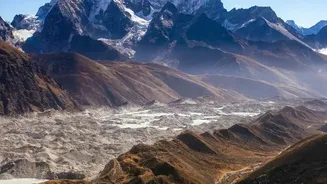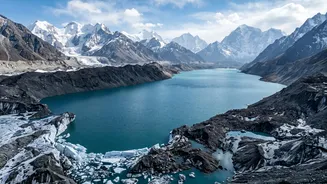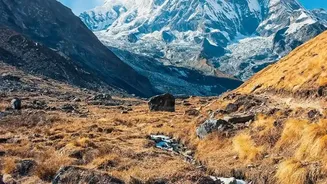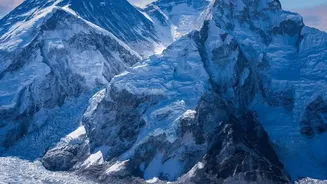





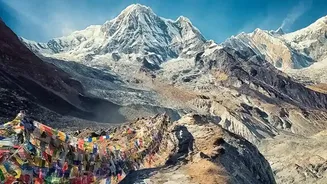

High in the Himalayas, hundreds of glacial lakes are swelling, creating ticking time bombs that threaten millions downstream. New reports connected to the UN paint a stark picture of this growing danger, known as Glacial Lake Outburst Floods.
What is a Glacial Outburst Flood?
A Glacial
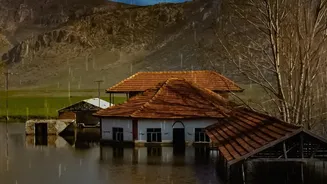
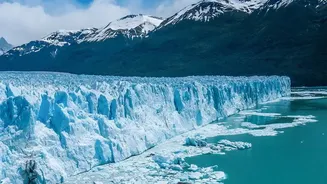
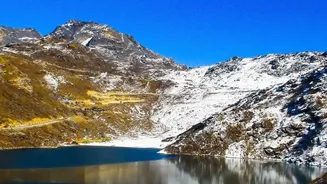
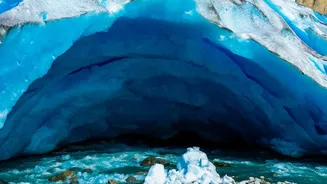
Lake Outburst Flood, or GLOF, is a sudden and often catastrophic release of water from a lake dammed by glacial ice or a moraine—a ridge of rock, dirt, and ice left behind by a retreating glacier. Think of it as a natural dam bursting. As global temperatures rise, glaciers in the Hindu Kush Himalaya region are melting at an accelerated rate. This meltwater pools to form new lakes or expands existing ones, increasing pressure on their unstable natural dams. A trigger, such as a rockfall, avalanche, or even heavy rainfall, can cause the fragile dam to fail, unleashing a devastating wall of water, mud, and debris on downstream communities with little to no warning.
The UN's Alarming Findings
Several recent reports released ahead of the COP31 climate summit underscore the escalating threat. They reveal that the world's frozen regions are warming much faster than the global average; the Hindu Kush Himalayas are warming at a rate that could translate a 1.5°C global increase to over 2°C locally. One UN-led study, currently in pre-publication, analyzed GLOF events across eight Himalayan countries and found that the frequency of these floods has increased fivefold since 1950. While countries like China and Pakistan have recorded more GLOF events, India has suffered the highest number of deaths, with over 6,000 fatalities reported between 1835 and 2025. This grim statistic highlights the extreme vulnerability of densely populated downstream areas in the Indian subcontinent.
Who Is Most at Risk?
Globally, an estimated 15 million people are exposed to the risk of GLOFs, and more than half of them live in just four countries: India, Pakistan, Peru, and China. In the Himalayan region, communities in states like Sikkim, Himachal Pradesh, Uttarakhand, and Arunachal Pradesh, as well as Jammu and Kashmir and Ladakh, are particularly vulnerable. These are areas where significant infrastructure, including towns, roads, and crucial hydropower projects, has been built along river valleys. The 2023 South Lhonak Lake disaster in Sikkim and the 2013 Kedarnath tragedy are devastating reminders of the destructive power of these events. The reports warn that as glaciers continue to retreat, the number and size of dangerous lakes will only grow, putting millions more at risk of losing their homes, livelihoods, and lives.
A Race Against Time to Adapt
Experts stress that while cutting global emissions to limit warming is critical, immediate adaptation measures are needed to protect vulnerable populations. The reports call for urgent investment in GLOF risk reduction. Key strategies include identifying and mapping potentially dangerous lakes using remote sensing and on-the ground surveys. For the most threatening lakes, engineering solutions like controlled drainage through siphons, spillways, or channels can lower water levels and reduce pressure on natural dams. However, the most crucial defence is the widespread implementation of early warning systems. These systems monitor lake conditions in real_time and can provide precious minutes or hours of warning for downstream communities to evacuate, a measure that is vital given the transboundary nature of many Himalayan rivers and lakes.