




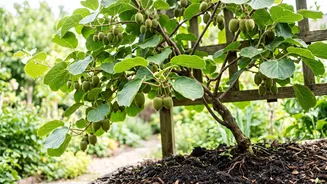


Is Growing Kiwi Fruit in India Possible?
Yes, but location is key. Kiwifruit, also known as Chinese gooseberry, is a temperate crop and thrives in specific regions of India. It grows best in the mid-hilly areas of states like Himachal Pradesh, Uttarakhand, Arunachal Pradesh, Sikkim, and Meghalaya.
These regions offer the cool winters necessary for the vines to flower and set fruit. An ideal altitude is between 800 and 1,500 metres above sea level, where the plants can get the required 700-800 chilling hours below 7°C during winter. High summer temperatures above 35°C can scorch the leaves, so the hot plains are not suitable for kiwi cultivation. If you live in a suitable climate, growing kiwis can be a fantastic long-term addition to your garden.
Choosing Your Vines: Male, Female, and Variety
Most kiwifruit plants are dioecious, meaning you need separate male and female plants for pollination and fruit production. The female vines produce the fruit, but only if pollinated by a nearby male plant. For a home garden, a ratio of one male plant for every six to eight female plants is recommended. Popular female (fruiting) varieties grown in India include Hayward, Abbott, Allison, Bruno, and Monty. Hayward is a globally popular variety known for its large fruit and excellent flavour, but it requires more chilling hours, making it suitable for higher altitudes. Allison and Abbott are good choices for mid-hill regions as they mature earlier. Bruno is a heavy bearer with long fruit. For pollination, Tomuri is a common male variety that pairs well with Hayward, while others are available for earlier-flowering types. It’s crucial to match the flowering times of your male and female plants for successful pollination.
Planting and Preparing for Growth
Kiwis are vigorous climbing vines that need a strong support structure to thrive. A T-bar trellis or a pergola are the most common systems. This should be set up before planting, as the vines will grow rapidly. The ideal planting time is January, during the dormant season. Choose a sunny spot protected from strong winds. The soil should be a deep, well-drained sandy loam, rich in organic matter, with a slightly acidic pH of around 5.5 to 6.5. Waterlogged soil can cause root rot, so good drainage is essential. Dig large pits about 4 to 6 metres apart to give the vines ample space to grow and ensure good air circulation and sunlight exposure.
Patience, Pruning, and Ongoing Care
Growing kiwi fruit is a long-term investment of time. Vines typically begin to produce fruit after three to five years, with commercial yields taking even longer. Regular care is crucial. Water the plants consistently, especially during the dry summer months, but avoid overwatering. A layer of mulch helps retain soil moisture and suppress weeds. Fertilise with well-rotted manure and a balanced NPK mixture, particularly from the second year onwards. Pruning is one of the most critical tasks. Kiwi vines produce fruit on the current season's growth that comes from one-year-old wood. Heavy winter pruning (removing up to 70% of the previous season's growth) is necessary to encourage new, productive canes and prevent the vine from becoming a tangled mess.
Harvesting Your Reward
After years of patience, the harvest is a gratifying experience. In India, kiwis are typically ready for picking between October and November. Don't judge ripeness by the softness on the vine; kiwis are one of those unique fruits that ripen after being picked. The best indicator for home gardeners is to cut one open: if the seeds inside are black, the fruit is mature enough to harvest. Gently snap the fruit off at the stem. The harvested fruit will still be hard and tart. To ripen them, leave them at room temperature for a few days. You can speed up the process by placing them in a paper bag with a banana or an apple, which releases ethylene gas that promotes ripening. Properly stored in a cool place, kiwis can last for several weeks or even months.